Overview
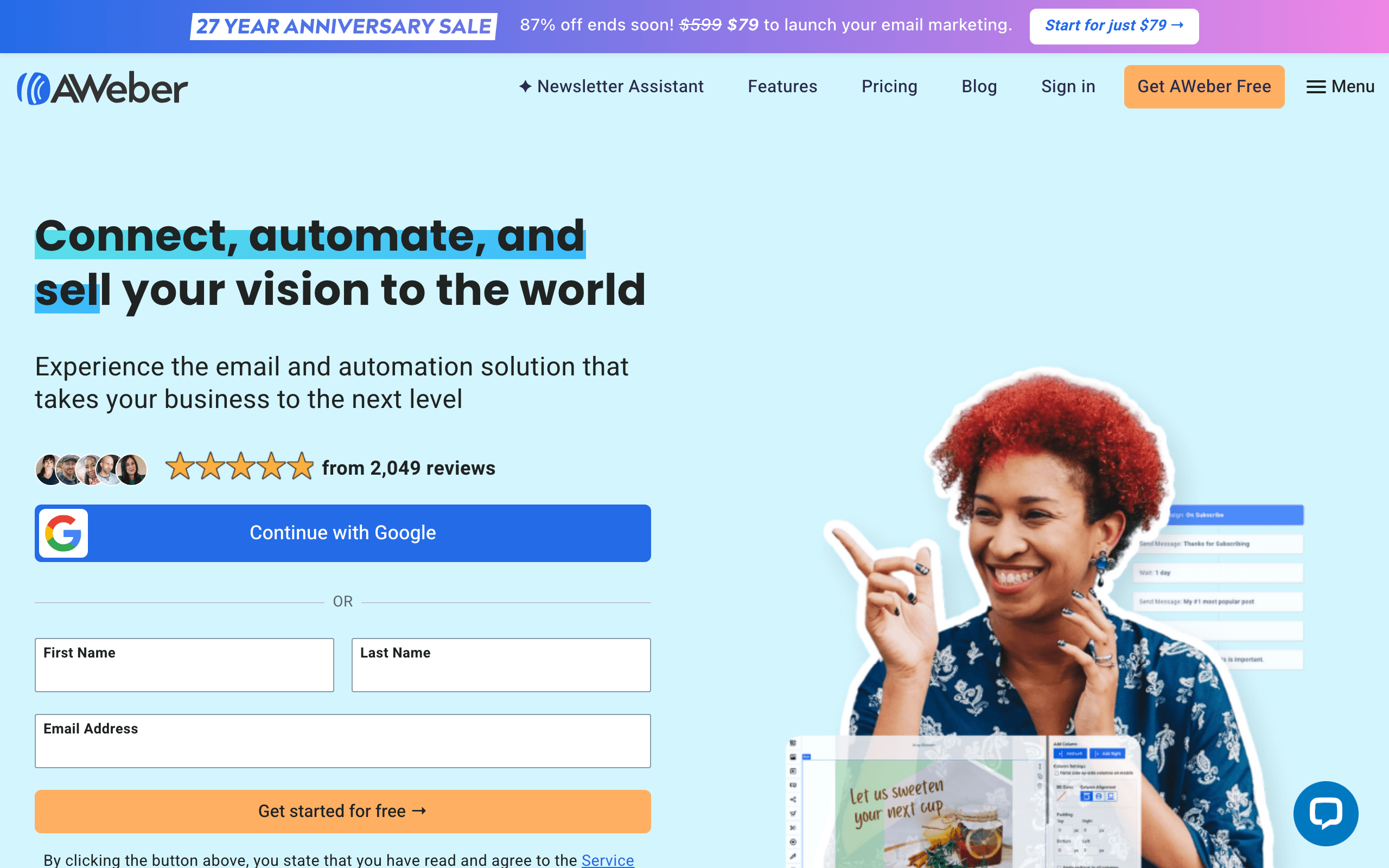
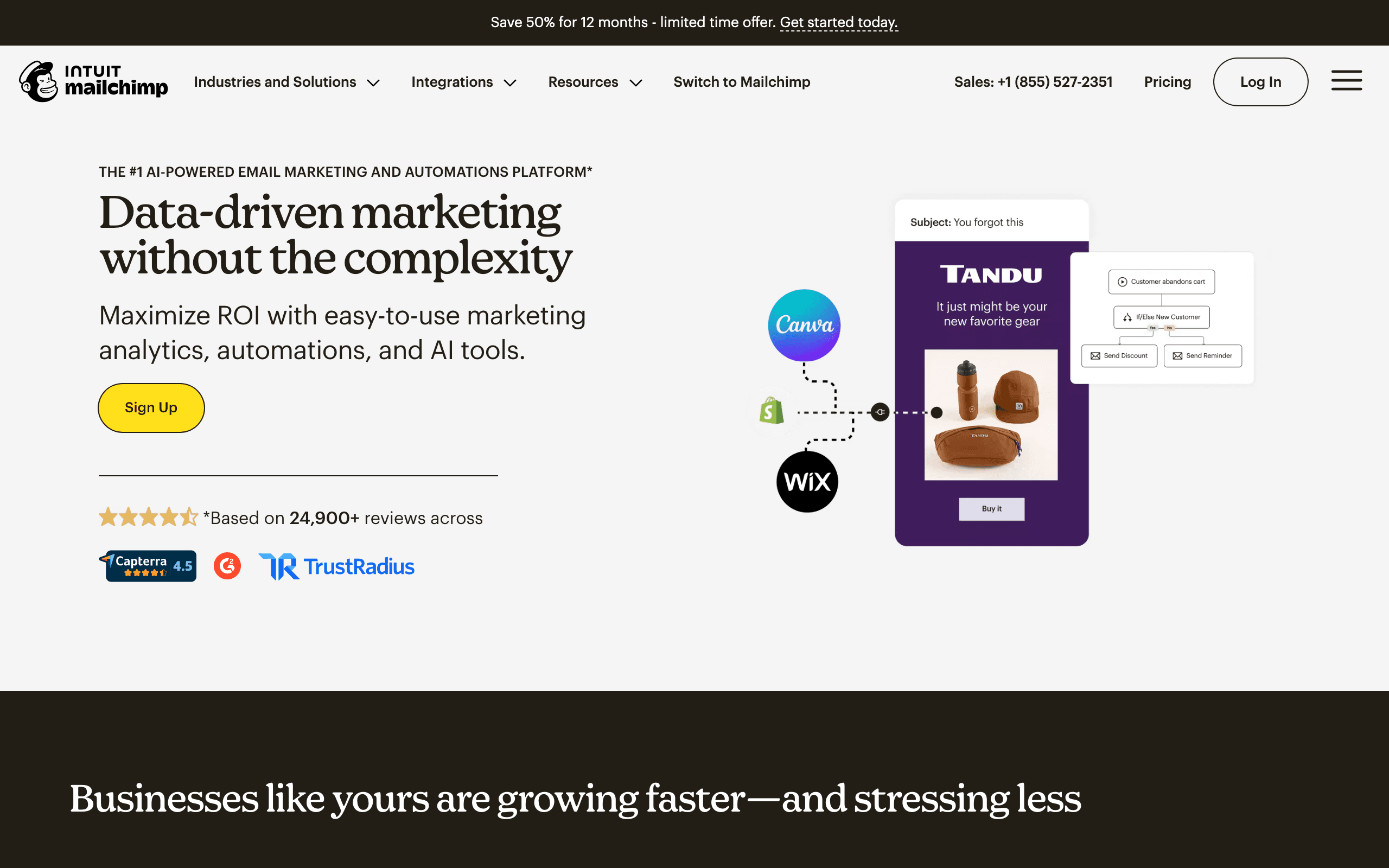
AWeber and Mailchimp are both email marketing veterans. AWeber invented the autoresponder in 1998. Mailchimp launched in 2001 and became the most recognized email marketing brand globally. Check our Mailchimp comparison for more detailed analysis.
The choice often comes down to what you value: AWeber's reliability and support or Mailchimp's features and ecosystem.
The Core Difference
AWeber has stayed focused on what they do best: reliable email delivery with excellent support. They control their entire infrastructure end-to-end and have built a reputation for inbox placement. Their customer service team has won 15+ awards.
Mailchimp evolved from email marketing into a broader marketing platform. They've added landing pages, CRM features, social ads, and advanced automation. The feature set is larger, but so is the complexity.
Pricing: Same Price, Different Value
At 10,000 subscribers, both platforms cost approximately $135/month. AWeber's Plus plan includes priority 24/7 support and 120,000 monthly sends. Mailchimp's Standard plan includes more advanced automation features and 120,000 sends.
The pricing parity is unusual. Most competitors are cheaper than Mailchimp. AWeber charges the same but offers different value - better support vs. more features.
One key difference: Mailchimp counts all contacts including unsubscribed ones. AWeber now only counts active subscribers. If you have list churn, AWeber may cost less in practice.
Where AWeber Wins
Deliverability: AWeber controls their entire email infrastructure. They don't outsource delivery to third parties. This focused approach produces industry-leading deliverability rates.
Customer Support: 24/7 live support with phone access on all paid plans. AWeber has won 15+ customer service awards. When you need help, you get it quickly.
Template Library: 600+ email templates vs Mailchimp's 100+. AWeber's Smart Designer also creates branded templates automatically from your website URL.
Simplicity: Fewer features means less complexity. AWeber is easier to learn and use for straightforward email marketing.
Where Mailchimp Wins
Automation: 40+ pre-built customer journeys and sophisticated branching logic. Mailchimp's automation is more powerful for complex marketing workflows.
E-commerce: Deeper integrations with Shopify and WooCommerce. Product recommendations, revenue tracking, and e-commerce analytics are more mature.
Ecosystem: Mailchimp is a household name. This matters for agencies, enterprise procurement, and stakeholder buy-in.
Advanced Features: Predictive analytics, send time optimization, and behavioral targeting. Mailchimp has invested heavily in AI and machine learning.
For SaaS Companies
Neither AWeber nor Mailchimp is built for SaaS. Both are general email marketing tools without subscription billing awareness.
If you're running a SaaS company and want automation that triggers based on Stripe events - trial expiry, failed payments, plan upgrades - consider Sequenzy. It's designed specifically for software businesses with transactional email and billing integration built in.
At $49/month for 120,000 emails, unlimited subscribers, it also costs a third of what either AWeber or Mailchimp charges.
The Contact Billing Controversy
One of the most important practical differences between AWeber and Mailchimp is how they count contacts. Mailchimp bills for all contacts including unsubscribed, cleaned, and non-subscribed contacts. This means you pay for people who cannot receive your emails. AWeber now counts only active, subscribed contacts toward your billing limit.
For businesses with significant list churn - which is common in e-commerce and content marketing - this billing difference can make AWeber meaningfully cheaper in practice even though the sticker prices are identical. A list of 10,000 active subscribers might include 2,000-3,000 unsubscribed or bounced contacts on Mailchimp, pushing you into a higher pricing tier. Use an email validator to keep your list clean regardless of which platform you choose.
Brand Recognition vs Product Quality
Mailchimp's brand recognition is unmatched in email marketing. The Freddie logo, the Super Bowl ads, and the podcast sponsorships have made Mailchimp synonymous with email marketing for many people. This brand power matters for agency recommendations, enterprise procurement, and stakeholder buy-in. Choosing Mailchimp is a safe, defensible decision.
AWeber lacks this brand cachet but has quietly maintained a reputation for excellent deliverability and support among long-time users. The question is whether brand recognition should influence your platform decision. If you need to justify your choice to non-marketing stakeholders, Mailchimp's name carries weight. If you are evaluating purely on merit, AWeber competes effectively on deliverability and support quality.
The Support Quality Divide
AWeber's 24/7 phone support across all paid plans versus Mailchimp's restriction of phone support to Premium plans ($350+/month) represents a fundamental difference in customer service philosophy. For small businesses that depend on their email platform and cannot afford extended downtime, the ability to call a knowledgeable support agent at 3am is genuinely valuable.
Mailchimp's email-only support on Standard plans has been a growing source of frustration for users. Response times have increased as the platform has grown, and the quality of support has reportedly declined. AWeber's smaller scale allows them to maintain more personal, responsive support, which continues to win them loyal customers despite competitive pressures from larger platforms.