Overview
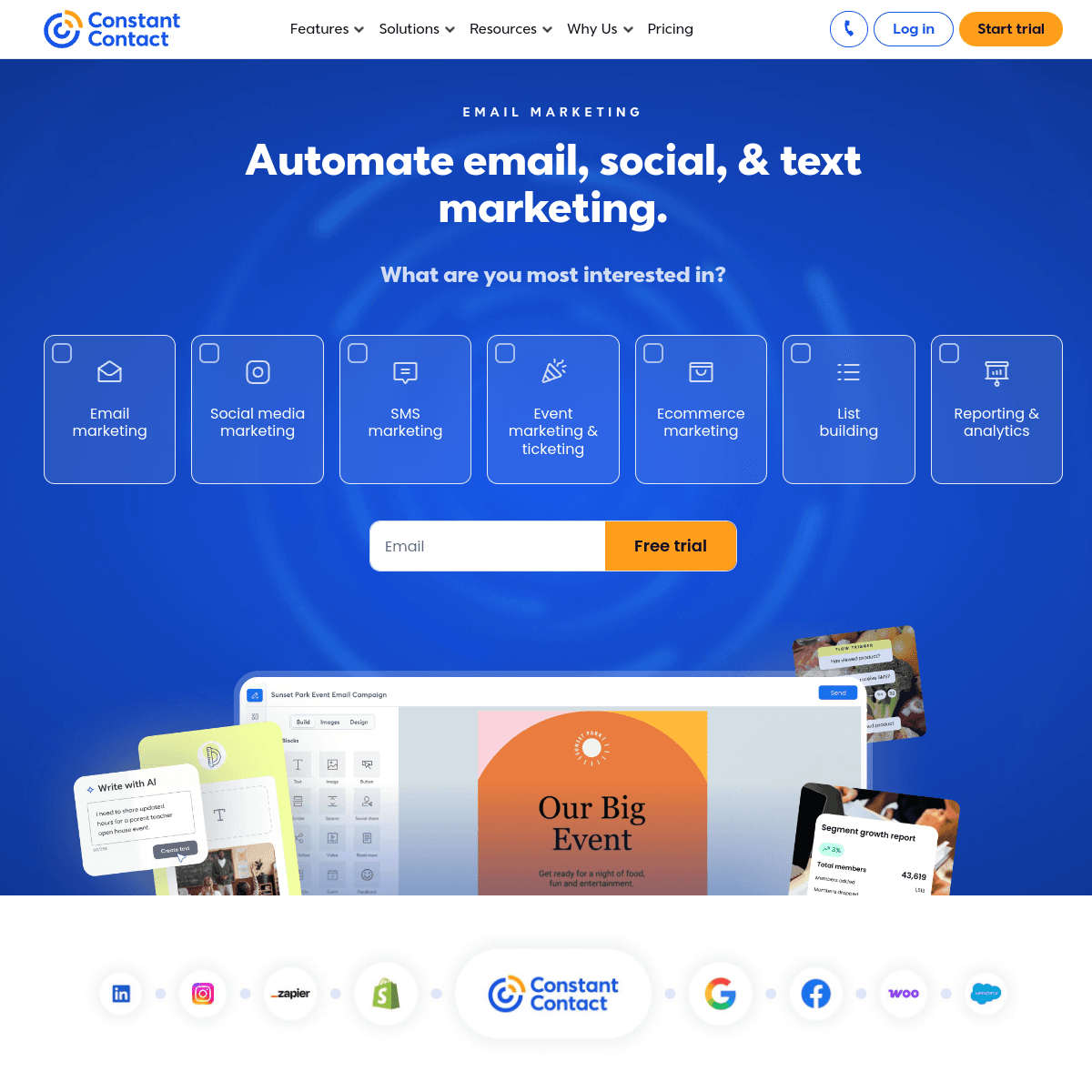
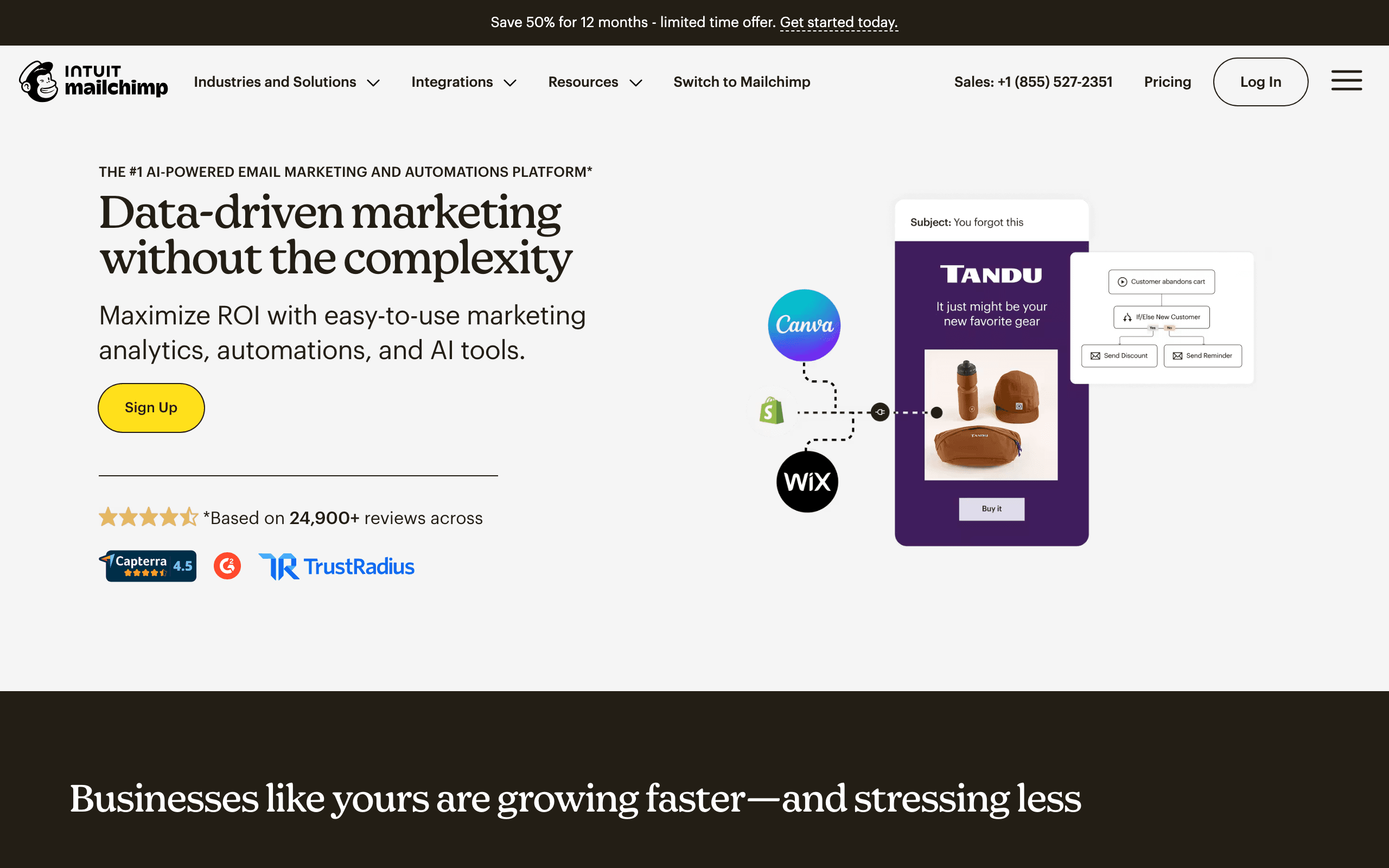
Constant Contact and Mailchimp are both veterans of email marketing. Constant Contact launched in 1995, Mailchimp in 2001. Both have served millions of small businesses. But they've evolved differently - Constant Contact doubling down on SMB and event marketing, Mailchimp becoming a broader marketing platform.
See our Mailchimp comparison for more detailed analysis of Mailchimp's capabilities.
The Core Difference
Constant Contact feels like the reliable local business partner. Phone support on every plan, event marketing built in, templates designed for newsletters and announcements. It's email marketing with a personal touch.
Mailchimp has evolved into a modern marketing platform. Advanced automation, AI content generation, predictive analytics, and 300+ integrations. It's built for marketing teams wanting cutting-edge features.
Pricing: $160 vs $135 at 10K
At 10,000 contacts, Constant Contact Standard costs $160/month. Mailchimp Standard costs $135/month.
Constant Contact's higher price includes phone support on all plans and higher email send limits (up to 24x contacts on Premium). Mailchimp reserves phone support for $350+/month Premium plans.
Both platforms eliminated or reduced free tiers. Constant Contact has no free plan as of June 2025. Mailchimp offers a limited free tier for 500 contacts.
Where Constant Contact Wins
Event Marketing: Built-in event management is Constant Contact's standout feature. Create registration pages, track RSVPs, send automated reminders, and manage attendees - all without third-party integrations. For businesses running workshops, fundraisers, or community events, this is valuable.
Phone Support: Every paid Constant Contact plan includes phone support. Mailchimp requires Premium ($350+/month) for phone access. For less technical users who want to talk to a human, Constant Contact is more accessible.
Onboarding Help: Constant Contact offers 1-on-1 marketing coaching and hands-on setup assistance. Their focus on SMB means they expect to hold your hand through getting started.
Where Mailchimp Wins
Automation: Mailchimp's Customer Journeys offers 40+ pre-built workflows with advanced triggers and conditional logic. Constant Contact's automation is more basic. For sophisticated nurture sequences, Mailchimp is superior.
Integrations: 300+ native integrations vs Constant Contact's 100+. Deep connections to Shopify, WooCommerce, Salesforce, and major marketing tools. Complex tech stacks work better with Mailchimp.
Modern Features: AI content generation, predictive demographics, send time optimization. Mailchimp continues investing in cutting-edge marketing technology that Constant Contact hasn't matched.
For SaaS Companies
Neither Constant Contact nor Mailchimp is built for SaaS. Both target traditional small businesses without subscription billing awareness.
If you're running a SaaS company and need automation based on Stripe events - trial expiry, plan changes, failed payments - consider Sequenzy. It's designed specifically for software businesses with transactional email and subscription-aware triggers.
At $49/month for 120,000 emails, unlimited subscribers, Sequenzy costs less than a third of either legacy platform.
Contact Counting and Billing Surprises
One frustration shared by users of both platforms is how contacts are counted toward billing. Mailchimp counts all contacts — including unsubscribed and non-marketing contacts — toward your pricing tier. If you have 10,000 active subscribers but 3,000 unsubscribed contacts, you are billed for 13,000 contacts. This inflates costs for businesses with natural list churn.
Constant Contact uses a similar model but with slightly more generous counting. Neither platform makes it easy to automatically clean your list of inactive or bounced contacts without manual intervention. For businesses with high turnover in their subscriber base, this billing approach can add 20-30% to your expected monthly cost. Tools like our email validator can help you keep your list clean before importing.
The Nonprofit Decision
Both platforms offer nonprofit discounts, making this a common comparison for charitable organizations. Constant Contact's event management features give it a genuine edge for nonprofits that run fundraising galas, volunteer orientations, and community events. Having registration, ticketing, and automated reminders in the same platform as your donor email list simplifies operations considerably.
Mailchimp offers 15% off for verified nonprofits and has stronger automation for donation follow-up sequences. If your nonprofit's primary communication is digital — email newsletters, automated donation receipts, and segmented appeals — Mailchimp's more sophisticated automation engine will serve you better. The choice really depends on whether your nonprofit runs frequent in-person events.
Long-term Platform Direction
Under Intuit's ownership, Mailchimp is evolving into a broader small business marketing platform with AI features, predictive analytics, and deeper e-commerce integration. The investment in modern technology means Mailchimp will likely continue to widen the feature gap with Constant Contact over the coming years.
Constant Contact has been slower to innovate, focusing instead on reliability and service quality for its existing customer base. This conservative approach means fewer surprises but also fewer improvements. Businesses evaluating these platforms should consider not just current features but where each platform is heading — and whether their own marketing needs will grow beyond what their chosen platform can offer.
Two Legacy Platforms Aging in Different Directions
Both Constant Contact and Mailchimp have been around for over two decades, but their aging trajectories are markedly different. Mailchimp, under Intuit's ownership, is actively investing in AI features, predictive analytics, and e-commerce integrations. The platform is getting more powerful but also more complex and more expensive with each update cycle. Constant Contact is aging more quietly, maintaining its existing feature set without dramatic additions or modernization.
For businesses choosing between them in 2026, this divergence matters. Mailchimp's trajectory means you will likely gain new features over the coming years but also face rising costs and increasing interface complexity. Constant Contact's trajectory means predictable pricing and a familiar interface, but you may find yourself falling behind competitors who leverage more sophisticated marketing tools. The question is whether you want a platform that is actively evolving or one that stays reliably the same.
The Phone Support Tax You Are Already Paying
Constant Contact charges a premium partly justified by phone support on every plan. At $160/month versus Mailchimp's $135/month at 10,000 contacts, you are paying roughly $300/year extra. Part of that goes toward the phone support infrastructure. Whether that premium is worth it depends on how often you actually call.
Most businesses call support a few times per year at most, usually during initial setup or when something breaks before a major send. For those handful of interactions, $300/year is expensive per-call pricing. Mailchimp's chat support is available on most plans and typically resolves issues within the same session. If your team is comfortable with chat-based troubleshooting and self-service documentation, the phone support premium is money better spent on actual marketing activities.
The Subscription Software Gap Both Share
Neither Constant Contact nor Mailchimp was built for the SaaS business model. Both focus on traditional retail and service businesses where email marketing means newsletters, promotions, and event announcements. The concept of a subscriber having a subscription status, an MRR value, a trial end date, or a payment failure history simply does not exist in either platform's data model.
SaaS companies using either platform end up building elaborate workarounds: Zapier connections to Stripe, custom tagging scripts to track plan tiers, manual segments for trial users versus paying customers. These integrations are fragile, require ongoing maintenance, and break whenever Stripe updates its API or the middleware tool changes its pricing. For subscription software businesses, Sequenzy eliminates this entire middleware layer by treating Stripe data as a native part of the subscriber profile, enabling automations triggered by billing events that Constant Contact and Mailchimp cannot even conceptualize.