Updated 2026-01-11
GetResponse
Mailchimp

GetResponse vs Mailchimp

All-in-one marketing vs email ecosystem

25
Features Compared
4
Key Differences
4
User Reviews
12
FAQs Answered
TL;DR

GetResponse offers webinars, landing pages, and conversion funnels built-in for €69/month (~$75) at 10k contacts. Mailchimp costs $135/month with superior integrations and brand recognition. Choose GetResponse for webinar-based marketing or Mailchimp for e-commerce and maximum integrations.

Platform Overview

See how each platform looks

GetResponse

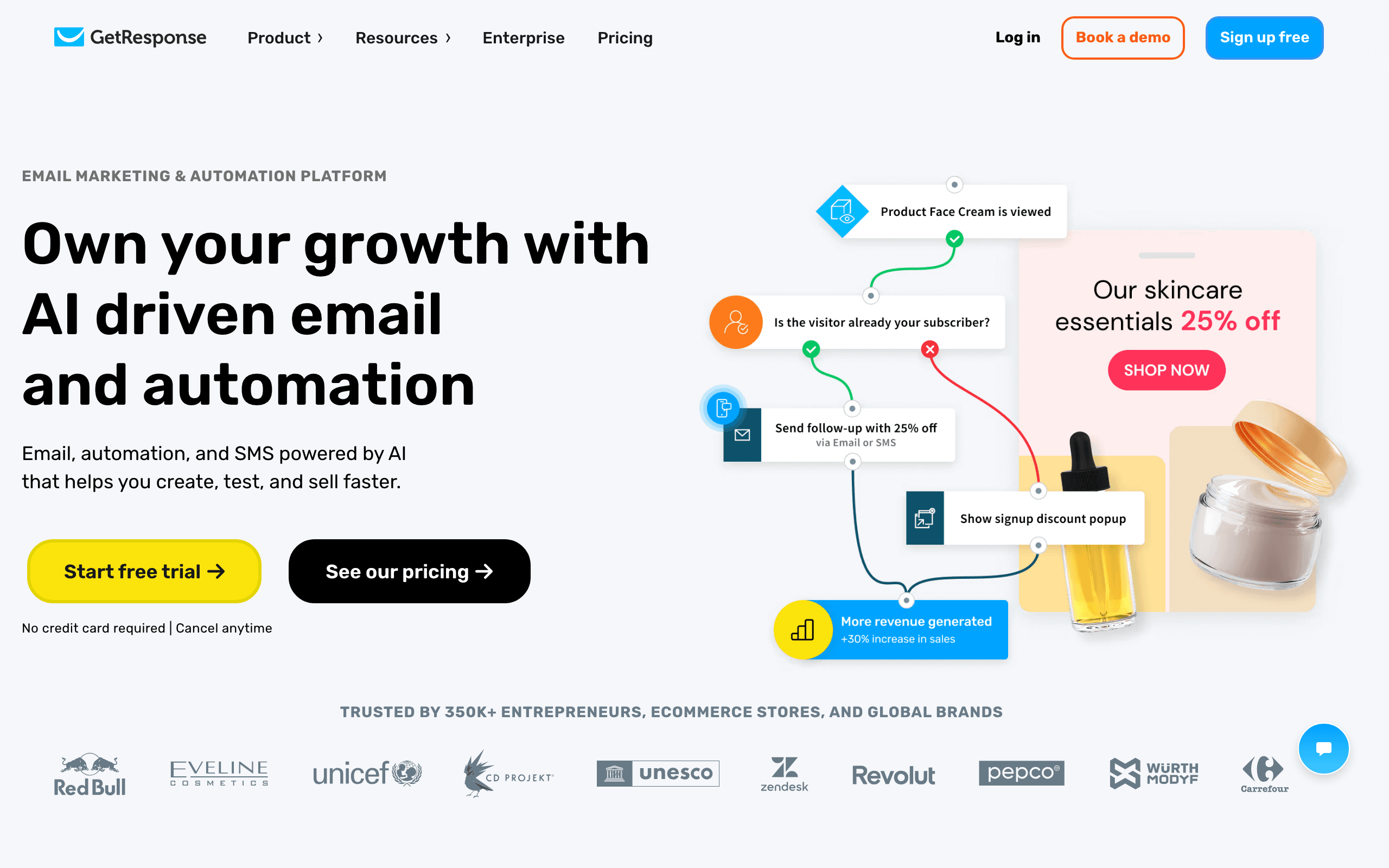
GetResponse dashboard screenshot

All-in-one marketing platform with webinars, landing pages, and automation.

Mailchimp

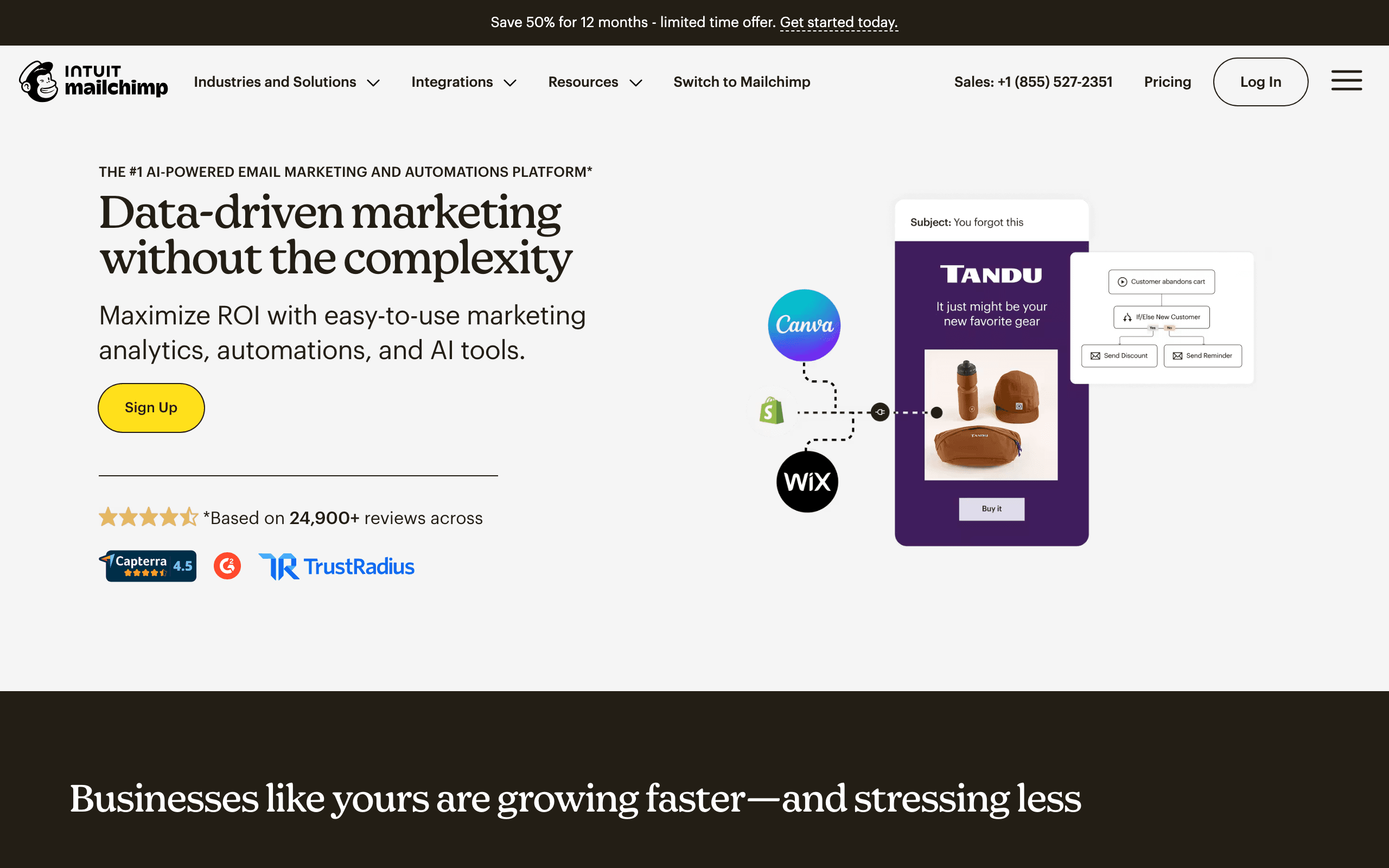
Mailchimp dashboard screenshot

Popular all-in-one marketing platform with email, automation, and CRM features.

Key Differences

The main things that set these tools apart

Built-in Webinars
GetResponse wins

GetResponse is one of the only email marketing platforms with native webinar hosting. You can run live webinars, on-demand recordings, and paid events - all integrated with your email lists. Mailchimp has no webinar functionality. This is a major differentiator for coaches, educators, and B2B marketers.

Conversion Funnels
GetResponse wins

GetResponse offers 30+ conversion funnel templates covering lead generation, sales, and webinar registration. The funnel builder is more sophisticated than Mailchimp's customer journeys for full marketing flows. For complete marketing funnels, GetResponse has the edge.

Integration Ecosystem
Mailchimp wins

Mailchimp connects to 300+ apps with deep native integrations for major platforms. GetResponse has 170+ integrations covering essentials. For complex tech stacks and e-commerce depth, Mailchimp's ecosystem is stronger.

Brand Recognition
Mailchimp wins

Mailchimp is a household name in marketing. This matters for agencies, enterprise procurement, and team buy-in. GetResponse is well-known in marketing circles but doesn't have Mailchimp's mainstream recognition.

Pricing Comparison

At 10,000 subscribers

GetResponse
€69 (~$75)/month

Starter plan with unlimited sends, AI tools included

Visit GetResponse
Mailchimp
$135/month

Standard plan, 120,000 sends, all contacts count

Visit Mailchimp
Best for SaaS
Sequenzy
$49/month

Subscriber-based, Stripe integration, SaaS-focused

Start Free Trial

Feature Comparison

25 features compared side-by-side

Feature
GetResponse
Mailchimp
Sequenzy
Webinars & Live Events
Built-in webinars
100-500 attendees
On-demand webinars
Evergreen webinars
Paid webinars
Built-in payment
Webinar funnels
Pre-built templates
Landing Pages & Funnels
Landing pages
AI-powered builder
Basic builder
Conversion funnels
30+ templates
Customer journeys
Website builder
AI website builder
Basic sites
A/B testing (pages)
Email Marketing
Email campaigns
Good
Excellent
Email templates
Good selection
Extensive library
AI-generated
A/B testing
Subject, content, timing
Send time optimization
AI-powered
Standard+
Email editor
Drag-and-drop
Drag-and-drop
Drag-and-drop
Marketing Automation
Automation workflows
Advanced
Advanced
Behavior-based
Pre-built workflows
E-commerce + webinars
40+ journeys
SaaS-focused
Behavioral triggers
Comprehensive
Comprehensive
Stripe + behavioral
Lead scoring
Marketer plan+
Standard+
Integrations
Total integrations
170+
300+
API-focused
E-commerce
Shopify, WooCommerce
Deep native
Payment processors
Stripe, PayPal (for webinars)
E-commerce focused
Stripe native
Zapier
Pricing Model
Pricing basis
Active subscribers
All contacts
Subscribers
Email sends
Unlimited
Limited (12x contacts)
Unlimited
Free plan
500 contacts, limited features
500 contacts, 500 sends
14-day trial
Annual discount
18% off (30% for 2-year)
~15% off
Available

Pros & Cons

Honest strengths and weaknesses of each platform

GetResponse

Pros
  • Cheaper at $59/month vs Mailchimp's ~$100/month for 10k
  • Built-in webinar hosting unique among email platforms
  • Conversion funnels for automated sales processes
  • AI-powered email and subject line tools
  • Website builder included on paid plans
  • Unlimited email sends on all paid plans
Cons
  • Smaller integration ecosystem than Mailchimp
  • Less brand recognition and market presence
  • Weaker e-commerce integrations
  • Less sophisticated reporting
  • No social media posting or ad management
  • Fewer third-party tools connect natively

Mailchimp

Pros
  • Largest integration ecosystem in email marketing
  • Strongest brand recognition and market presence
  • Deep e-commerce integrations with Shopify
  • Advanced automation with behavioral triggers
  • Social media posting and ad management
  • Comprehensive reporting and analytics
Cons
  • More expensive especially at scale
  • Counts unsubscribed contacts toward billing
  • No webinar hosting capabilities
  • No conversion funnel builder
  • Frequent pricing changes frustrate users
  • Interface can feel cluttered and complex

What Users Say

Real reviews from GetResponse and Mailchimp users

GetResponse Reviews

G2

Switched from Mailchimp and saved $40/month while gaining webinars and conversion funnels. GetResponse includes features Mailchimp doesn't even offer. Best marketing decision we've made.

Patricia A.2025-10-08
Capterra

Good value but some of our tools don't integrate with GetResponse. Mailchimp connects to everything. The webinars are nice but integration gaps caused workflow issues.

Jeff S.2025-11-20

Mailchimp Reviews

G2

Mailchimp connects to every tool we use — CRM, e-commerce, analytics, social media. The integration ecosystem is unmatched. GetResponse has more features but Mailchimp fits into our stack better.

Lisa M.2025-09-14
Trustpilot

Mailchimp keeps raising prices and the contact counting is unfair. They count unsubscribed contacts toward my bill. Considering GetResponse for the savings and webinar features.

Aaron K.2025-12-22

Best For

When to choose each tool

Choose GetResponse if you...
  • Coaches and educators running webinars
  • B2B marketers using webinar funnels
  • Businesses wanting all-in-one marketing
  • Teams needing landing page builders
  • Users wanting unlimited email sends
Choose Mailchimp if you...
  • E-commerce stores on Shopify/WooCommerce
  • Businesses needing maximum integrations
  • Agencies working with multiple clients
  • Teams requiring brand recognition
  • Users wanting extensive email templates

When to Consider Sequenzy Instead

AI-Powered Email with Stripe Integration

Both GetResponse and Mailchimp are general marketing tools. Neither understands software subscriptions. Sequenzy integrates with Stripe for subscription-aware automation - trial expiry emails, failed payment recovery, and churn prevention campaigns.

Better Value at $49/month

At $49/month for 120k emails (unlimited subscribers), Sequenzy costs less than both GetResponse (~$75) and Mailchimp ($135). For SaaS companies, you also get billing event triggers that neither competitor offers.

Transactional + Marketing Unified

GetResponse and Mailchimp focus on marketing campaigns. Sequenzy combines transactional and marketing email - password resets, billing notifications, and campaigns in one platform with consistent deliverability.

Overview

GetResponse and Mailchimp both offer email marketing, but they've evolved differently. GetResponse has become an all-in-one marketing platform with unique features like webinars and conversion funnels. Mailchimp is the email marketing giant with unmatched brand recognition. Check our Mailchimp comparison for detailed analysis.

The choice depends on whether you need GetResponse's webinar-centric marketing or Mailchimp's ecosystem strength.

The Core Difference

GetResponse is one of the few email marketing platforms that includes native webinar hosting. You can run live webinars, on-demand recordings, and even paid webinar events - all integrated with your email lists and automation. This makes GetResponse particularly valuable for coaches, educators, and B2B marketers.

Mailchimp has invested in becoming the email marketing ecosystem. With 300+ integrations, extensive templates, and household name recognition, it's the safe choice for businesses wanting maximum connectivity and proven reliability.

Pricing: €69 vs $135 at 10K

At 10,000 contacts, GetResponse costs €69/month (~$75 USD) for the Starter plan with unlimited email sends. Mailchimp's Standard plan costs $135/month with a 120,000 email limit.

GetResponse is about 45% cheaper while including unlimited sends. However, webinar features require the Creator plan (€114/month at 10k), which narrows the gap.

GetResponse only charges for active subscribers. Mailchimp counts all contacts including unsubscribed ones. If you have list churn, the cost difference can be larger than the list prices suggest.

Where GetResponse Wins

Built-in Webinars: This is GetResponse's killer feature. No other major email marketing platform offers native webinar hosting. You can run live events, create evergreen webinar funnels, and monetize with paid webinars - all in one platform.

Landing Pages & Funnels: GetResponse's landing page builder is AI-powered with 30+ conversion funnel templates. It's more sophisticated than Mailchimp's basic landing pages.

Unlimited Sends: GetResponse includes unlimited email sends on all plans. Mailchimp limits sends to 12x your contact count. High-volume senders save money with GetResponse.

Creator Economy Features: The Creator plan includes course hosting and paid newsletters. GetResponse is positioning for creators selling digital products.

Where Mailchimp Wins

Integration Ecosystem: 300+ integrations vs 170+. Mailchimp connects to more tools, and its e-commerce integrations (Shopify, WooCommerce) are deeper.

Brand Recognition: Everyone knows Mailchimp. This matters for agencies, enterprise procurement, and team stakeholders who want "safe" choices.

Email Templates: Mailchimp has invested heavily in email design with an extensive template library and polished editor.

E-commerce Features: Product recommendations, revenue tracking, and abandoned cart automations are more mature in Mailchimp.

For SaaS Companies

Neither GetResponse nor Mailchimp is built for SaaS. Both are general marketing tools without subscription billing awareness.

If you're running a SaaS company and want automation that triggers based on Stripe events - trial expiry, failed payments, plan upgrades - consider Sequenzy. It's designed specifically for software businesses with transactional email and billing integration built in.

At $49/month for 120,000 emails, unlimited subscribers, it costs less than both GetResponse and Mailchimp while offering SaaS-specific features neither has.

The Integration Ecosystem Factor

Mailchimp has the largest integration ecosystem in email marketing — virtually every business tool connects natively. CRM systems, e-commerce platforms, analytics tools, social media managers — Mailchimp integrates with all of them. GetResponse has a respectable but smaller integration library. For businesses with complex tool stacks, Mailchimp's ecosystem reduces the friction of data flow between platforms. This practical advantage often matters more than feature comparisons on paper.

Contact Counting Practices

Mailchimp counts unsubscribed and non-subscribed contacts toward billing tiers, effectively charging for contacts who cannot receive emails. GetResponse counts active contacts only. This difference can be significant — a business with 10,000 active subscribers might have 15,000 total contacts in Mailchimp and pay the higher-tier price. GetResponse's cleaner counting means you pay only for contacts you can actually email.

Feature Value vs Brand Trust

GetResponse objectively offers more features per dollar — webinars, conversion funnels, AI tools, and unlimited sends at lower prices. But Mailchimp's brand dominance means more resources, tutorials, community support, and third-party expertise. Finding a GetResponse consultant is harder than finding a Mailchimp expert. This ecosystem of knowledge and support has practical value that feature lists do not capture.

Frequently Asked Questions

12 questions answered about GetResponse vs Mailchimp

Not sure which to pick?

If you're a SaaS founder who needs Stripe integration and unified email, try Sequenzy free. No credit card required.

Related Comparisons

Sequenzy - Complete Pricing Guide

Pricing Model

Sequenzy uses email-volume-based pricing. You only pay for emails you send. Unlimited contacts on all plans — storing subscribers is always free.

All Pricing Tiers

  • 2.5k emails/month: Free (Free annually)
  • 15k emails/month: $19/month ($205/year annually)
  • 60k emails/month: $29/month ($313/year annually)
  • 120k emails/month: $49/month ($529/year annually)
  • 300k emails/month: $99/month ($1069/year annually)
  • 600k emails/month: $199/month ($2149/year annually)
  • 1.2M emails/month: $349/month ($3769/year annually)
  • Unlimited emails/month: Custom pricing (Custom annually)

Yearly billing: All plans offer a 10% discount when billed annually.

Free Plan Features (2,500 emails/month)

  • Visual automation builder
  • Transactional email API
  • Reply tracking & team inbox
  • Goal tracking & revenue attribution
  • Dynamic segments
  • Payment integrations
  • Full REST API access
  • Custom sending domain

Paid Plan Features (15k - 1.2M emails/month)

  • Visual automation builder
  • Transactional email API
  • Reply tracking & team inbox
  • Goal tracking & revenue attribution
  • Dynamic segments
  • Payment integrations (Stripe, Paddle, Lemon Squeezy)
  • Full REST API access
  • Custom sending domain

Enterprise Plan Features (Unlimited emails)

  • Visual automation builder
  • Transactional email API
  • Reply tracking & team inbox
  • Goal tracking & revenue attribution
  • Dynamic segments
  • Payment integrations
  • Full REST API access
  • Custom sending domain

Important Pricing Notes

  • You only pay for emails you send — unlimited contacts on all plans
  • No hidden fees - all features included in the price
  • No credit card required for free tier

Contact

  • Pricing Page: https://sequenzy.com/pricing
  • Sales: hello@sequenzy.com