
Overview
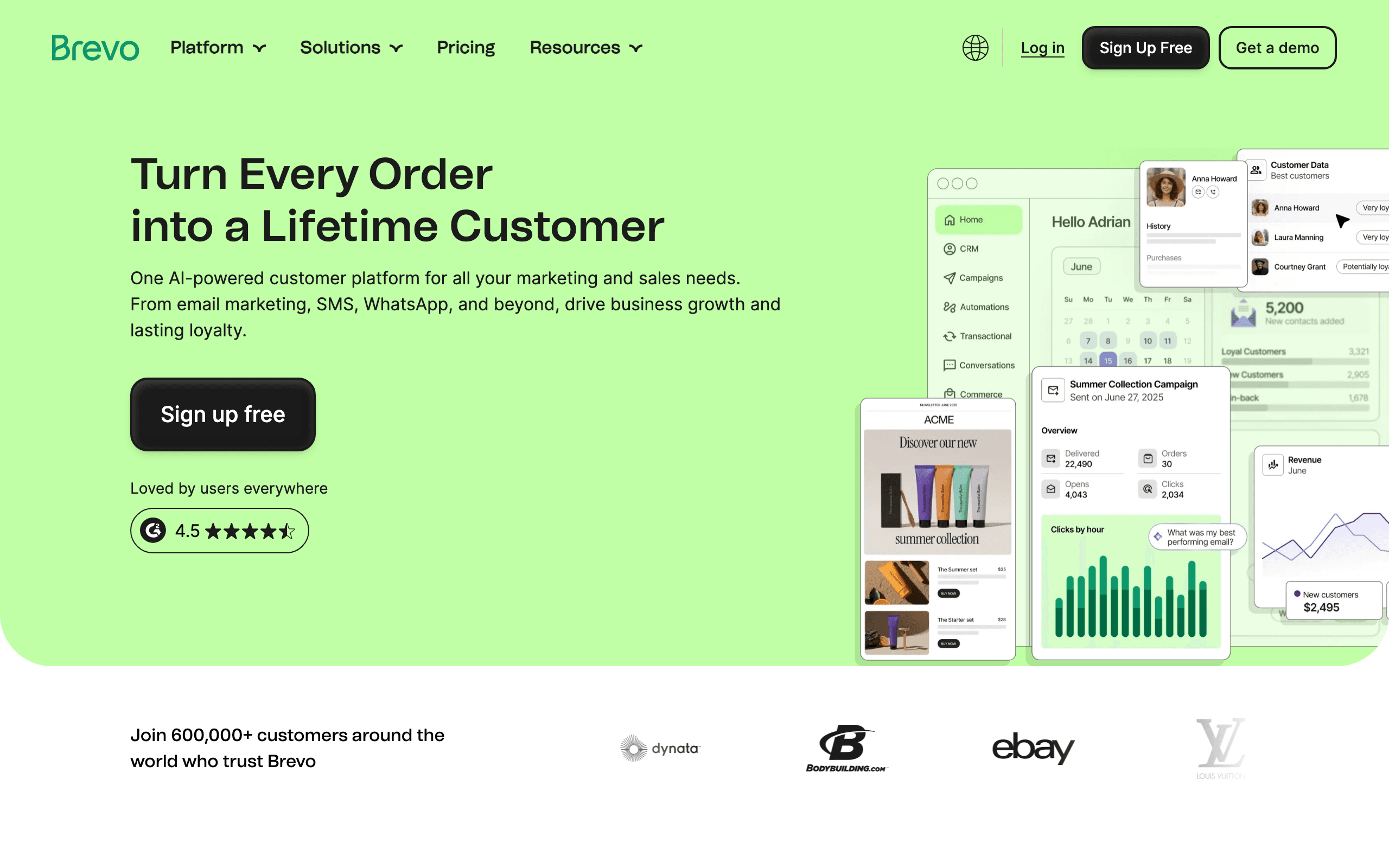
Klaviyo and Brevo (formerly Sendinblue) represent different approaches to email marketing. Klaviyo is the go-to platform for e-commerce stores, especially Shopify. Brevo is a budget-friendly all-in-one marketing platform for general use. See our Klaviyo comparison and Brevo comparison for detailed breakdowns.
The choice comes down to: are you running an online store, or do you need general marketing tools?
The Core Difference
Klaviyo is laser-focused on e-commerce. Every feature connects to your store data - what customers browse, buy, and abandon. Product recommendations use AI trained on purchase patterns. Revenue attribution shows exactly which emails drove sales.
Brevo takes the opposite approach. It's a general-purpose platform that bundles email, SMS, WhatsApp, live chat, and CRM. E-commerce integrations exist but aren't the focus.
Pricing: $150 vs $25 at 10K
The pricing difference is dramatic. At 10,000 subscribers, Klaviyo costs $150/month. Brevo costs $25/month.
Why the gap? Klaviyo charges per active profile and positions as premium. Brevo charges per email sent with unlimited contacts. If you have a large list but moderate sending volume, Brevo is 6x cheaper.
For e-commerce stores generating significant revenue, Klaviyo's price is justified by its revenue attribution and optimization features. For everyone else, Brevo's pricing is hard to beat.
E-commerce: Klaviyo Dominates
If you run a Shopify or WooCommerce store, Klaviyo is the better choice. The integrations are deep - product catalogs sync automatically, browse abandonment tracks without extra setup, and AI sequences understand purchase context.
Brevo's e-commerce plugins work but require more manual configuration. You won't get Klaviyo-level product recommendations or predictive customer lifetime value.
All-in-One: Brevo Wins
For non-e-commerce businesses, Brevo offers more in one platform. Email campaigns, SMS, WhatsApp, live chat, landing pages, and CRM - all included. You're not paying for e-commerce features you won't use.
Klaviyo focuses tightly on email and SMS for stores. If you need broader marketing tools, you'll need additional integrations.
For SaaS Companies
Neither Klaviyo nor Brevo is built for SaaS. Klaviyo understands shopping carts, not subscriptions. Brevo is general-purpose without specialized software features.
If you're a SaaS company looking for Stripe integration and subscription-aware automation, consider Sequenzy. It's built specifically for software businesses with transactional email and billing-based triggers.
The 6x Price Question
Klaviyo costs 6x more than Brevo ($150 vs $25/month at 10k contacts). This is the largest price gap in this comparison category. The question is whether Klaviyo's e-commerce specialization generates enough additional revenue to justify spending $1,500/year more. For large e-commerce stores where email drives significant revenue, Klaviyo's product recommendations and revenue attribution often generate returns that dwarf the subscription cost. For smaller stores or those where email is a secondary channel, Brevo's basic e-commerce capabilities may be sufficient at a fraction of the cost.
Multi-Channel vs E-commerce Depth
Brevo offers email, SMS, and WhatsApp marketing from one platform — breadth across channels. Klaviyo offers deep e-commerce automation with product recommendations, predictive analytics, and revenue attribution — depth within the e-commerce vertical. For online stores that communicate primarily through email, Klaviyo's depth drives more revenue. For businesses that need to reach customers across multiple channels, Brevo's breadth provides wider coverage at a lower cost.
The Small Store Decision
For e-commerce stores generating less than $50,000/month in revenue, Klaviyo's premium is hard to justify. The sophisticated automation and predictive analytics are most valuable at scale — when you have enough purchase data for recommendations to be accurate and enough revenue for attribution to be meaningful. Smaller stores can achieve solid results with Brevo's basic e-commerce features and invest the $125/month savings into advertising or inventory instead.