ListmonkvsMailchimp

Listmonk vs Mailchimp

Free self-hosted vs comprehensive marketing platform

TL;DR

Listmonk is a free, open-source, self-hosted newsletter manager built in Go. Mailchimp is a comprehensive marketing platform with email, social, landing pages, and automation. Listmonk costs nothing but requires technical setup. Mailchimp costs money but handles everything for you.

Key Differences

The main things that set these tools apart

Cost
Listmonk wins

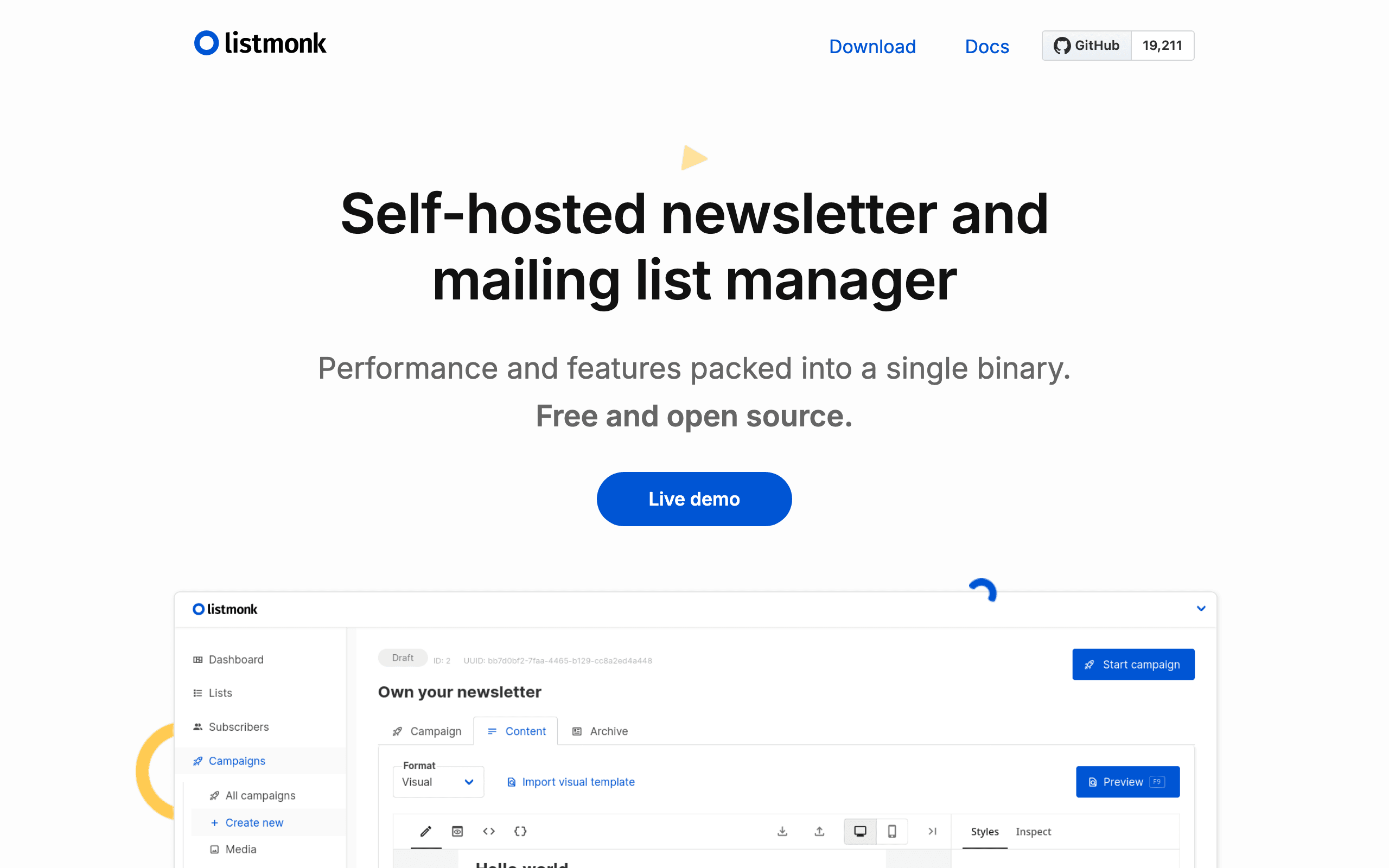
Listmonk is completely free. No subscription, no per-subscriber fees, no sending limits. You only pay for your server and SMTP service. Mailchimp starts at $130/month for 10k subscribers. For budget-conscious users, the savings are massive.

Technical Requirement
Mailchimp wins

Listmonk requires self-hosting via Docker. You need to manage servers, updates, backups, and security. Mailchimp is fully managed. Sign up and start sending. For non-technical users, Mailchimp is dramatically easier.

Feature Depth
Mailchimp wins

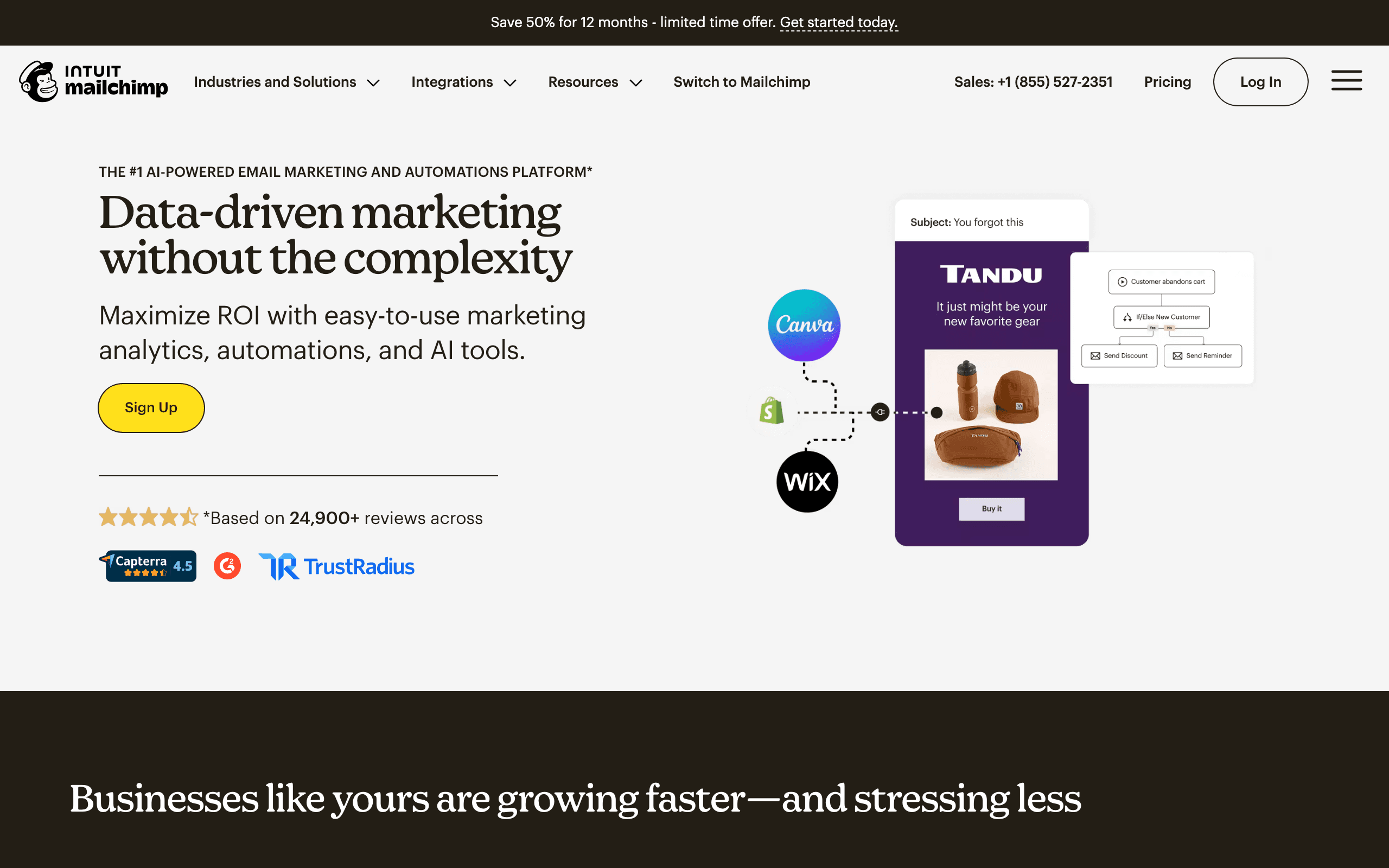
Mailchimp offers automation, landing pages, social media, e-commerce integrations, advanced segmentation, and more. Listmonk does one thing: send newsletters. No automation, no landing pages, no social. Different tools for different needs.

Performance
Listmonk wins

Listmonk is built in Go and is extremely fast. It can handle millions of subscribers on modest hardware. Mailchimp handles scale too, but Listmonk's efficiency is notable for high-volume senders.

Data Ownership
Listmonk wins

With Listmonk, your data stays on your server. Complete control and privacy. With Mailchimp, your data lives on their infrastructure. For privacy-conscious users or those with compliance requirements, Listmonk wins.

Pricing Comparison

At 10,000 subscribers

Listmonk
$0/month

100% free. Self-hosted. Only pay for server hosting and SMTP.

Visit Listmonk
Mailchimp
$130/month

Standard plan. Full marketing features and automation.

Visit Mailchimp
Sequenzy

The SaaS alternative

$49/month

10k contacts, unlimited sends, native Stripe integration.

Feature Comparison

Side-by-side feature breakdown

Feature
Listmonk
Mailchimp
Sequenzy
Cost & Hosting
Software Cost
Free forever
$130/month at 10k
$49/month at 10k
Hosting Model
Self-hosted only
Fully managed
Fully managed
Setup Effort
Requires Docker/server
Sign up and start
Sign up and start
Maintenance
You maintain it
They maintain it
They maintain it
Email Features
Campaign Sending
Yes, fast
Template Editor
Basic HTML
Drag-and-drop
Good
A/B Testing
Multi-SMTP
Analytics
Basic opens/clicks
Comprehensive
Good
Marketing Features
Landing Pages
Social Media
Automation
Advanced
Forms & Popups
Basic
Advanced
E-commerce
Deep integrations
Stripe only
Technical
API
REST API
Comprehensive
Good
Performance
Extremely fast (Go)
Standard
Fast
Data Ownership
100% yours
On their servers
On their servers
Support
Community only
Email, chat, phone
Founder support

Best For

When to choose each tool

Choose Listmonk if you...
  • Technical users comfortable with Docker
  • Budget-conscious high-volume senders
  • Privacy-focused organizations
  • Simple newsletter use cases
Choose Mailchimp if you...
  • Non-technical users needing ease
  • Businesses wanting full marketing suite
  • Teams needing automation and landing pages
  • E-commerce businesses
Choose Sequenzy if you...
  • SaaS companies with Stripe billing
  • Teams wanting managed hosting at lower cost
  • Companies needing payment-triggered emails
  • Founders who want both simplicity and power

When to Consider Sequenzy Instead

Managed Without Mailchimp Pricing

Sequenzy is fully managed like Mailchimp but costs $49/month at 10k subscribers vs $130/month. No self-hosting hassle, better pricing than Mailchimp.

Native Stripe Integration

Neither Listmonk nor Mailchimp has deep Stripe integration. Sequenzy offers native OAuth with subscription lifecycle events and payment triggers.

SaaS-Focused Features

Built for SaaS founders. Behavioral automation, subscription tracking, and transactional email in one platform.

Overview

Listmonk and Mailchimp represent opposite ends of the email marketing spectrum. Listmonk is free, open-source, self-hosted, and simple. Mailchimp is paid, managed, and feature-rich. One gives you complete control at zero software cost. The other handles everything but charges accordingly. See our Mailchimp comparison for context.

The Fundamental Tradeoff

Listmonk costs nothing but requires you to host and maintain it. Mailchimp costs money but handles all the infrastructure. This isn't just about money. It's about what you want to spend your time on. If you enjoy (or at least don't mind) running Docker containers, Listmonk is a great deal. If you want to focus purely on marketing, Mailchimp removes the technical burden.

Cost Comparison

At 10,000 subscribers, Listmonk costs $0 for the software. Add maybe $10/month for a VPS and $1-5/month for SMTP (Amazon SES pricing). Total: under $20/month. Mailchimp costs $130/month. That's a $1,200+ annual difference. For high-volume senders, the savings compound significantly.

Feature Gap

Mailchimp offers automation, landing pages, social media scheduling, e-commerce integrations, audience segmentation, and A/B testing. Listmonk sends newsletters. That's it. No automation workflows. No landing pages. No social integration. If you need those features, Listmonk simply doesn't have them.

Technical Requirements

Listmonk requires Docker and basic server administration. You need to handle updates, backups, security, and troubleshooting. Mailchimp requires only an email address to sign up. For non-technical users or teams without DevOps, Mailchimp is dramatically more accessible.

Performance and Scale

Listmonk is built in Go and is exceptionally fast. It can handle millions of subscribers on modest hardware. This makes it attractive for high-volume senders who want to minimize costs. Mailchimp handles scale through infrastructure, but you're paying for that infrastructure.

Data Ownership

With Listmonk, your subscriber data stays on your server. Complete ownership and control. With Mailchimp, data lives on their infrastructure. For privacy-focused organizations or those with compliance requirements, Listmonk's self-hosted model is appealing.

For SaaS Companies

Neither is ideal for SaaS. Listmonk lacks behavioral automation. Mailchimp lacks deep SaaS integrations. For subscription businesses needing Stripe integration and event-based automation, consider Sequenzy. Managed like Mailchimp, priced better, built for SaaS.

Making the Choice

Choose Listmonk if you can self-host, want to save money, and only need basic newsletter sending. Choose Mailchimp if you need comprehensive marketing features and want zero technical hassle. For SaaS companies wanting managed hosting with subscription-focused features, consider Sequenzy.

Frequently Asked Questions

Yes, the software is 100% free and open-source. You only pay for server hosting (often $5-20/month) and SMTP service (like Amazon SES at ~$0.10 per 1000 emails).

If you're comfortable with Docker and basic server administration, setup takes 30-60 minutes. If Docker is unfamiliar, expect a learning curve. There are community guides and one-click deployment options for some hosts.

No. Listmonk is focused on sending campaigns and newsletters. No drip sequences, no behavioral triggers, no automation workflows. For automation, you need a different tool.

Yes, very well. Built in Go, it's extremely efficient. Users report handling millions of subscribers on modest VPS hardware. Performance is a strength.

Any SMTP service works. Popular choices include Amazon SES, Postmark, SendGrid, Mailgun. You can even use multiple SMTP servers simultaneously for redundancy.

Depends on your needs. If you need automation, landing pages, social media integration, or want zero technical hassle, Mailchimp's cost is justified. If you just send newsletters and can self-host, Listmonk saves significant money.

No. Listmonk uses HTML templates. You can use external email builders and import HTML, but there's no visual drag-and-drop editor built in.

Deliverability depends on your SMTP provider and domain setup, not Listmonk itself. With proper SPF, DKIM, and DMARC using a reputable SMTP service, deliverability is comparable.

Export your subscribers from Mailchimp as CSV. Set up Listmonk on your server with Docker. Import subscribers via Listmonk's admin. Set up SMTP (Amazon SES is popular). Recreate your templates in HTML. Note that you'll lose automation workflows since Listmonk doesn't support them.

Export subscribers from Listmonk. Import into Mailchimp. Recreate templates using Mailchimp's builder. Take advantage of Mailchimp's automation and landing pages. Expect higher costs but less maintenance.

Not sure which to pick?

If you're a SaaS founder who needs Stripe integration and unified email, try Sequenzy free. No credit card required.

Related Comparisons

Sequenzy - Complete Pricing Guide

Pricing Model

Sequenzy uses subscriber-based pricing. You only pay for subscribers active in sequences (automations). Inactive subscribers are free to store.

All Pricing Tiers

  • 0-100 subscribers: Free (Free annually) - 2k emails/month
  • 101-1,000 subscribers: $19/month ($205/year annually) - 15k emails/month
  • 1,001-5,000 subscribers: $29/month ($313/year annually) - 60k emails/month
  • 5,001-10,000 subscribers: $49/month ($529/year annually) - 120k emails/month
  • 10,001-25,000 subscribers: $99/month ($1069/year annually) - 300k emails/month
  • 25,001-50,000 subscribers: $199/month ($2149/year annually) - 600k emails/month
  • 50,001-100,000 subscribers: $349/month ($3769/year annually) - 1.2M emails/month
  • 100,000+ subscribers: Custom pricing (Custom annually) - Unlimited emails/month

Yearly billing: All plans offer a 10% discount when billed annually.

Free Plan Features (0-100 subscribers)

  • Visual automation builder
  • Transactional email API
  • Reply tracking & team inbox
  • Goal tracking & revenue attribution
  • Dynamic segments
  • Payment integrations
  • Full REST API access
  • Custom sending domain

Paid Plan Features (1,000 - 100,000 subscribers)

  • Visual automation builder
  • Transactional email API
  • Reply tracking & team inbox
  • Goal tracking & revenue attribution
  • Dynamic segments
  • Payment integrations (Stripe, Paddle, Lemon Squeezy)
  • Full REST API access
  • Custom sending domain

Enterprise Plan Features (100,000+ subscribers)

  • Visual automation builder
  • Transactional email API
  • Reply tracking & team inbox
  • Goal tracking & revenue attribution
  • Dynamic segments
  • Payment integrations
  • Full REST API access
  • Custom sending domain

Important Pricing Notes

  • You only pay for subscribers who are active in automations/sequences
  • Storing inactive subscribers is free
  • No hidden fees - all features included in the price
  • No credit card required for free tier

Contact

  • Pricing Page: https://sequenzy.com/pricing
  • Sales: hello@sequenzy.com