Overview
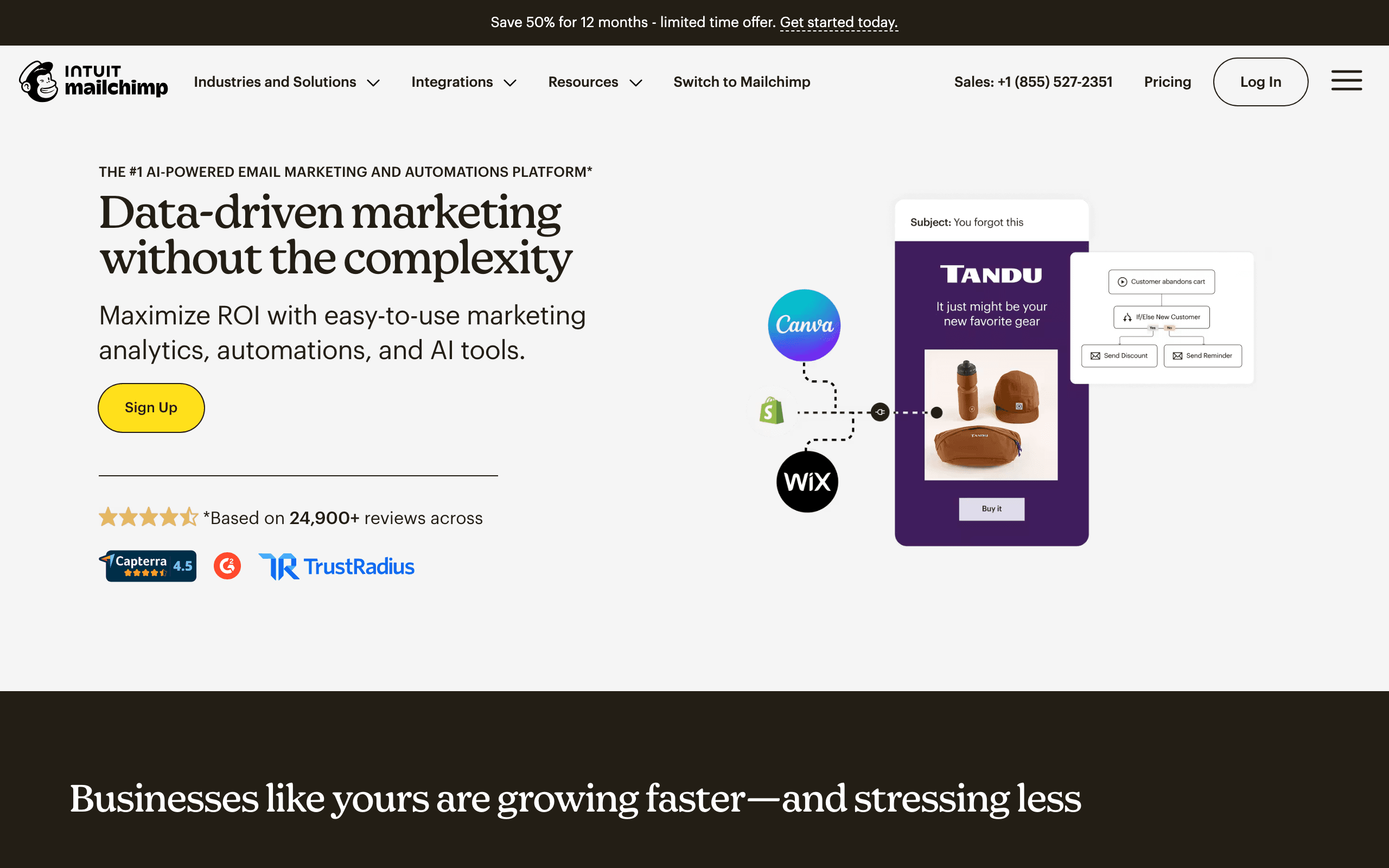
Mailchimp and Omnisend target different markets. Mailchimp is a general marketing platform serving creators, SMBs, and various industries. Omnisend is an e-commerce specialist built for Shopify, WooCommerce, and online stores with deep product catalog integration.
Different Markets
Mailchimp asks "how do I market my business?" Omnisend asks "how do I sell more products online?" If you're running an e-commerce store, Omnisend speaks your language. If you're doing general marketing, Mailchimp is more versatile.
E-commerce Depth
This is Omnisend's strength. Abandoned cart automation with multi-channel recovery (email + SMS + push). Product recommendations based on browsing behavior. Deep Shopify and WooCommerce integrations that sync product catalogs automatically. Mailchimp has e-commerce features, but they're not as specialized.
Multi-Channel Marketing
Omnisend unifies email, SMS, and web push in single workflows. Send an abandoned cart email, follow up with SMS if unopened, trigger push notification later. Mailchimp's SMS requires separate integrations - the experience isn't as unified.
Platform Breadth
Mailchimp is more than email - social media posting, advertising integrations, website builder, content management. Omnisend focuses narrowly on e-commerce communication. If you need marketing beyond email and SMS, Mailchimp has more tools.
Pricing Comparison
At 10k contacts: Mailchimp is ~$130/month (Standard), Omnisend is ~$115/month (Standard). Similar pricing, but Omnisend includes more e-commerce features at base level. SMS costs extra on Omnisend ($0.015/message to US). Both are more expensive than Sequenzy's $49/month.
For SaaS Companies
Neither platform is ideal for SaaS. Mailchimp is too general. Omnisend is e-commerce-focused. If you're a SaaS company needing behavioral automation and Stripe integration, consider Sequenzy instead.
Making the Choice
Choose Omnisend for e-commerce stores needing deep Shopify/WooCommerce integration and multi-channel automation. Choose Mailchimp for general businesses needing broader marketing tools. For SaaS companies, both platforms lack the subscription-focused features that tools like Sequenzy provide.
Abandoned Cart Recovery Compared
Abandoned cart recovery is where Omnisend truly outshines Mailchimp. Omnisend offers multi-channel recovery workflows that combine email, SMS, and web push notifications in a single automation. You can send an email 30 minutes after abandonment, follow up with SMS two hours later, and trigger a push notification the next day.
Mailchimp's abandoned cart automation is email-only and uses simpler trigger logic. For stores where cart abandonment represents significant lost revenue, Omnisend's multi-channel approach typically recovers more sales. The product recommendation blocks in Omnisend's recovery emails also show related items, increasing average order value.
SMS Marketing Integration
Omnisend integrates SMS natively within the same workflow builder as email. This means you can create automations that switch between channels based on customer behavior — send an email first, then SMS if the email goes unopened. The unified reporting shows how each channel contributes to conversions.
Mailchimp does not have native SMS. You need third-party integrations like Twilio or other SMS providers, which means separate dashboards, separate billing, and no unified analytics. For e-commerce businesses where SMS drives significant revenue, this gap is a real disadvantage for Mailchimp.
Product Catalog Sync
Both platforms sync with Shopify and WooCommerce, but the depth differs. Omnisend automatically imports your entire product catalog and keeps it updated in real time. Product recommendation blocks in emails pull from your actual inventory with current prices, images, and availability.
Mailchimp's product sync works but the recommendation engine is less sophisticated. Omnisend uses browsing behavior and purchase history to suggest products more relevant to each customer. For stores with large catalogs, this personalization can meaningfully improve click-through rates.
Revenue Attribution and ROI
Both platforms track revenue generated from email campaigns, but they approach attribution differently. Omnisend attributes revenue across all channels in its unified dashboard, showing how email, SMS, and push notifications each contribute to sales. This cross-channel view helps optimize your marketing spend.
Mailchimp provides revenue tracking for email campaigns through its e-commerce integrations. The reporting is solid for email-only analysis but lacks the multi-channel perspective. For stores investing in SMS alongside email, Omnisend's unified attribution provides a clearer picture of marketing ROI. For SaaS businesses tracking subscription revenue instead, use our email deliverability guide to ensure your messages reach inboxes.