Overview
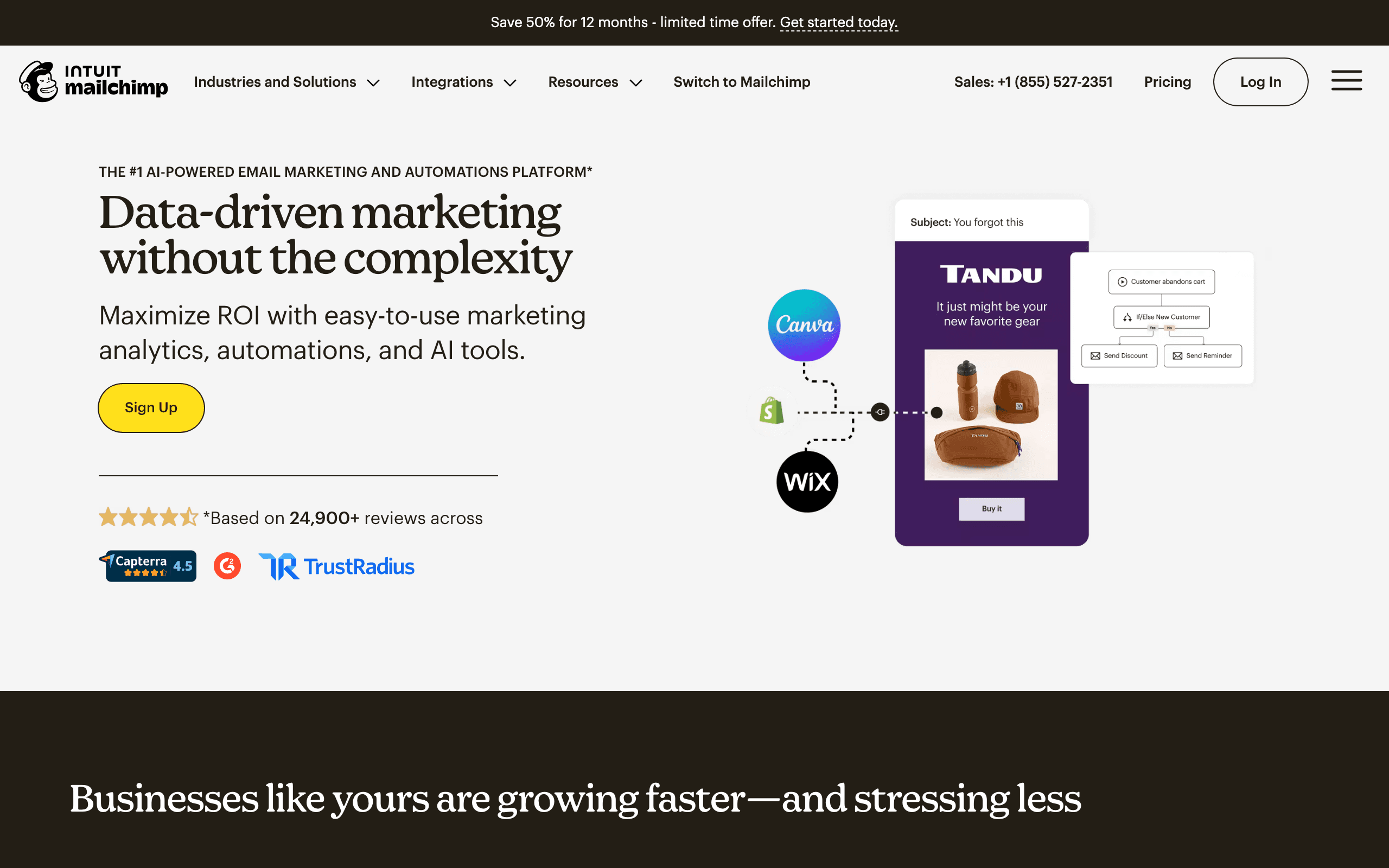
tinyEmail and Mailchimp serve different markets. tinyEmail specializes in e-commerce with AI tools and Shopify integration. Mailchimp is the all-purpose email marketing giant with broad capabilities and massive integration ecosystem.
The core question is whether you need e-commerce specialization or broad versatility. See our platform comparison guide for more options.
Focus vs Versatility
tinyEmail is built specifically for e-commerce. Their templates, AI, and features are optimized for online stores. Mailchimp serves everyone from bloggers to enterprises, which means more features but less e-commerce focus.
For Shopify stores, tinyEmail's specialized approach and free plan make it compelling. For businesses with diverse needs, Mailchimp's versatility is valuable.
Integration Ecosystem
Mailchimp's 300+ integrations cover almost every business tool. CRMs, social media, e-commerce platforms, accounting software - Mailchimp connects to most things.
tinyEmail has fewer integrations but focuses on e-commerce platforms and CRMs. If you need connections to obscure tools, Mailchimp is safer.
Beyond Email
Mailchimp offers landing pages, websites, social posting, and ads. It tries to be an all-in-one marketing platform. tinyEmail focuses primarily on email marketing.
If you want everything in one place, Mailchimp is more complete. If you just need excellent e-commerce email, tinyEmail's focus is an advantage.
Pricing Comparison
tinyEmail at $65/month for 15,000 emails is cheaper than Mailchimp at $100/month for 10,000 contacts. tinyEmail also offers free plans for Shopify stores, while Mailchimp's free tier is limited to 1,000 emails/month.
For e-commerce businesses, tinyEmail typically offers better value. Compare with Sequenzy pricing for SaaS alternatives.
When Each Platform Wins
Choose tinyEmail when: You run an e-commerce store, want AI content assistance, prefer budget-friendly pricing, or need a free Shopify starting point. Explore our email marketing alternatives.
Choose Mailchimp when: You need broad integrations, want landing pages and social tools, have diverse marketing needs, or work with clients across industries.
For SaaS Companies
If you run a software business rather than e-commerce or general marketing, neither platform is ideal. SaaS companies should consider Sequenzy, which offers Stripe integration and subscription-focused automation.
Integration Ecosystem Gap
Mailchimp integrates with nearly every business tool available. tinyEmail has limited integrations focused on Shopify. For businesses with complex multi-tool workflows, Mailchimp's integration breadth is a genuine operational advantage that tinyEmail cannot match.
AI Content: tinyEmail's Edge
tinyEmail's AI subject line and content generation is an advantage Mailchimp does not have. For small teams that struggle with email copywriting, AI assistance saves time and often improves engagement metrics. This feature alone can justify tinyEmail's price for content-challenged marketers.
Analytics and Optimization
Mailchimp provides deeper analytics including audience insights, engagement patterns, and comparative reporting. tinyEmail's analytics cover basics. For data-driven marketers who optimize based on performance data, Mailchimp's reporting depth enables better decision-making.