
Overview
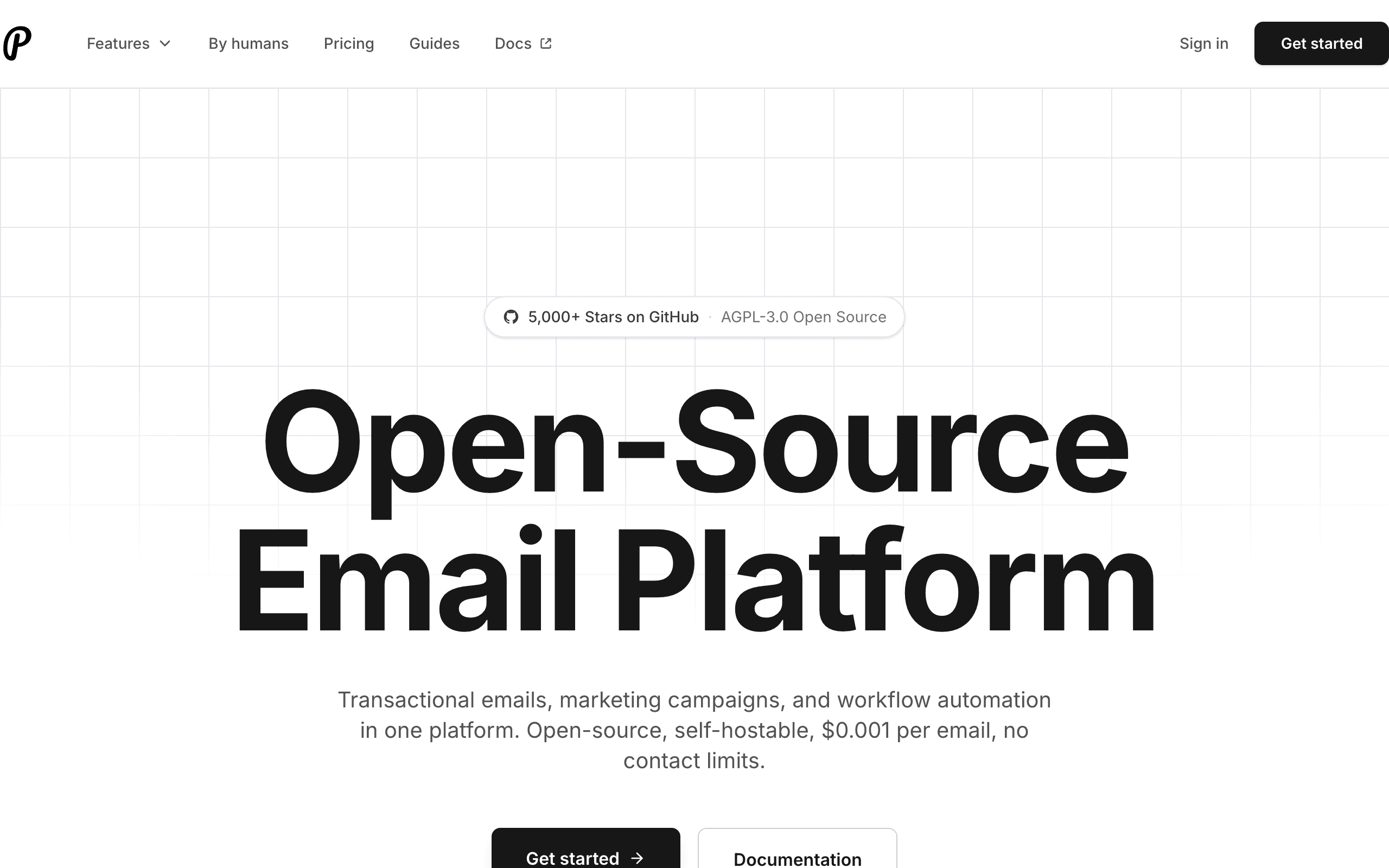
Customer.io and Plunk are vastly different tools. Customer.io is an enterprise-grade behavioral messaging platform used by growth-stage companies for multi-channel customer engagement. Plunk is an open-source email platform built on AWS SES for simple, affordable email delivery. See our Customer.io comparison and Plunk comparison.
The Feature Gap
Customer.io offers advanced behavioral triggers, multi-channel messaging (email, push, SMS, in-app), deep segmentation, and complex workflow builders. Plunk offers simple email sending with basic automation. This isn't a close competition on features - Customer.io is far more powerful.
The Price Gap
But Plunk is far more affordable. Customer.io starts at $100/month and scales quickly. Plunk is $0.001/email, or free if self-hosted (just AWS SES costs). At 10,000 contacts, Customer.io might be $150+/month vs Plunk at $10/month. For startups watching every dollar, this matters.
Open Source Advantage
Plunk is fully open-source and self-hostable. You can run it on your own infrastructure, keeping email data under your control. Customer.io is proprietary SaaS. For companies with strict data requirements or wanting to avoid vendor lock-in, Plunk's open-source nature is valuable.
Different Stages, Different Needs
Customer.io makes sense when you have complex behavioral messaging needs, multi-channel requirements, and the budget to support it. Plunk makes sense when you need simple, affordable email and want open-source flexibility. Most startups start with something simple and graduate to more complex tools later.
The Middle Ground
Sequenzy offers a middle path: more features than Plunk (proper automation, segmentation) without Customer.io's complexity or enterprise pricing. With native Stripe integration for SaaS, it's built for the stage between Plunk simplicity and Customer.io complexity.
Making the Choice
Choose Customer.io for advanced behavioral messaging at growth-stage companies. Choose Plunk for simple, affordable, open-source email. For SaaS needing marketing automation with Stripe integration at reasonable pricing, consider Sequenzy.
The Stage-Appropriate Tool Problem
Startups evolve through email needs in predictable stages. Stage one: send basic transactional emails (password resets, receipts). Stage two: add simple marketing emails (welcome sequences, announcements). Stage three: build behavioral automation (event-triggered campaigns, lifecycle sequences). Plunk handles stage one beautifully. Customer.io handles stage three beautifully. The gap between them is where most growing SaaS companies live.
Plunk's simplicity is its greatest strength and its ceiling. When you need to send an email after a user signs up or completes a purchase, Plunk delivers reliably at minimal cost. But when you need to send different emails based on which features a user adopted during their first week, Plunk's basic workflows cannot express that logic. You need event-driven segmentation and conditional branching.
Customer.io handles that complexity but at a steep entry price. The $100/month minimum with no free tier means you're paying enterprise pricing before you've validated your email strategy. For a bootstrapped startup sending 5,000 emails per month, that feels disproportionate — especially when Plunk handles the same volume for $5.
The Self-Hosting Tradeoff
Plunk's open-source nature appeals to teams who value data sovereignty and cost control. Self-hosting means your subscriber data never leaves your infrastructure, and you pay only AWS SES costs — roughly $0.10 per 1,000 emails. For companies in regulated industries or with strict data residency requirements, this is a genuine advantage over any hosted platform.
But self-hosting has hidden costs. You maintain the infrastructure, handle updates, manage backups, and troubleshoot issues without dedicated support. As email sending scales, monitoring deliverability, managing bounce rates, and handling reputation becomes a full-time concern. Customer.io abstracts all of that — their team manages deliverability, infrastructure, and platform reliability so yours doesn't have to.
The honest assessment is that self-hosting Plunk works well at small scale with technical founders who enjoy ops work. At the point where email infrastructure maintenance competes with product development time, a managed platform becomes the practical choice.
Bridging the Gap with Purpose-Built SaaS Tools
The 15x price difference between Plunk ($10/month at 10k) and Customer.io ($150+/month at 10k) reflects a real market gap. Sequenzy occupies the space between these extremes: proper behavioral automation and segmentation at $49/month — not as simple as Plunk, not as complex as Customer.io, but right-sized for most SaaS companies.
The key differentiator is native Stripe integration. Neither Plunk nor Customer.io connects directly to Stripe via OAuth. For subscription SaaS, billing events are the most important automation triggers. Trial expirations, payment failures, plan changes — these drive the emails that directly impact revenue. Having those triggers built in eliminates the custom engineering that both Plunk and Customer.io require for billing-aware automation.
User Behavior Tracking
SaaS email marketing depends on understanding how users interact with your product. Customer.io and Plunk track user events differently. The depth of behavioral data determines how targeted your email automation can be.
Event tracking, feature usage monitoring, and activity scoring help you identify which users need onboarding help, which are ready to upgrade, and which are at risk of churning. Compare how each platform ingests and acts on this behavioral data.
Trial and Onboarding Optimization
Converting trial users to paid customers is critical for SaaS growth. Customer.io and Plunk handle onboarding email sequences differently. The ability to trigger emails based on specific product milestones creates more relevant communication.
Effective onboarding emails guide users to their activation moment. Compare how each platform lets you define milestones, segment by trial progress, and personalize onboarding content based on user behavior and plan type. For deeper billing integration, see Sequenzy's Stripe features.
Company-Level vs User-Level Communication
SaaS products often have multiple users within a single account. Customer.io and Plunk handle company-level targeting differently. Being able to group users by organization and trigger emails based on account-level events is essential for B2B SaaS.
Consider how each platform manages company attributes, aggregate usage data, and role-based communication. The ability to send different onboarding emails to admins vs team members, or trigger expansion revenue emails based on company-level metrics, matters for B2B growth.