Updated 2026-01-11
HubSpot
Mailchimp

HubSpot vs Mailchimp

Enterprise CRM vs email marketing icon

22
Features Compared
4
Key Differences
4
User Reviews
13
FAQs Answered
TL;DR

HubSpot is a complete CRM platform with marketing, sales, and service hubs. Mailchimp is a focused email marketing tool that's evolved into a broader marketing platform. Choose HubSpot for full CRM needs or Mailchimp for email-first marketing.

Platform Overview

See how each platform looks

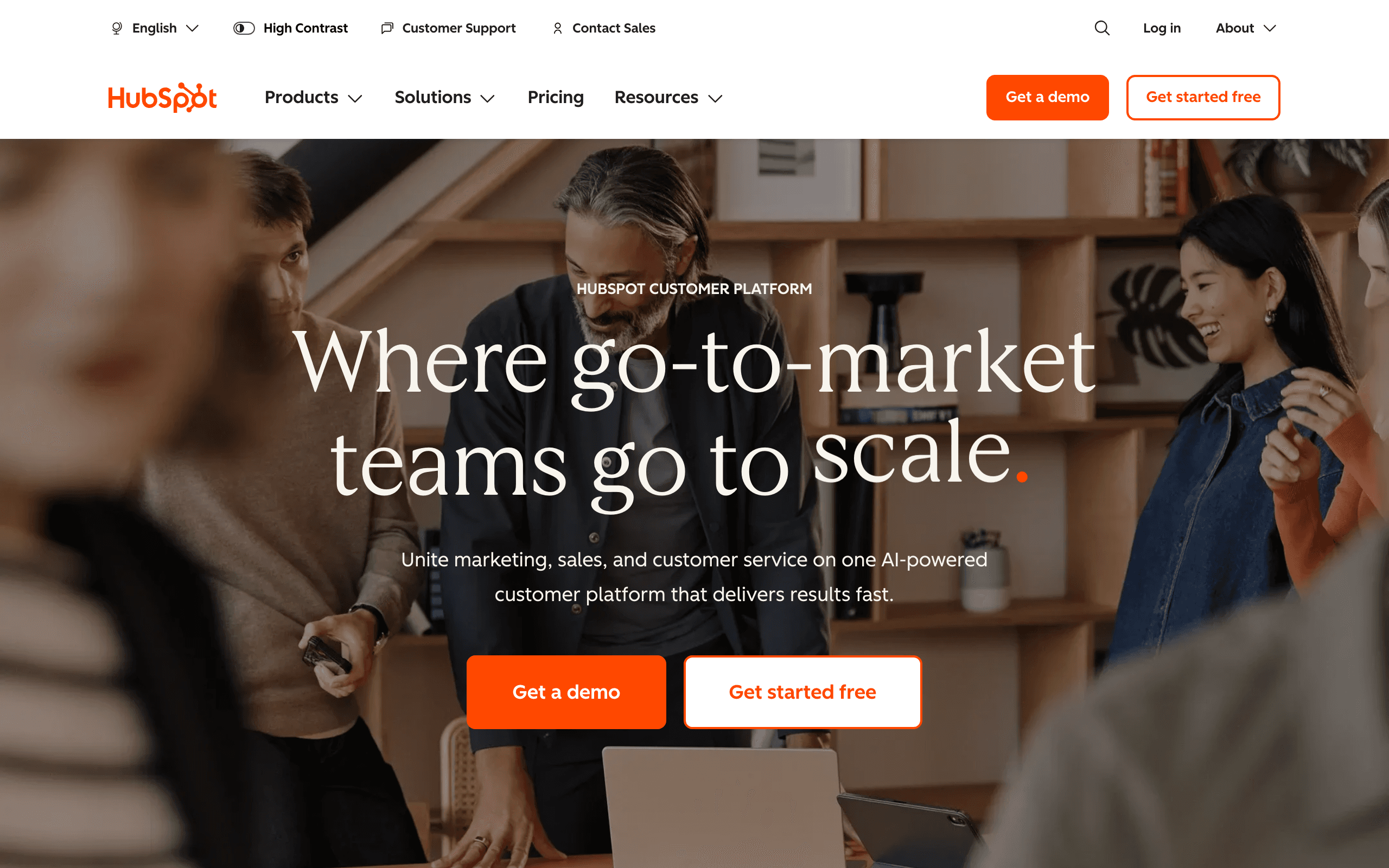
HubSpot

HubSpot dashboard screenshot

Enterprise all-in-one CRM, marketing, sales, and service platform.

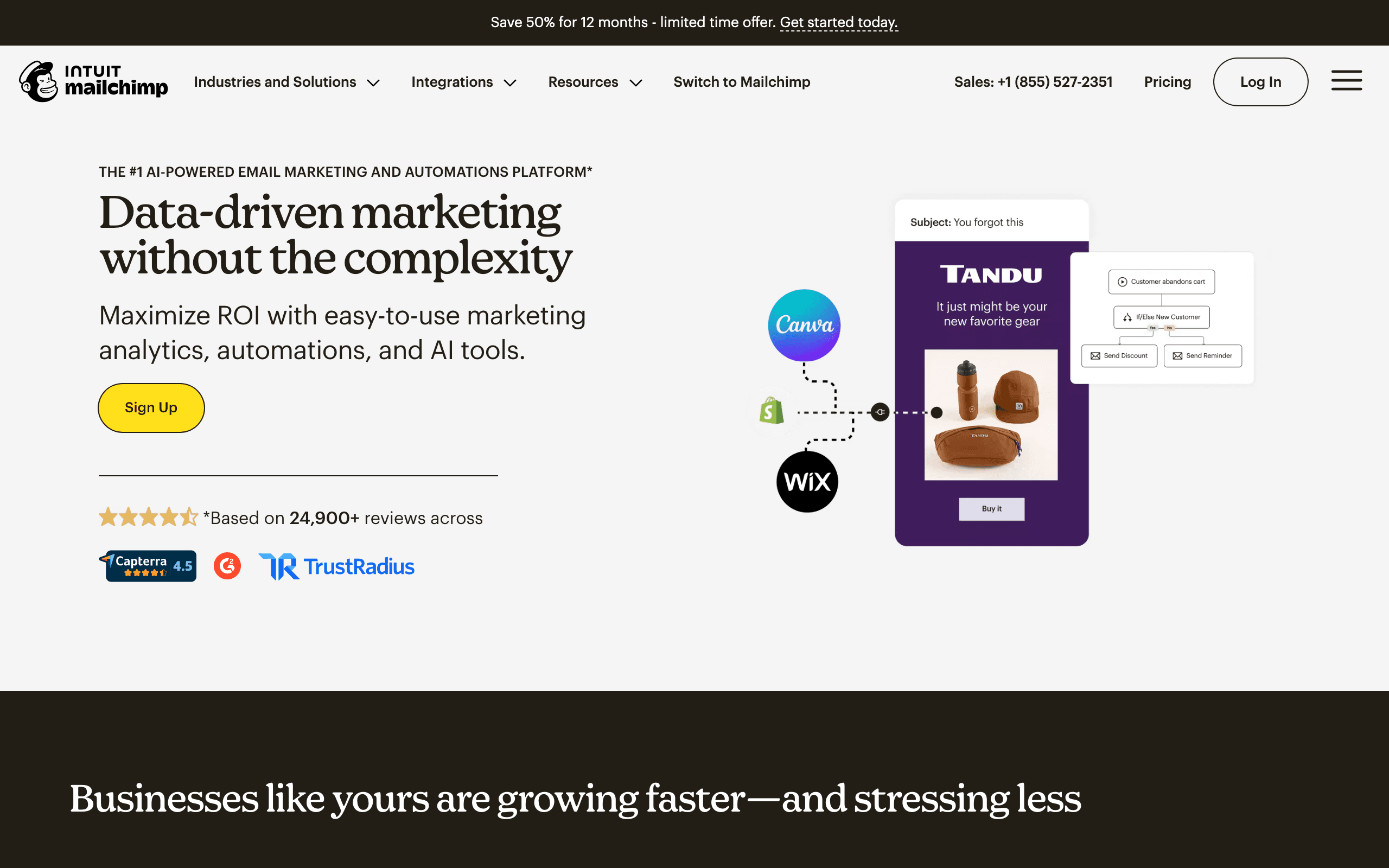
Mailchimp

Mailchimp dashboard screenshot

Popular all-in-one marketing platform with email, automation, and CRM features.

Key Differences

The main things that set these tools apart

Platform Philosophy
Tie

HubSpot is a CRM platform that includes email marketing. Mailchimp is an email marketing platform that added CRM features. If you need a complete business system, HubSpot. If you need great email marketing, Mailchimp.

CRM Depth
HubSpot wins

HubSpot's CRM is enterprise-grade with sales pipelines, service tickets, and marketing automation all connected. Mailchimp's contact management is basic - it's really an email list, not a CRM.

Email Marketing Focus
Mailchimp wins

Mailchimp has spent 20+ years perfecting email. Templates, deliverability, and the email editor are polished. HubSpot's email is good but not the platform's core strength.

Total Cost of Ownership
Mailchimp wins

HubSpot Professional with 10k contacts costs $1,000+/month. Mailchimp Standard is $135/month. The 7x price difference is justified only if you use HubSpot's CRM, sales, and service features.

Pricing Comparison

At 10,000 subscribers

HubSpot
$1,000+/month

Marketing Hub Professional with 10k contacts, plus onboarding fees

Visit HubSpot
Mailchimp
$135/month

Standard plan, up to 100,000 emails/month

Visit Mailchimp
Best for SaaS
Sequenzy
$49/month

Subscriber-based, Stripe integration, SaaS-focused

Start Free Trial

Feature Comparison

22 features compared side-by-side

Feature
HubSpot
Mailchimp
Sequenzy
CRM Capabilities
Contact management
Full CRM
Basic
Deal pipeline
Advanced
Sales automation
Built-in
Service tickets
Service Hub
Meeting scheduling
Built-in
Via Calendly
Email Marketing
Email campaigns
Good
Excellent
Email templates
Good
Extensive library
A/B testing
Send time optimization
Professional+
Standard+
Email editor
Drag-and-drop
Drag-and-drop
Drag-and-drop
Marketing Automation
Automation workflows
Advanced
Good
Behavior-based
Lead scoring
Built-in
Standard+
Behavioral triggers
Comprehensive
Good
Multi-channel automation
Email, ads, social
Email, SMS
Email
Content & Website
Landing pages
Built-in
Built-in
Website builder
CMS Hub
Basic sites
Blog hosting
Full CMS
SEO tools
Built-in
Limited
Pricing Model
Pricing basis
Marketing contacts
Contacts + sends
Subscribers
Free plan
CRM only
500 contacts
14-day trial
Entry price
$20/mo Starter
$13/mo Essentials
$49/mo
Scalability cost
Very expensive
Moderate
Affordable

Pros & Cons

Honest strengths and weaknesses of each platform

HubSpot

Pros
  • Complete CRM with sales, marketing, and service hubs
  • Free CRM tier with basic email marketing
  • Advanced pipeline and contact management
  • Sophisticated reporting across entire funnel
  • Massive integration ecosystem and marketplace
  • Enterprise-grade scalability and security
Cons
  • Marketing Hub Professional costs $1,000+/month
  • Mandatory onboarding fees at higher tiers
  • Steep learning curve for full platform
  • Overkill for businesses focused on email only
  • Complex pricing across hubs and tiers
  • Contact pricing scales expensively

Mailchimp

Pros
  • Much more affordable at $135/month vs $1,000+/month
  • Largest brand recognition in email marketing
  • More intuitive for email campaign creation
  • Comprehensive e-commerce integrations
  • Social media posting and ad management
  • Simpler learning curve for marketing teams
Cons
  • No real CRM or sales pipeline management
  • Limited compared to HubSpot for enterprise needs
  • Counts unsubscribed contacts toward billing
  • Frequent pricing changes frustrate users
  • Less sophisticated reporting and analytics
  • Cannot replace a dedicated CRM platform

What Users Say

Real reviews from HubSpot and Mailchimp users

HubSpot Reviews

G2

HubSpot connected our marketing and sales teams for the first time. Marketers see pipeline impact, sales sees engagement history. This visibility alone justifies the investment.

Jennifer M.2025-10-12
Capterra

Powerful platform but we're paying $1,200/month for features we barely use. For our 15-person company, Mailchimp would handle our email needs at a tenth of the cost.

Chris P.2025-11-22

Mailchimp Reviews

G2

Mailchimp handles our email marketing perfectly at $135/month. We considered HubSpot but couldn't justify 8x the cost for features our small team wouldn't use.

Amy L.2025-09-15
Trustpilot

Mailchimp is good for email but we outgrew it. When we needed CRM and sales tracking, we had to add another tool anyway. Should have started with HubSpot's free CRM.

Kevin D.2025-12-20

Best For

When to choose each tool

Choose HubSpot if you...
  • Businesses needing full CRM platform
  • Teams with sales and marketing alignment
  • Companies wanting service ticket management
  • Inbound marketing methodology followers
  • Enterprises with budget for complete solution
Choose Mailchimp if you...
  • Email-first marketing strategies
  • Small to medium businesses
  • Budget-conscious teams
  • E-commerce with Shopify/WooCommerce
  • Teams wanting simplicity over features

When to Consider Sequenzy Instead

Purpose-Built for SaaS

HubSpot is a general CRM. Mailchimp is for email marketing. Neither understands software subscriptions. Sequenzy integrates with Stripe for subscription-aware automation - trial expiry, plan changes, and churn prevention.

Dramatically Lower Cost

At $49/month for 120,000 emails, unlimited subscribers, Sequenzy costs a fraction of HubSpot and less than half of Mailchimp. For SaaS companies that don't need a full CRM or e-commerce features, Sequenzy delivers more relevant value.

Transactional + Marketing Unified

HubSpot's transactional email requires a separate add-on. Mailchimp uses Mandrill. Sequenzy combines transactional and marketing email natively for software products.

Overview

HubSpot and Mailchimp are both marketing giants, but they're fundamentally different products. HubSpot is a complete CRM platform with marketing, sales, and service hubs. Mailchimp is the world's most recognized email marketing tool. See our HubSpot comparison and Mailchimp comparison for detailed breakdowns.

The question isn't which is "better" - it's which type of platform you need.

The Core Difference

HubSpot built a CRM platform that happens to include email marketing. You get contact management, deal pipelines, service tickets, and marketing automation all in one system. The email features exist to serve the broader customer relationship strategy.

Mailchimp built email marketing into an institution. For 20+ years, they've perfected email campaigns, templates, and deliverability. They've added more features over time, but email remains the core.

Pricing: $1,000+ vs $135 at 10K

The price difference is stark. HubSpot Marketing Hub Professional with 10k contacts costs $1,000+/month (including required onboarding). Mailchimp Standard is $135/month.

That 7x difference buys you HubSpot's full CRM platform - sales pipelines, service tools, and advanced automation. If you need those features, HubSpot is competitive with buying separate tools. If you just need email marketing, Mailchimp is obviously better value.

CRM: HubSpot Wins Easily

HubSpot's CRM is enterprise-grade. Contact records connect to deals, tickets, and every interaction. Sales teams can track pipelines. Service teams can manage support. Marketing can see the full customer journey.

Mailchimp's "CRM" is really a contact database. It works for email marketing but doesn't support sales processes or service management. If CRM matters, there's no comparison.

Email Marketing: Mailchimp's Specialty

For pure email marketing, Mailchimp is better. The template library is extensive. The email editor is refined. Deliverability is excellent. The analytics are focused on what email marketers need.

HubSpot's email marketing is good but not exceptional. It's designed to work within the CRM context rather than stand alone.

When Each Platform Shines

Choose HubSpot when: You need a complete CRM platform. Your sales and marketing teams need to share data. You want service ticket management. You have budget for the full suite.

Choose Mailchimp when: Email marketing is your primary need. You're budget-conscious. You want simplicity over features. You need e-commerce integrations.

For SaaS Companies

Both platforms serve SaaS companies but neither is built specifically for software. HubSpot is a general CRM, Mailchimp is email marketing.

For SaaS-specific features like Stripe integration and subscription-aware automation, consider Sequenzy. At $49/month for 120,000 emails, unlimited subscribers, it costs far less than either while offering transactional email for software products.

The Platform Category Difference

HubSpot is a CRM platform that includes marketing. Mailchimp is a marketing platform that added basic CRM. This foundational difference determines everything. HubSpot organizes your entire customer lifecycle from first touch through purchase through support. Mailchimp organizes your email campaigns and audience engagement. For businesses where email is the primary marketing channel and sales happens separately, Mailchimp is sufficient. For businesses where marketing and sales must work together through a shared customer record, HubSpot provides infrastructure that Mailchimp cannot replicate.

The Free CRM Strategy

HubSpot offers a free CRM tier that includes basic email marketing, contact management, and deal tracking. This creates a compelling entry point — start free, add marketing capabilities as you grow. Mailchimp also has a free tier but it is email-focused with limited contacts. HubSpot's free CRM strategy is designed to get organizations started with CRM habits early, making the eventual upgrade to paid marketing tools a natural progression. For startups, starting with HubSpot's free CRM and growing into paid tiers can be more cost-effective long-term than starting with Mailchimp and eventually needing to migrate to a CRM platform.

The Graduation Point

Many businesses start with Mailchimp for email marketing and eventually "graduate" to HubSpot when they need CRM, sales pipeline management, and marketing-sales alignment. This graduation typically happens when the business reaches 10-50 employees and the sales process becomes complex enough to require CRM. If your business trajectory points toward needing CRM within 1-2 years, starting with HubSpot's free tier may save the pain and cost of migrating later.

Frequently Asked Questions

13 questions answered about HubSpot vs Mailchimp

Testimonials

Sequenzy Testimonials

Not sure which to pick?

If you're a SaaS founder who needs Stripe integration and unified email, try Sequenzy free. No credit card required.

Related Comparisons

Sequenzy - Complete Pricing Guide

Pricing Model

Sequenzy uses email-volume-based pricing. You only pay for emails you send. Unlimited contacts on all plans — storing subscribers is always free.

All Pricing Tiers

  • 2.5k emails/month: Free (Free annually)
  • 15k emails/month: $19/month ($205/year annually)
  • 60k emails/month: $29/month ($313/year annually)
  • 120k emails/month: $49/month ($529/year annually)
  • 300k emails/month: $99/month ($1069/year annually)
  • 600k emails/month: $199/month ($2149/year annually)
  • 1.2M emails/month: $349/month ($3769/year annually)
  • Unlimited emails/month: Custom pricing (Custom annually)

Yearly billing: All plans offer a 10% discount when billed annually.

Free Plan Features (2,500 emails/month)

  • Visual automation builder
  • Transactional email API
  • Reply tracking & team inbox
  • Goal tracking & revenue attribution
  • Dynamic segments
  • Payment integrations
  • Full REST API access
  • Custom sending domain

Paid Plan Features (15k - 1.2M emails/month)

  • Visual automation builder
  • Transactional email API
  • Reply tracking & team inbox
  • Goal tracking & revenue attribution
  • Dynamic segments
  • Payment integrations (Stripe, Paddle, Lemon Squeezy)
  • Full REST API access
  • Custom sending domain

Enterprise Plan Features (Unlimited emails)

  • Visual automation builder
  • Transactional email API
  • Reply tracking & team inbox
  • Goal tracking & revenue attribution
  • Dynamic segments
  • Payment integrations
  • Full REST API access
  • Custom sending domain

Important Pricing Notes

  • You only pay for emails you send — unlimited contacts on all plans
  • No hidden fees - all features included in the price
  • No credit card required for free tier

Contact

  • Pricing Page: https://sequenzy.com/pricing
  • Sales: hello@sequenzy.com