Updated 2026-03-15

Best Email Marketing Tools for Enterprises

Manage email at scale with platforms built for multi-brand, multi-department, compliance-ready organizations.

Enterprise email marketing is infrastructure, not a campaign tool. When multiple departments, brands, and regions all communicate through the same channel, your platform needs to handle governance, compliance, and scale without breaking. Legacy enterprise platforms cost six figures annually. Modern alternatives deliver similar capabilities at a fraction of the cost. I evaluated 13 platforms for organizations with 200+ employees and 100,000+ subscribers.

TL;DR

For most enterprises, Sequenzy offers the best value with pay-per-email pricing that saves dramatically when you have large contact databases but email segments selectively. HubSpot is the safe choice if you need a full CRM ecosystem and have the budget. If you are already deep in the Salesforce ecosystem, Marketing Cloud integrates most naturally with your existing infrastructure.

Why Enterprises Need Email Marketing

Revenue at Scale

At enterprise volumes, even small improvements in email conversion translate to millions in additional revenue. Sophisticated segmentation and automation drive outsized returns.

Customer Lifecycle Management

From prospect to advocate, enterprise customers go through complex journeys spanning months or years. Email orchestrates these journeys across every touchpoint.

Cross-Department Coordination

Marketing, sales, customer success, product, and support all need email. A unified platform prevents subscriber fatigue and conflicting messages.

Compliance and Brand Consistency

GDPR, CAN-SPAM, CCPA, and industry regulations demand audit trails, consent management, and access controls that only proper enterprise tools provide.

Enterprises Email Marketing Benchmarks

Know these numbers before you start. They'll help you set realistic goals and pick the right tool.

21-25%
Average Open Rate

Enterprise emails typically see open rates between 21-25%, lower than SMB due to list size and varied engagement levels. Segmented sends within enterprises often hit 30%+.

2.5-3.5%
Average Click Rate

Click rates for enterprise campaigns average 2.5-3.5%. Internal communications and account-specific emails perform higher at 5-8%.

Tuesday-Thursday, 9-11am recipient time zone
Best Send Time

Enterprise B2B emails perform best mid-week during business hours. Multi-region enterprises should use send-time optimization to deliver based on each recipient's time zone.

97%+
Deliverability Rate

Enterprise organizations should target 97%+ deliverability with dedicated IPs, authenticated domains, and aggressive list hygiene. Below 95% indicates systemic issues.

Important Tips Before You Choose

Lessons from enterpriseswho've been doing this for years. Save yourself the trial and error.

Negotiate Annual Contracts with Volume Discounts

Enterprise email platforms expect negotiation. Ask for annual prepay discounts, volume tiers, and bundled support. Most legacy vendors will offer 15-30% off list pricing for a multi-year commitment.

Centralize Suppression Lists Across Departments

The number one enterprise email mistake is over-emailing because departments do not share suppression data. Implement a shared suppression list that all teams pull from before every send to prevent subscriber fatigue.

Build a Shared Subscriber Profile Layer

Instead of each department maintaining its own data, create a unified subscriber profile that aggregates interactions across marketing, sales, product, and support. This enables frequency capping and smarter segmentation across the entire organization.

Implement Approval Workflows Before Going Live

Enterprise email governance requires approval chains. Set up template approval, content review, and send authorization workflows from day one. Retrofitting governance after departments have been sending freely is much harder.

Run IP Warm-Up in Phases by Department

When migrating to a new platform, do not send all enterprise volume from new IPs on day one. Warm up department by department over 4-6 weeks to build sender reputation gradually and maintain deliverability.

Measure Aggregate Subscriber Experience

Track the total number of emails each subscriber receives from all departments combined. Enterprise organizations often discover individual subscribers receive 12-15 emails per week from different teams. Set frequency caps based on aggregate volume.

13 Best Email Marketing Tools for Enterprises

Our Top Pick for Enterprises
#1
Sequenzy

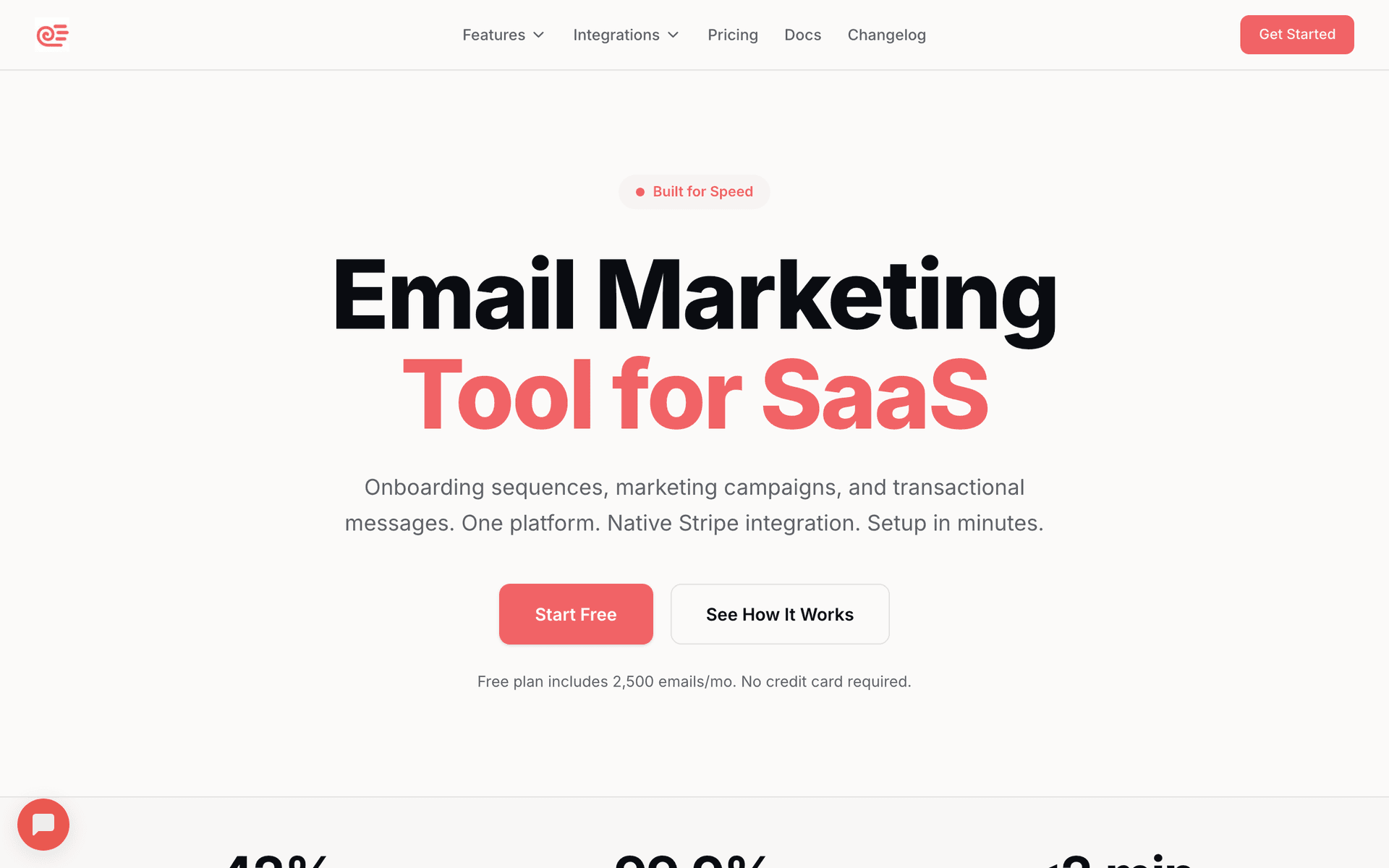
AI-powered email marketing with smart automation and pay-per-email pricing.

Visit

Sequenzy earns the top spot for a specific reason: pay-per-email pricing at enterprise scale is transformative. Enterprise organizations maintain databases of hundreds of thousands of contacts but only email segments for any given campaign. Per-contact pricing means paying for dormant contacts. With Sequenzy's free tier covering up to 2,500 emails per month and paid plans at $29 for 50,000 emails, an enterprise can maintain its full database and only pay for actual sends. We have seen enterprise clients cut their email marketing costs by 60-70% compared to legacy platforms simply by switching from per-contact to per-email pricing. The AI sequence builder is genuinely useful when creating flows across multiple product lines and departments - it generates complete lifecycle sequences in minutes that would take a marketing team days to map out. The API is developer-friendly with comprehensive webhook support, making custom integrations straightforward for enterprise engineering teams. The platform is newer than legacy enterprise tools like Salesforce Marketing Cloud, which means multi-brand features and role-based access controls are still maturing. But the cost savings alone justify evaluation, and the direct founder support means enterprise clients get strategic partnership rather than being routed through a support ticket queue.

Best for
Enterprises wanting AI-powered automation with pay-per-email cost savings
Pricing
Free up to 2,500 emails/mo, then $29/mo for 50K emails (unlimited contacts)

Pros

  • Pay-per-email pricing saves dramatically at enterprise scale
  • AI generates sequences across products and segments
  • Developer-friendly API for custom integrations
  • Direct founder support for strategic partnership

Cons

  • Newer platform still building enterprise track record
  • No built-in SMS marketing
  • Smaller template library than legacy platforms
  • Multi-brand features still growing
#2
HubSpot

Complete CRM and marketing platform for enterprise organizations.

Visit

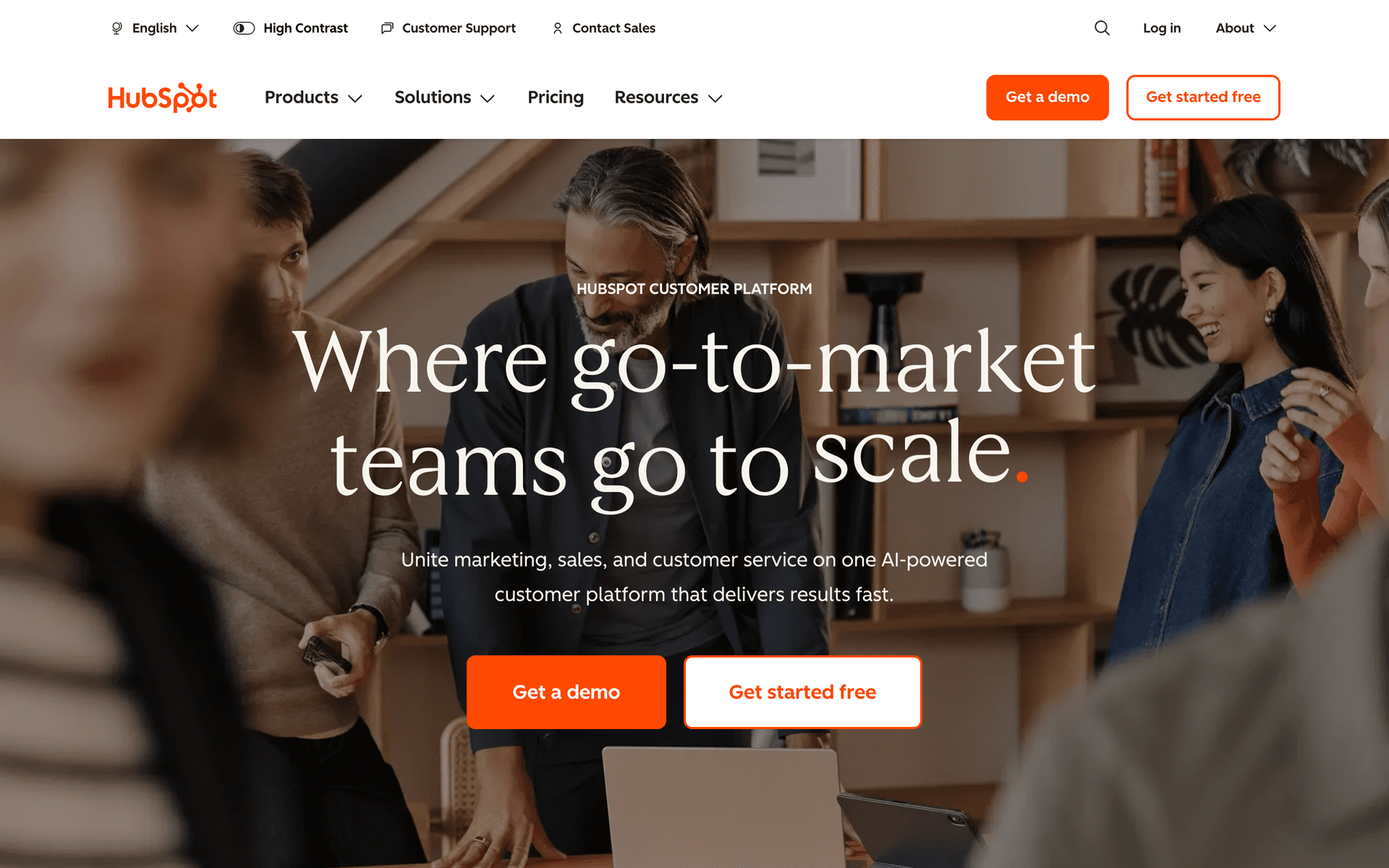
HubSpot Enterprise is the full marketing suite with CRM, email, landing pages, social media, attribution, and analytics all in one ecosystem. For enterprise organizations that want a single vendor managing their entire customer data layer, HubSpot delivers genuine unified visibility. The content management system integrates tightly with email personalization, so you can tailor content based on a contact's entire interaction history across your website, emails, sales calls, and support tickets. The integration marketplace is the largest available, with 1,500+ apps covering virtually every enterprise tool. Enterprise features include custom objects for modeling complex data relationships, advanced multi-touch attribution reporting, and granular team permissions with approval workflows. At $3,600 per month for the Marketing Hub Enterprise tier, it is a serious investment - and that is before per-contact overage charges, which add up fast when you have hundreds of thousands of contacts. For organizations that commit to the HubSpot ecosystem and can justify the cost, the unified data model and streamlined workflows genuinely reduce operational complexity. But the lock-in is real, and migrating away from HubSpot once your data is deeply integrated becomes a multi-month project.

Best for
Enterprises wanting a complete CRM and marketing ecosystem
Pricing
Marketing Hub Enterprise from $3,600/month

Pros

  • Complete CRM, marketing, sales, and service platform
  • Largest integration marketplace
  • Excellent reporting and attribution
  • Strong team permissions and governance

Cons

  • Very expensive at enterprise tier
  • Requires commitment to HubSpot ecosystem
  • Per-contact pricing on top of platform fees
  • Complex implementation timeline
#3
Salesforce Marketing Cloud

Enterprise marketing platform with the deepest CRM integration available.

Visit

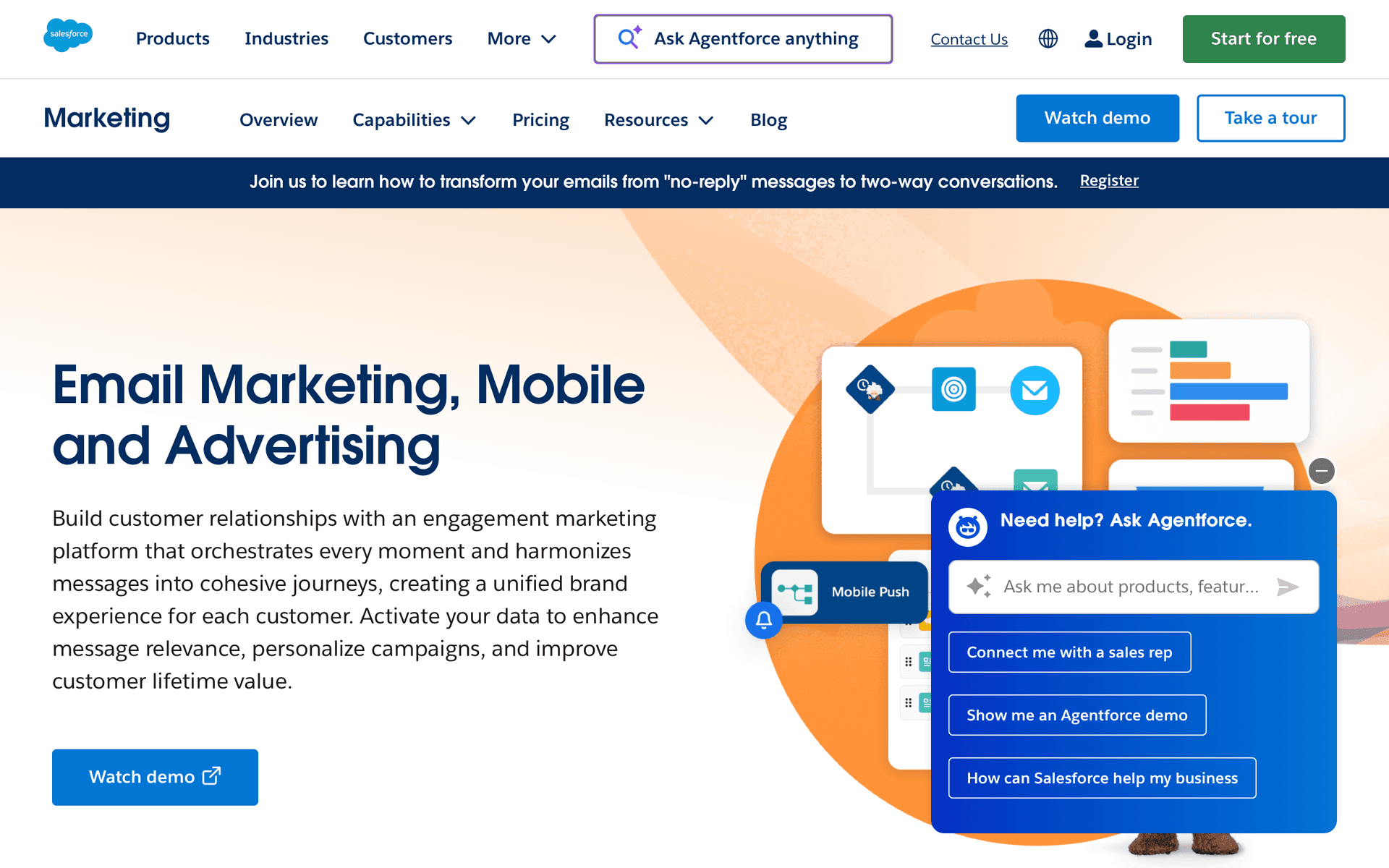
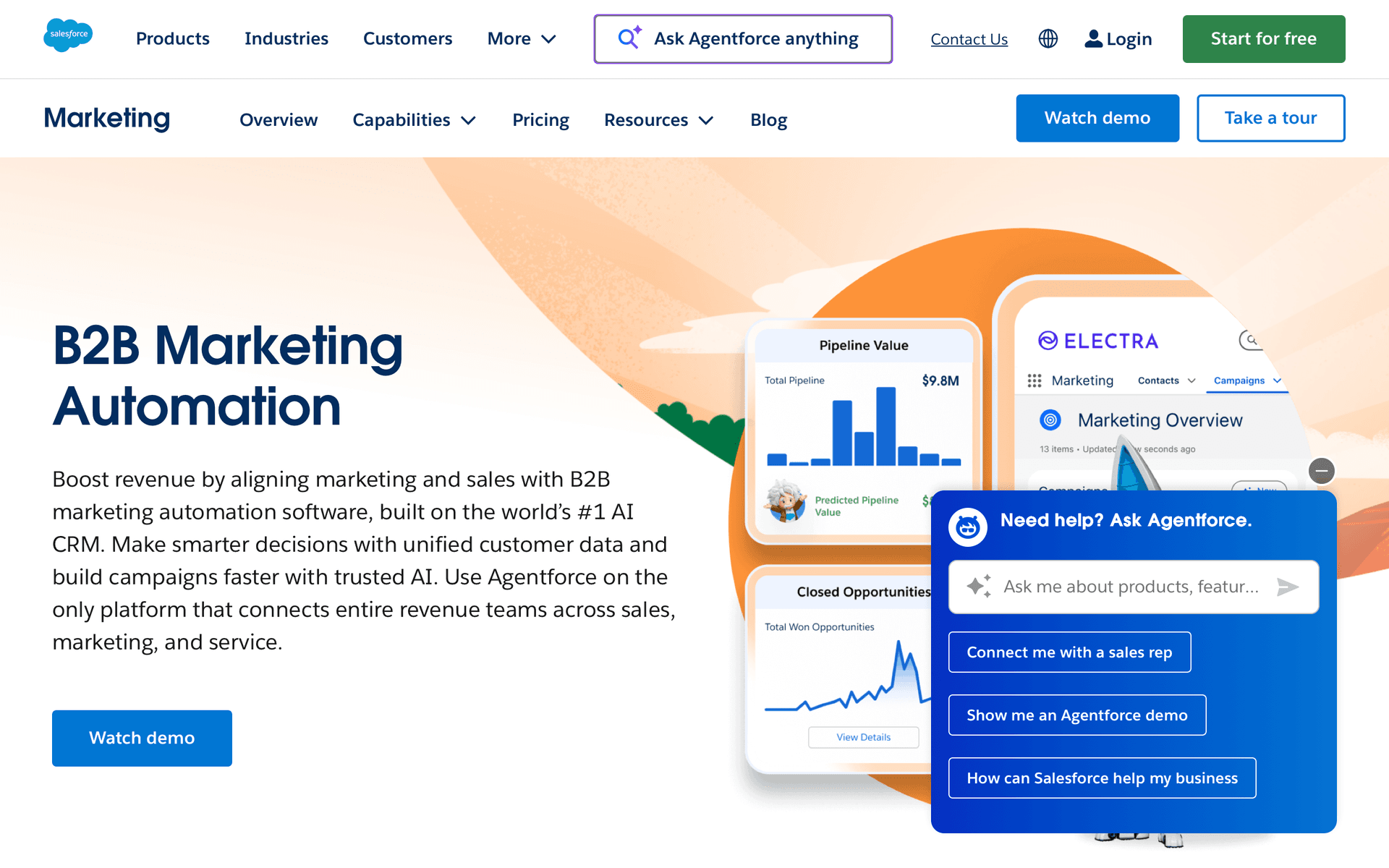
Salesforce Marketing Cloud is the legacy enterprise standard, and for organizations already deep in the Salesforce ecosystem it remains the most natural choice. Journey Builder handles the most complex multi-channel orchestration scenarios - you can build journeys that span email, SMS, push, ads, and direct mail with branching logic based on real-time CRM data. The Salesforce CRM integration is genuinely unmatched: every contact, opportunity, case, and custom object flows into your marketing automation, enabling personalization based on sales pipeline stage, support ticket status, and product usage. Einstein AI provides predictive analytics for send-time optimization, engagement scoring, and churn prediction. The pricing starts at $1,250 per month and climbs steeply with add-ons, and implementation typically takes 3-6 months with certified consultants who charge $200-400 per hour. The learning curve is among the steepest in the industry. For large enterprises with complex CRM needs and a dedicated marketing operations team of 3+ people, SFMC delivers capabilities no other platform can match. For everyone else, the total cost of ownership makes it hard to justify.

Best for
Large enterprises already in the Salesforce ecosystem
Pricing
From $1,250/month, enterprise pricing custom

Pros

  • Deepest CRM integration available
  • Most sophisticated journey orchestration
  • Einstein AI for predictive analytics
  • Handles multi-brand and multi-region

Cons

  • Very expensive with consultant costs
  • Months-long implementation
  • Steep learning curve
  • Requires dedicated admin team
#4
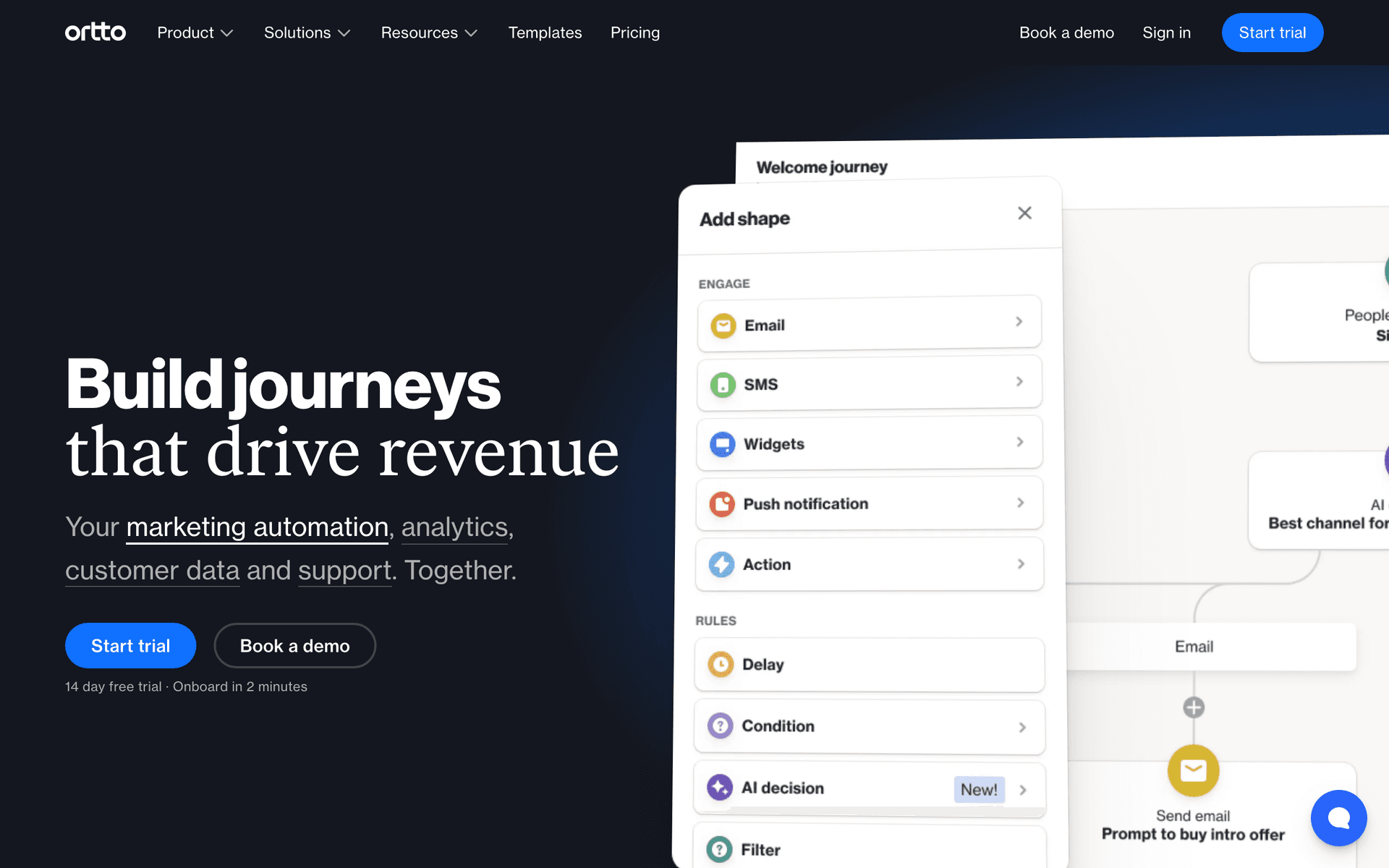
Braze

Modern customer engagement platform for cross-channel messaging at scale.

Visit

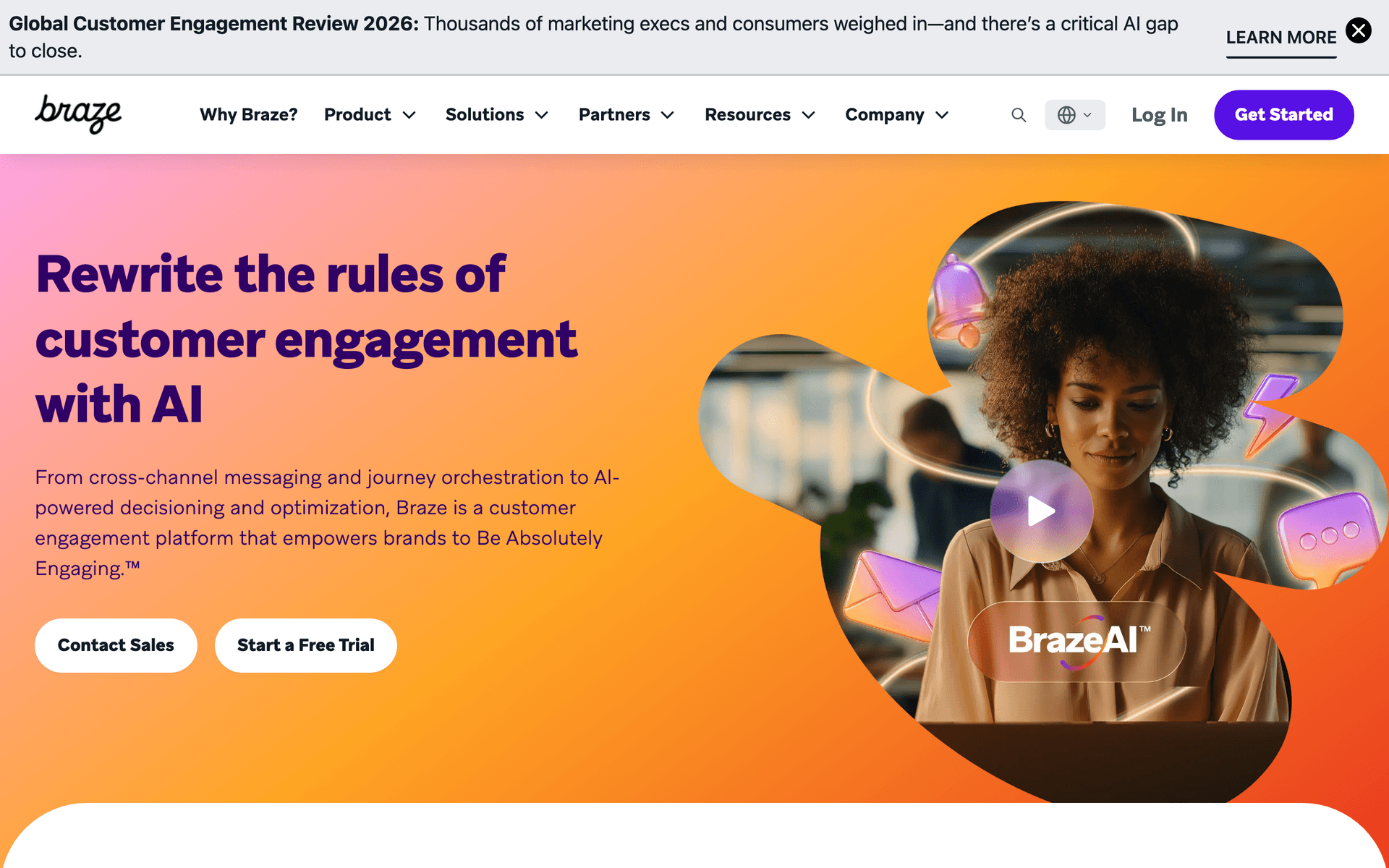
Braze represents the modern alternative to legacy enterprise tools, built from the ground up for real-time, data-driven engagement at massive scale. Real-time data streaming means messages trigger based on live customer behavior - not batch-processed data from hours ago. When a user takes an action in your app, Braze can respond with a personalized message across email, push, SMS, or in-app within milliseconds. The Canvas flow builder handles sophisticated multi-channel journeys with A/B testing at every decision point. For enterprise B2C brands with millions of active users - think retail, media, travel, or gaming - Braze handles the volume without performance degradation. The modern API-first architecture means engineering teams can integrate deeply without fighting legacy constraints. Custom pricing typically starts at $50,000 annually and scales with user count and channel usage. Compared to Salesforce Marketing Cloud, implementation is significantly faster (weeks vs. months), but the platform is more B2C-focused and less suited for B2B enterprise communication where CRM integration depth matters more than real-time responsiveness.

Best for
Enterprise B2C brands with real-time messaging needs
Pricing
Custom pricing, typically $50,000+/year

Pros

  • Real-time data streaming and triggering
  • Sophisticated multi-channel orchestration
  • Handles millions of users
  • Modern API-first architecture

Cons

  • Expensive custom pricing
  • Requires engineering resources
  • B2C focused, less ideal for B2B
  • Limited built-in CRM
#5
ActiveCampaign

Advanced automation with built-in CRM at a fraction of enterprise pricing.

Visit

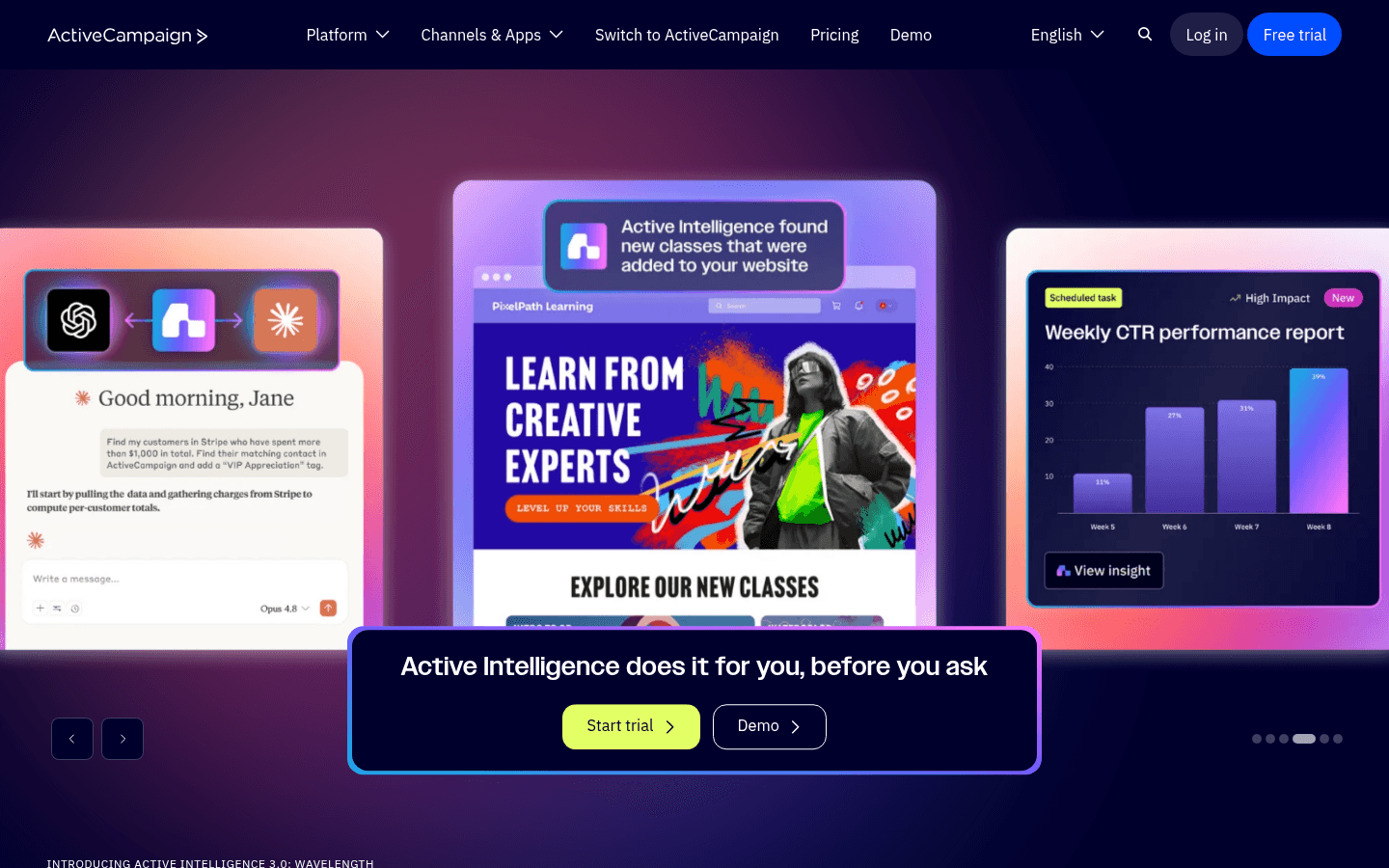
ActiveCampaign occupies the valuable middle ground between mid-market tools and true enterprise platforms - delivering roughly 80% of HubSpot's functionality at perhaps 20% of the cost. The automation builder is one of the most powerful available, supporting complex branching logic, conditional waits, lead scoring with decay, and goal tracking across multiple sequences. The enterprise tier includes custom reporting, custom objects, and a dedicated customer success manager. For enterprises that do not need the full Salesforce or HubSpot ecosystem but want serious automation capabilities, ActiveCampaign delivers. The built-in CRM is functional for tracking deals and accounts, though it lacks the depth of dedicated CRM platforms. Where it falls short at true enterprise scale is multi-brand management (which requires separate accounts), advanced governance controls, and the polish of enterprise reporting. Per-contact pricing also adds up when you reach enterprise list sizes of 100K+ contacts. But for enterprises in the $5M-50M revenue range, it provides powerful capabilities without the enterprise price tag.

Best for
Enterprises wanting powerful automation without top-tier pricing
Pricing
Enterprise from $145/month for 2,500 contacts

Pros

  • Powerful automation with complex logic
  • Built-in CRM with deal tracking
  • Significantly cheaper than HubSpot Enterprise
  • Lead scoring and attribution

Cons

  • Per-contact pricing adds up at scale
  • Reporting less polished than HubSpot
  • Limited multi-brand support
  • Interface can feel cluttered
#6
Klaviyo

Data-driven email and SMS with deep e-commerce integrations.

Visit

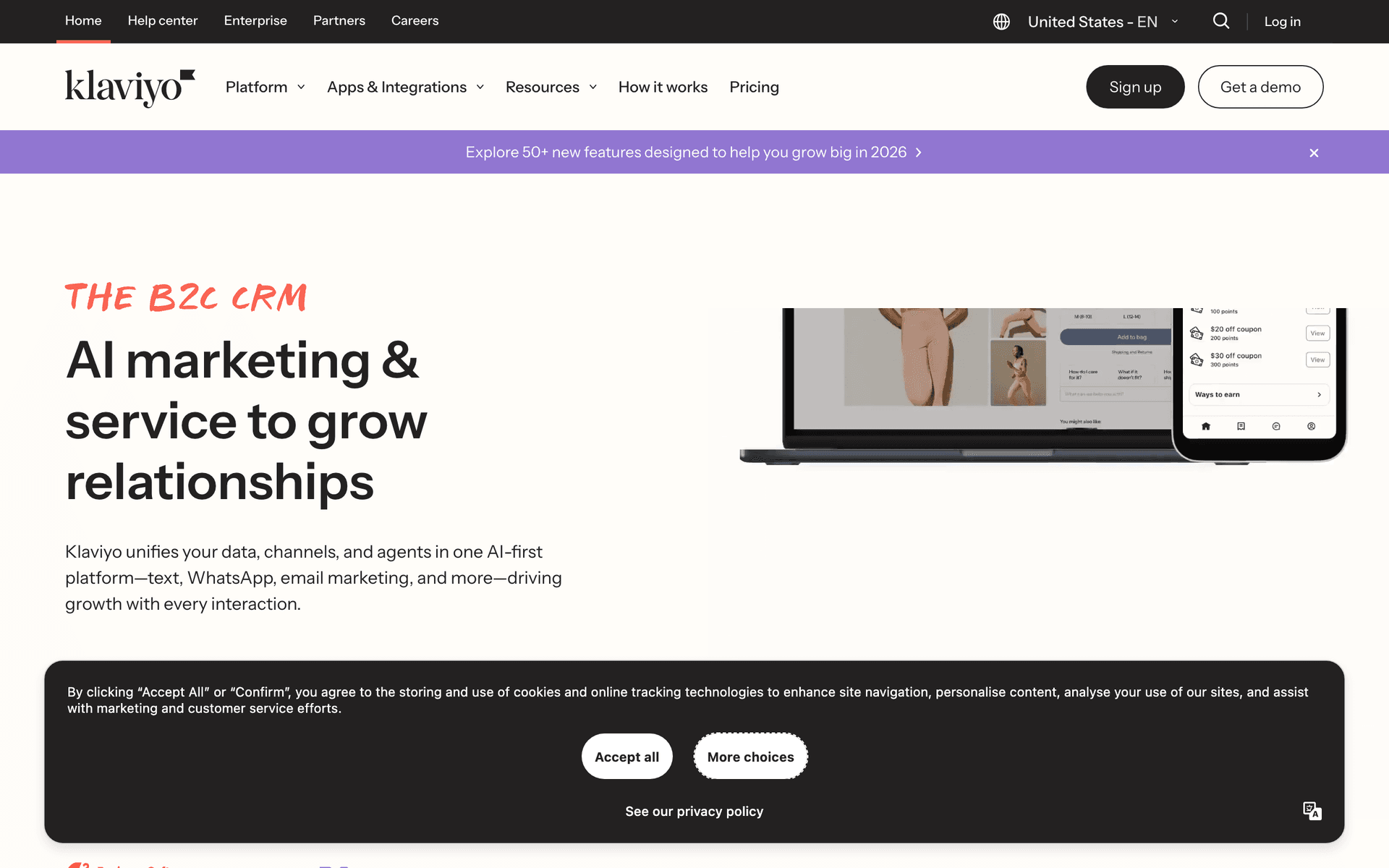
Klaviyo is exceptional for enterprise retail and e-commerce operations. The deep integrations with Shopify, Magento, BigCommerce, and WooCommerce go beyond basic product sync - Klaviyo ingests complete order history, browsing behavior, and catalog data to power AI-driven product recommendations and predictive analytics. The predictive analytics engine forecasts customer lifetime value, expected date of next purchase, and churn risk at the individual level, enabling sophisticated segmentation that generic enterprise tools cannot match. For enterprise e-commerce brands doing $10M+ in annual revenue, these capabilities translate directly to meaningful revenue lift. Per-profile pricing becomes genuinely expensive at enterprise volumes though - at 500K profiles, you are looking at several thousand dollars per month. The platform is also heavily e-commerce focused, which makes it less suitable for B2B enterprises or organizations with mixed business models.

Best for
Enterprise retail and e-commerce brands
Pricing
$20/month for 500 contacts, scales with list

Pros

  • Deep e-commerce data integration
  • Predictive analytics for customer behavior
  • Powerful segmentation at scale
  • Built-in SMS

Cons

  • Per-profile pricing expensive at scale
  • Less suited for B2B
  • E-commerce focus limits general use
  • Complex flows difficult to debug
#7
Mailchimp

Well-known email platform with enterprise features.

Visit

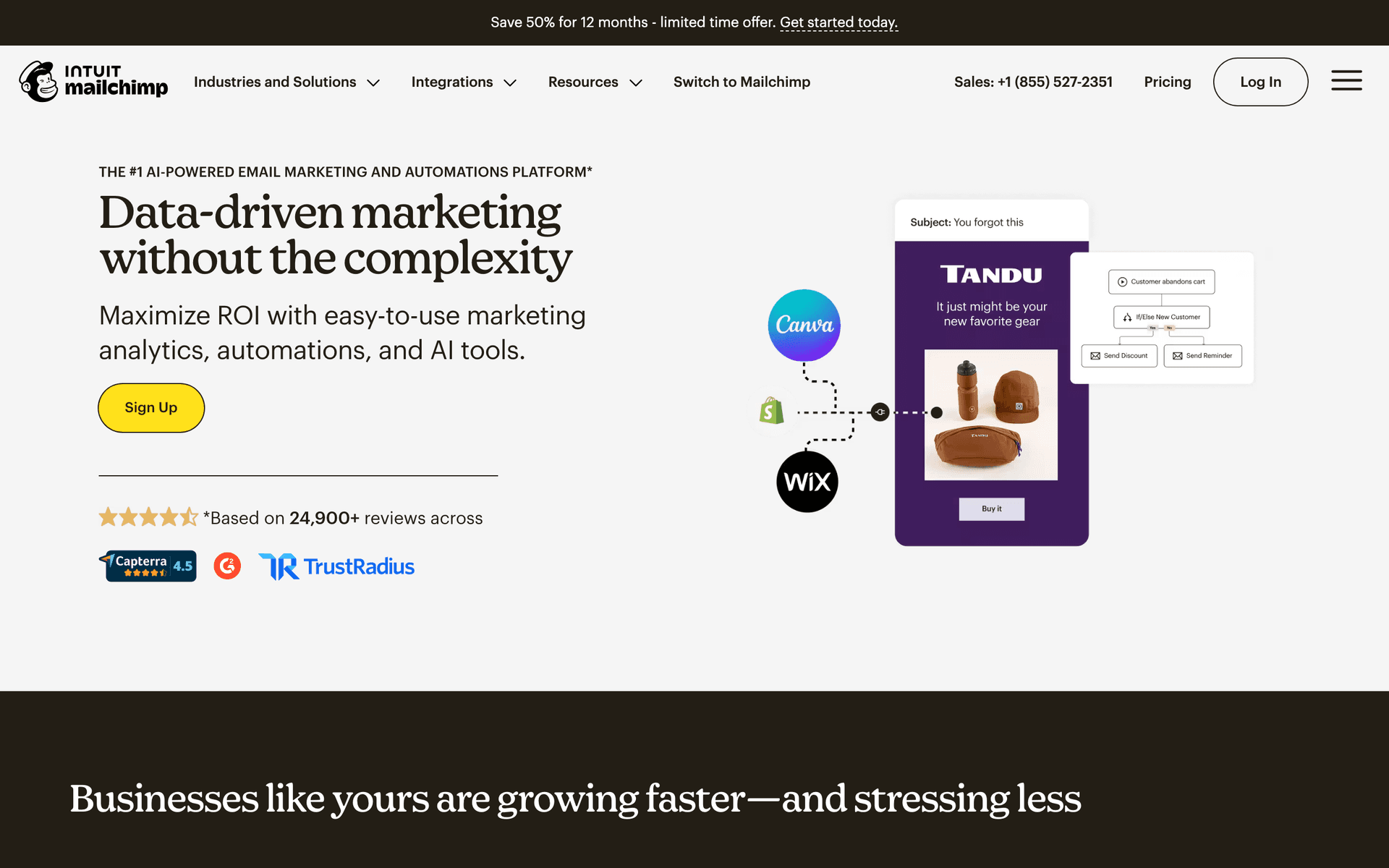
Mailchimp Premium offers advanced segmentation, multivariate testing, and comparative reporting for enterprise organizations. The editor is genuinely intuitive, which matters in enterprise settings where dozens of non-technical team members across different departments need to create and send campaigns. For enterprises with simpler email needs - newsletters, product announcements, event invitations - Mailchimp's ease of use is a real advantage over more complex platforms. The learning curve is days rather than months. However, enterprise limitations become apparent quickly: automation lacks the branching depth of ActiveCampaign or HubSpot, the API is functional but not as flexible as modern alternatives, and multi-brand management requires separate accounts with separate billing. The per-contact pricing model also hits hard at enterprise scale - a 500K contact list on Premium costs over $1,500 per month.

Best for
Enterprises prioritizing ease of use over automation depth
Pricing
Premium from $350/month for 10,000 contacts

Pros

  • Intuitive editor for non-technical teams
  • Strong brand recognition
  • Good multivariate testing
  • Wide integration marketplace

Cons

  • Automation lags behind competitors
  • Per-contact pricing expensive at scale
  • Limited API flexibility
  • Multi-brand management is weak
#8
Brevo

Multi-channel marketing with pay-per-email pricing.

Visit

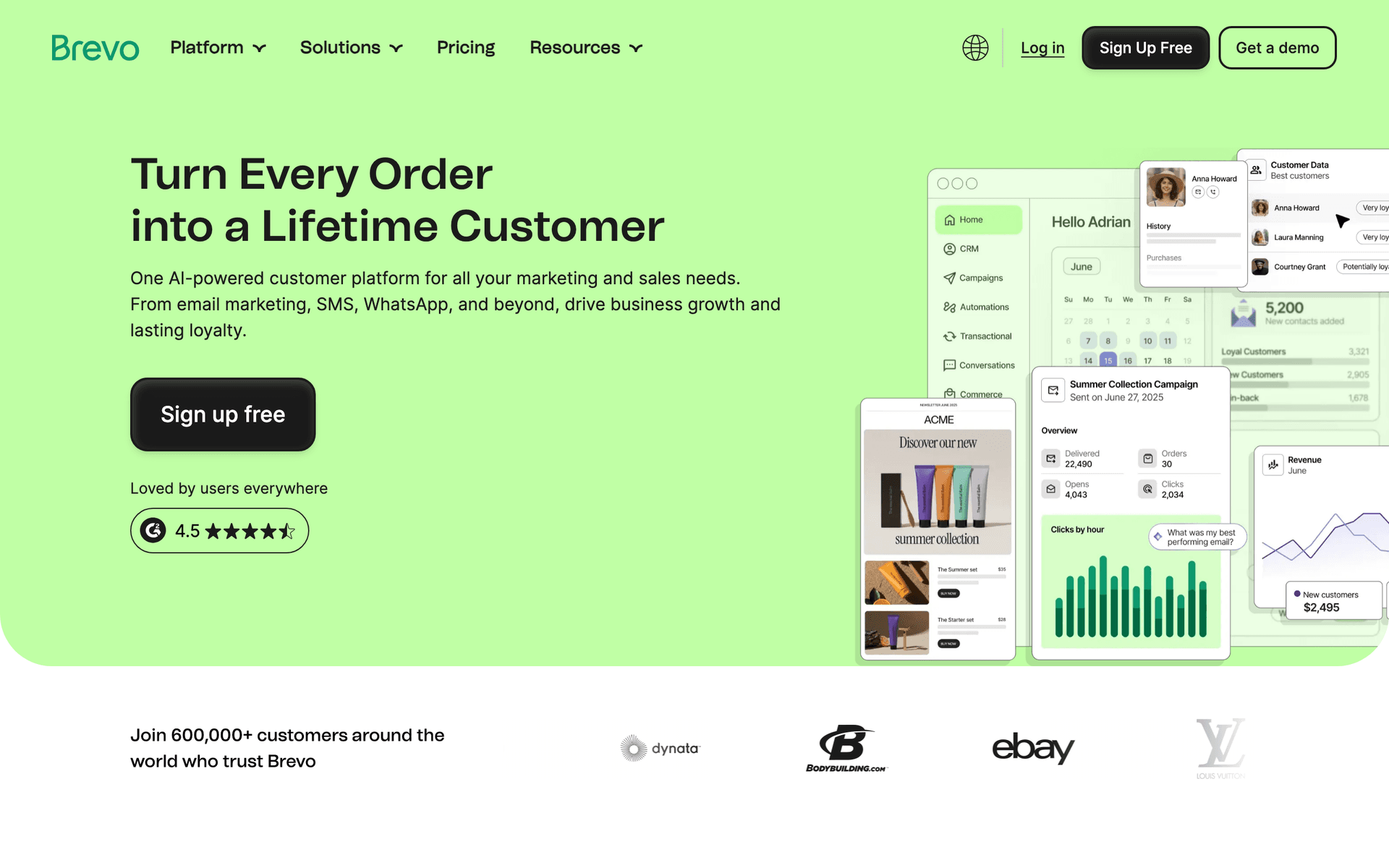
Brevo's enterprise plan offers dedicated IPs, priority support, and sub-account management - the core infrastructure needs for enterprise email. The pay-per-email pricing model is the same cost advantage that makes Sequenzy attractive: enterprises with large but infrequently emailed databases save substantially compared to per-contact models. Multi-channel support across email, SMS, and WhatsApp consolidates vendors and simplifies operations for teams managing communication across channels. Where Brevo falls short for enterprise use is in automation sophistication - the workflow builder handles standard sequences but lacks the complex branching, scoring, and conditional logic that enterprise marketing operations teams expect. Reporting is functional but not deep enough for enterprise analytics needs. The platform is EU-headquartered in Paris, which is an advantage for enterprises with EU data residency requirements.

Best for
Cost-conscious enterprises wanting multi-channel marketing
Pricing
Business from $65/month for 20,000 emails

Pros

  • Pay-per-email pricing saves at scale
  • Multi-channel including SMS and WhatsApp
  • Sub-account management
  • Dedicated IP addresses

Cons

  • Automation less sophisticated
  • Enterprise features are newer
  • Reporting is basic
  • Deliverability can be inconsistent
#9
Customer.io

Event-driven messaging platform with advanced segmentation.

Visit

Customer.io is the engineer's choice for enterprise email, built around an event-driven architecture that gives technical teams maximum flexibility. Any product action, API event, or data change can trigger messages with complex conditional logic. The segmentation engine handles sophisticated boolean logic that marketing-focused platforms cannot match - combine behavioral events, user attributes, and computed properties in arbitrarily complex filters. For enterprises with strong engineering teams that want to build deeply customized communication flows, Customer.io provides flexibility that marketing-first platforms simply lack. The trade-off is clear: non-technical marketers will struggle with the interface, and the platform requires meaningful engineering investment to implement properly. Multi-channel messaging across email, push, SMS, and in-app is well-implemented. Enterprise plans include EU data residency, which matters for multi-national organizations.

Best for
Tech-forward enterprises with engineering resources
Pricing
Premium from $100/month, enterprise custom

Pros

  • Flexible event-driven architecture
  • Advanced boolean segmentation
  • Multi-channel messaging
  • Excellent API and webhooks

Cons

  • Requires engineering to implement
  • Non-technical marketers struggle
  • Per-profile pricing adds up
  • No built-in CRM
#10
Iterable

Cross-channel marketing platform for enterprise consumer brands.

Visit

Iterable is built specifically for B2C brands needing sophisticated cross-channel orchestration at enterprise scale. The platform's AI engine optimizes send time, channel selection, and content for each individual user based on their engagement patterns, so the system learns whether a particular user responds better to email on Tuesday mornings or push notifications on Saturday afternoons. The data architecture handles millions of user profiles and billions of events without performance degradation. For enterprise B2C companies in media, retail, delivery, or entertainment, Iterable delivers genuinely best-in-class orchestration. For B2B enterprises or organizations with simpler communication needs, it is significantly more platform than you need. Pricing starts in the mid five figures annually and scales with user count and message volume.

Best for
Enterprise B2C brands with complex cross-channel needs
Pricing
Custom pricing, typically $50,000+/year

Pros

  • Sophisticated cross-channel orchestration
  • AI-powered optimization
  • Handles millions of users
  • Flexible data model

Cons

  • Expensive even by enterprise standards
  • Overkill for B2B or simpler use cases
  • Requires dedicated team
  • Lengthy implementation
#11
Campaign Monitor

Email marketing with brand management and multi-location support.

Visit

Campaign Monitor fills a specific enterprise niche that few other platforms address well: organizations with multiple brands, franchises, or regional teams needing centralized brand control with distributed execution. The lock-and-edit template system lets headquarters create approved templates that local teams customize within defined guardrails - changing text and images without breaking brand guidelines, layout, or compliance disclaimers. For franchise networks, multi-brand retailers, or organizations with regional marketing teams, this capability alone can justify the platform. Beyond that specific use case, enterprise capabilities are limited compared to full enterprise platforms - automation is basic, segmentation is functional but not advanced, and the API is dated.

Best for
Multi-brand enterprises needing centralized brand control
Pricing
Premier from $159/month

Pros

  • Lock-and-edit templates for brand control
  • Multi-brand and multi-location management
  • Clean email builder
  • Good deliverability

Cons

  • Basic automation
  • Limited segmentation
  • Per-contact pricing at volume
  • API is functional but not modern
#12
GetResponse

Marketing platform with email, automation, webinars, and landing pages.

Visit

GetResponse MAX plan includes dedicated support, dedicated IPs, transactional emails, and SMS - covering the core enterprise infrastructure requirements at a price point well below legacy enterprise platforms. The breadth of features is impressive for the price: email, landing pages, webinars, push notifications, and basic SMS in one platform. For enterprises that need these capabilities bundled together without managing multiple vendor relationships, the consolidation has real operational value. Enterprise features are less mature than dedicated platforms though - the CRM is basic compared to HubSpot, the automation lacks the depth of ActiveCampaign, and multi-brand management requires separate accounts rather than native sub-brand support. The MAX plan at $1,099 per month still undercuts most enterprise alternatives significantly.

Best for
Enterprises wanting a broad feature set at moderate price
Pricing
MAX from $1,099/month

Pros

  • Wide feature set including webinars
  • Dedicated IP and support
  • Transactional and marketing combined
  • More affordable than legacy tools

Cons

  • Enterprise features less mature
  • Basic CRM functionality
  • Multi-brand requires separate accounts
  • Automation has a learning curve
#13
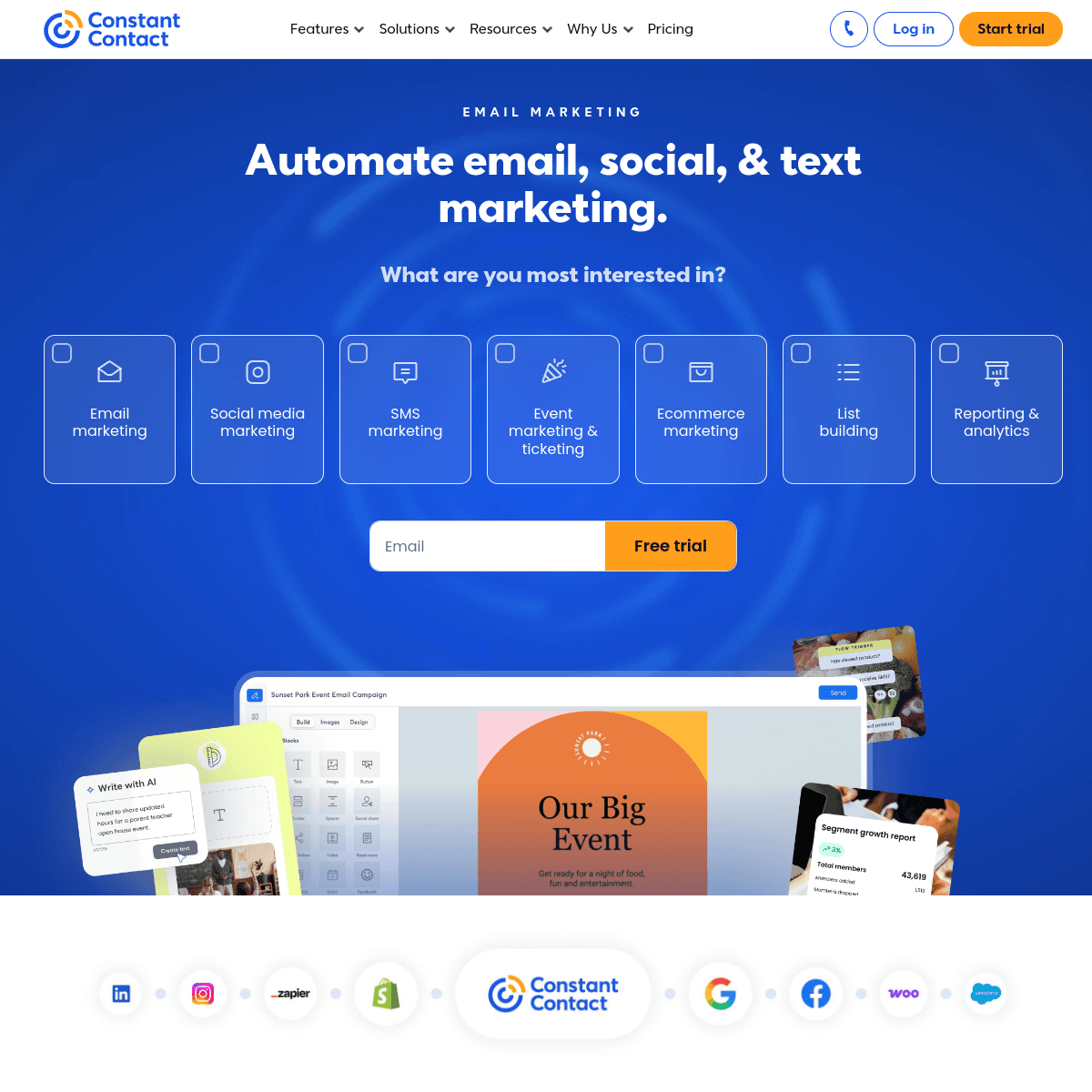
Constant Contact

Established email marketing with event management features.

Visit

Constant Contact serves enterprises that value simplicity above all else and have relatively straightforward email needs. The platform is one of the easiest to learn, which means non-technical team members can be productive within hours rather than weeks. Phone support is a genuine differentiator - when someone on your team gets stuck, they can call a real person. Event management features are uniquely useful for enterprises running conferences, trade shows, and customer events. However, for enterprise-scale operations requiring governance, multi-brand management, advanced automation, and sophisticated segmentation, the platform falls well short of modern requirements. Analytics lack the depth enterprise marketing teams expect, and the API is limited for custom integrations.

Best for
Enterprises with simple email needs and event management
Pricing
Premium from $80/month

Pros

  • Phone support
  • Event management tools
  • Very easy to learn
  • Reliable platform

Cons

  • Automation is basic
  • Limited enterprise governance
  • No multi-brand support
  • Analytics lack depth

Feature Comparison

FeatureSequenzyHubSpotSalesforce MCBraze
AI-powered automation
Yes
Basic
Einstein AI
Yes
Team permissions
Yes
Advanced
Advanced
Advanced
Multi-brand support
Growing
Yes
Yes
Yes
API access
Full API
Full API
Full API
Full API
Compliance tools
GDPR
SOC 2, GDPR
SOC 2, GDPR
SOC 2, GDPR
Multi-channel
Email
Email, Ads
Email, SMS
Email, Push, SMS
Dedicated support
Founder access
Dedicated CSM
Dedicated team
Dedicated CSM
Free tier available
Starting price
$29/mo
$3,600/mo
$1,250+/mo
Custom

Common Mistakes to Avoid

We see these mistakes over and over. Skip the learning curve and avoid these from day one.

Choosing a Platform Based Only on IT Requirements

Security, compliance, and integration checklists matter but should not be the only criteria. The marketing team uses the platform daily. If the UI is terrible, adoption suffers and you end up paying enterprise pricing for basic email blasts.

Paying Per-Contact with Millions of Dormant Records

Enterprises accumulate contacts over years from events, partnerships, and acquisitions. Per-contact pricing means paying full price for millions of contacts you email once a year or never. Pay-per-email pricing eliminates this waste.

Running Without Frequency Capping

Without caps, marketing sends a campaign on Monday, product sends an announcement on Tuesday, events sends an invitation on Wednesday, and support sends a survey on Thursday. The subscriber sees four emails in a week from the same company and unsubscribes from everything.

Treating Implementation as a One-Time Project

Enterprise email platforms require ongoing optimization - deliverability monitoring, template updates, integration maintenance, and governance enforcement. Budget for ongoing platform management, not just the initial implementation.

Ignoring Regional Compliance Requirements

Different regions have different email rules. GDPR in Europe, CASL in Canada, CAN-SPAM in the US, LGPD in Brazil. A single global email strategy that ignores regional consent and privacy requirements exposes the enterprise to significant legal risk.

Email Sequences Every Enterprise Needs

These are the essential automated email sequences that will help you grow your business and keep clients coming back.

Enterprise Onboarding

New enterprise account created or contract signed

Guide organizations through platform adoption with role-specific communication.

Immediately
Welcome to {{product}} - your implementation roadmap

Send the executive sponsor a high-level plan with milestones and a dedicated contact.

Day 1
Technical setup guide: SSO, security, and configuration

Technical onboarding for IT covering SSO/SAML, security, API access, and permissions.

Day 5
{{executive}} has set up {{product}} for your department

Department-specific onboarding referencing the executive sponsor.

Day 21
Your 3-week adoption report

Account metrics showing adoption progress by department.

Account Expansion

Account reaches 80% of current plan usage

Identify expansion opportunities within enterprise accounts.

Immediately
Your team is growing - here is how other departments use {{product}}

Case study showing how similar enterprises expanded across departments.

Day 7
Unlock {{feature}} for your growing team

Highlight features on higher tiers with ROI calculations.

Day 14
Let us plan for your team's growth

Personal outreach from account manager with usage data and expansion options.

Renewal Reminder

90 days before contract renewal

Build the case for renewal through value documentation.

90 days before
Your annual impact report from {{product}}

Comprehensive ROI report with usage metrics and business outcomes.

60 days before
What we have built since your last renewal

Product improvements and roadmap items released during their contract.

30 days before
Your renewal is approaching - let us connect

Renewal conversation with contract details and incentives.

Executive Engagement

Quarterly cadence for enterprise accounts

Maintain executive relationships with strategic content.

Quarterly
Q{{quarter}} industry insights for {{industry}} leaders

Curated industry insights, benchmarks, and trends relevant to the executive.

On milestone
Congratulations: {{company}} just hit {{milestone}}

Celebrate account milestones with impact metrics.

Enterprise Email Is Infrastructure

At enterprise scale, email is not something marketing does on Tuesdays. It is infrastructure supporting every customer-facing function. Sales sends nurture sequences. Product sends announcements. Customer success sends onboarding flows. Support sends satisfaction surveys. Events sends invitations. Each of these touches the same subscribers through the same channel.

The enterprises that get email right treat it as shared infrastructure rather than a marketing tool. They invest in governance frameworks, build unified subscriber profiles, enforce suppression rules across every team, and measure the aggregate subscriber experience across all touchpoints. The ones that get it wrong let every department run independently, resulting in subscribers receiving a dozen emails per week from different teams within the same company.

The Hidden Cost of Per-Contact Pricing at Scale

Most enterprise email platforms charge per contact. At enterprise scale, this pricing model is quietly devastating to your budget. Consider a typical scenario: you have 2 million contacts accumulated over years of events, partnerships, acquisitions, and organic growth. In any given month, you email perhaps 400,000 of those contacts for specific campaigns. With per-contact pricing, you pay full price for 1.6 million idle contacts every single month.

Pay-per-email pricing eliminates this waste entirely. You maintain your full database - every contact from every conference, every acquisition, every partner list - and only pay for the emails you actually send. For the enterprise above, the savings could easily exceed $50,000 per year. Sequenzy and Brevo both offer this model, and it is worth running the math for your specific situation.

Compliance Is Not Optional

For enterprises, email compliance is an ongoing operational requirement that spans multiple jurisdictions and regulatory frameworks. GDPR in Europe, CCPA and state-level laws in the US, CASL in Canada, LGPD in Brazil - each has different rules for consent, data retention, and subscriber rights. Your platform needs to enforce these rules automatically based on subscriber location and consent status.

Look for consent management that tracks how and when consent was obtained, data residency controls for subscribers in specific jurisdictions, audit trails that can produce complete records on demand, and automated suppression based on regulatory requirements. When legal asks for records of all communications with a specific subscriber, you need to produce them within hours, not weeks.

Building Your Enterprise Email Governance Framework

Before selecting a platform, document your governance requirements. Start with these questions: How many departments or teams will send email? What approval process should campaigns go through? What is the maximum number of emails a subscriber should receive per week from all teams combined? How will you handle shared suppression lists? What compliance requirements apply in each market you operate in?

Team Structure and Permissions

Map out who needs access and at what level. Typical enterprise roles include administrators who manage platform configuration, template designers who build reusable assets, campaign managers who create and schedule sends, analysts who access reporting, and compliance reviewers who approve content before it goes out. Your platform should support these distinct roles with granular permissions.

Frequency Management

Enterprise frequency management requires coordination across teams. Set a company-wide maximum for marketing emails per subscriber per week - typically 2-3 for B2B and 3-5 for B2C. Implement this through shared suppression lists that all teams check before sending. Some platforms like HubSpot and Braze handle this natively. Others require manual processes or custom integration work.

Integration Architecture

Enterprise email platforms sit at the center of a complex technology stack. Plan integrations with your CRM (Salesforce, HubSpot), data warehouse (Snowflake, BigQuery), customer data platform (Segment, mParticle), analytics platform (Amplitude, Mixpanel), and internal tools. APIs and webhooks are the connective tissue. Prioritize platforms with mature, well-documented APIs and pre-built integrations for your core systems.

Evaluating Total Cost of Ownership

Enterprise email platform costs extend well beyond the subscription price. Factor in implementation costs (internal engineering time plus any external consultants), ongoing administration (typically 0.5-1 FTE for a mid-size enterprise), training for new team members, integration maintenance, and potential migration costs if you need to switch later.

For a realistic comparison, model the total cost over 3 years at your expected contact volume and send frequency. Include per-contact or per-email charges at scale, not just the base subscription. A platform that looks affordable at 10,000 contacts may cost 10x more than expected at 500,000 contacts.

Migration Planning

Switching enterprise email platforms is a significant project. Plan for 4-8 weeks minimum, covering data migration (contacts, segments, templates, automation flows), DNS updates for sending domains, IP warm-up for dedicated IPs, team training on the new platform, and parallel running during transition. The most common mistake is cutting over too quickly without proper IP warm-up, which tanks deliverability during the transition period.

Getting Started

If you are selecting an enterprise email platform, start with these steps:

  1. Document your governance requirements and team structure
  2. Calculate your true contact volume and monthly send volume
  3. Model the total cost of ownership for your top 3 candidates over 3 years
  4. Run a pilot with your highest-priority department before rolling out company-wide
  5. Plan your IP warm-up and migration timeline in detail
  6. Establish shared suppression lists and frequency caps from day one

The platform matters, but the governance framework around it matters more. A well-governed setup on a simple platform outperforms an ungoverned setup on the most sophisticated enterprise tool every time.

How We Evaluated These Tools

I evaluated these platforms based on enterprise-specific requirements including multi-brand support, team permissions and governance, compliance tooling (SOC 2, GDPR, HIPAA where applicable), API depth, and total cost of ownership at 500K+ contacts. Pricing was assessed at enterprise scale, not entry-level tiers.

Frequently Asked Questions

Ready to grow your enterprise practice?

Start your free trial today. Set up your first email sequence in minutes with AI-powered content generation.

Related Industries

Sequenzy - Complete Pricing Guide

Pricing Model

Sequenzy uses email-volume-based pricing. You only pay for emails you send. Unlimited contacts on all plans — storing subscribers is always free.

All Pricing Tiers

  • 2.5k emails/month: Free (Free annually)
  • 15k emails/month: $19/month ($205/year annually)
  • 60k emails/month: $29/month ($313/year annually)
  • 120k emails/month: $49/month ($529/year annually)
  • 300k emails/month: $99/month ($1069/year annually)
  • 600k emails/month: $199/month ($2149/year annually)
  • 1.2M emails/month: $349/month ($3769/year annually)
  • Unlimited emails/month: Custom pricing (Custom annually)

Yearly billing: All plans offer a 10% discount when billed annually.

Free Plan Features (2,500 emails/month)

  • Visual automation builder
  • Transactional email API
  • Reply tracking & team inbox
  • Goal tracking & revenue attribution
  • Dynamic segments
  • Payment integrations
  • Full REST API access
  • Custom sending domain

Paid Plan Features (15k - 1.2M emails/month)

  • Visual automation builder
  • Transactional email API
  • Reply tracking & team inbox
  • Goal tracking & revenue attribution
  • Dynamic segments
  • Payment integrations (Stripe, Paddle, Lemon Squeezy)
  • Full REST API access
  • Custom sending domain

Enterprise Plan Features (Unlimited emails)

  • Visual automation builder
  • Transactional email API
  • Reply tracking & team inbox
  • Goal tracking & revenue attribution
  • Dynamic segments
  • Payment integrations
  • Full REST API access
  • Custom sending domain

Important Pricing Notes

  • You only pay for emails you send — unlimited contacts on all plans
  • No hidden fees - all features included in the price
  • No credit card required for free tier

Contact

  • Pricing Page: https://sequenzy.com/pricing
  • Sales: hello@sequenzy.com