Updated 2026-03-15

Best Email Marketing Tools for B2B Companies

Nurture leads, shorten sales cycles, and close more deals with the right email marketing platform.

B2B email marketing is fundamentally different from B2C. Sales cycles are longer, buying committees have multiple stakeholders, and trust is built over weeks or months of valuable content. The right email platform nurtures leads through complex buying journeys, scores them based on engagement, and hands the hottest prospects to your sales team at the right moment. I tested and reviewed 13 email marketing tools specifically for B2B use cases, ranking them on CRM integration, lead scoring, automation sophistication, and sales alignment features.

TL;DR

ActiveCampaign is the best all-in-one solution for B2B companies that need CRM, lead scoring, and sales pipeline alongside email automation. Sequenzy is the better choice for B2B teams that want AI to generate their nurture sequences quickly and prefer pay-per-email pricing for smaller, targeted lists. For product-led B2B SaaS, Customer.io provides the deepest behavioral automation based on product usage data.

Why B2B Companies Need Email Marketing

Lead Nurturing

B2B buyers are not ready to purchase when they first discover you. Email nurtures them over weeks or months with case studies, white papers, and industry insights until they are ready to engage with sales.

Sales Pipeline Support

Email automation keeps leads warm between sales touchpoints. Prospects who receive relevant content between calls are more likely to advance through the pipeline. Automated follow-ups ensure no lead falls through the cracks.

Thought Leadership

B2B buying decisions are influenced by perceived expertise. A consistent email newsletter with industry analysis, original research, and practical advice positions your company as the authority that prospects trust.

Account-Based Marketing

B2B deals often involve multiple stakeholders. Email lets you target different roles within an account with relevant content. Decision-makers get ROI focused content. Technical evaluators get capability deep-dives. Champions get internal selling tools.

B2B Companies Email Marketing Benchmarks

Know these numbers before you start. They'll help you set realistic goals and pick the right tool.

23-30%
Average Open Rate

B2B emails perform well when content is genuinely valuable. Thought leadership newsletters from trusted senders often exceed 35%. Generic promotional emails drop below 15%.

2.5-4%
Average Click Rate

Click rates in B2B are driven by content quality. Case studies and original research get the highest clicks. Product-focused emails with premature CTAs get the lowest.

Tuesday-Thursday, 9-11 AM in recipient's time zone
Best Send Time

Mid-morning on workdays when professionals are processing their inbox. Avoid Monday mornings (inbox overload) and Friday afternoons (weekend mode). Send in the recipient's local time zone for best results.

5-15% of nurtured leads
Marketing Qualified Lead Rate

A healthy B2B nurture program should convert 5-15% of leads into marketing qualified leads ready for sales engagement. If your rate is below 5%, your content is not building enough trust or urgency.

Important Tips Before You Choose

Lessons from b2b companieswho've been doing this for years. Save yourself the trial and error.

Lead with value in every single email

B2B buyers are sophisticated and can instantly detect self-serving content. Every email should teach something, share original data, or provide a framework they can use - regardless of whether they ever buy from you. The companies that generate the most pipeline from email are the ones that make every message worth reading.

Build separate tracks for different buying stages

A prospect who just downloaded a white paper needs educational content. One who attended a demo needs deal-advancing materials. One who went cold needs re-engagement. Sending the same nurture sequence to all three wastes your best content on the wrong audience.

Create internal selling tools for your champions

B2B deals involve committees. Your champion needs ammunition - ROI calculators, comparison sheets, implementation timelines, and executive summaries they can forward to their CFO or CTO. Build these into your email sequences so champions have what they need to sell internally.

Align email cadence with your sales cycle length

If your average deal takes 3 months from first touch to close, your nurture sequence should span at least 3 months. If deals take 6-12 months, you need sustained content over that full period. Running out of nurture content halfway through the buying cycle means losing deals.

Use plain-text emails from sales reps for late-stage nurture

Early-stage nurture can use designed marketing emails. But once a prospect is in active evaluation, switch to plain-text emails that look like personal messages from their sales rep. Designed marketing emails feel impersonal during deal-stage conversations.

Track engagement scoring, not just opens

In B2B, a prospect who opened 8 of your last 10 emails and clicked on 3 case studies is much warmer than one who opened 2 emails. Build an engagement scoring model that weights actions like case study downloads, pricing page visits, and demo requests higher than simple opens.

13 Best Email Marketing Tools for B2B Companies

Our Top Pick for B2B Companies
#1
Sequenzy

AI-powered email marketing with smart automation sequences and pay-per-email pricing.

Visit

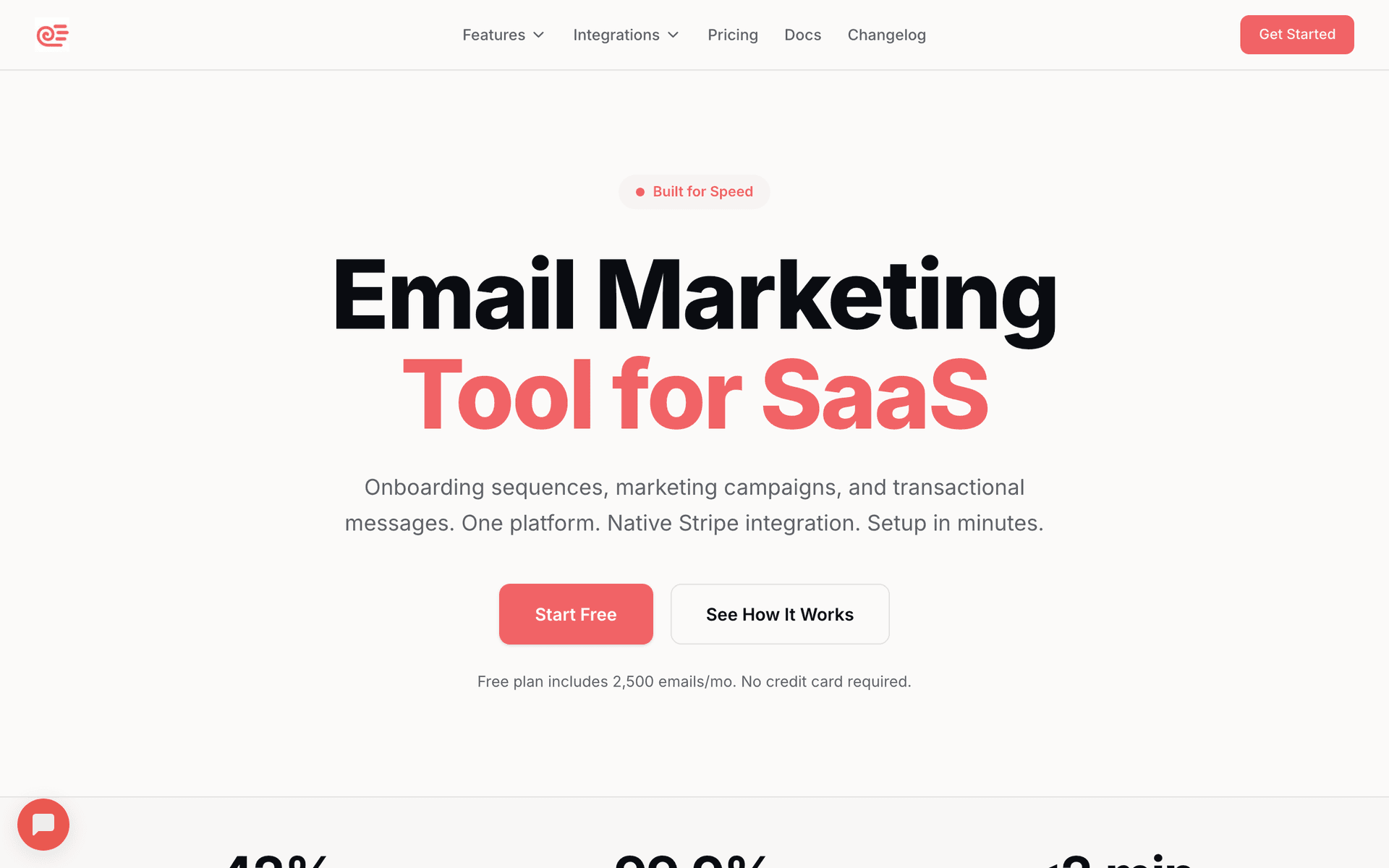
I put Sequenzy first for B2B companies because the AI sequence builder solves the content creation bottleneck that kills most B2B email programs. B2B email requires a steady stream of valuable, professional content - nurture sequences, onboarding flows, re-engagement campaigns - and most teams struggle to produce it consistently. Sequenzy generates complete nurture sequences with case study frameworks, thought leadership templates, and milestone-based flows in seconds. You refine and personalize the AI output rather than starting from scratch. The pay-per-email pricing works naturally for B2B, where lists are typically 1,000-20,000 contacts with targeted sends to specific segments. The free tier covers 2,500 emails per month, which is enough for a small B2B company to run basic nurture sequences. The Stripe integration handles subscription lifecycle emails for B2B SaaS companies automatically. The honest limitation: no built-in CRM or lead scoring - you will need a separate CRM like Salesforce or HubSpot CRM (free) for pipeline management.

Best for
B2B companies wanting AI-powered lead nurturing with efficient pricing
Pricing
Free up to 2,500 emails/mo, then $29/mo for 50K emails (unlimited contacts)

Pros

  • AI generates professional B2B nurture sequences
  • Pay-per-email ideal for smaller, targeted B2B lists
  • Stripe integration for B2B SaaS lifecycle automation
  • Direct founder support

Cons

  • Newer platform with a growing feature set
  • No built-in SMS marketing
  • Smaller template library compared to established platforms
  • No native CRM or lead scoring
#2
ActiveCampaign

Advanced automation and CRM with lead scoring and sales pipeline.

Visit

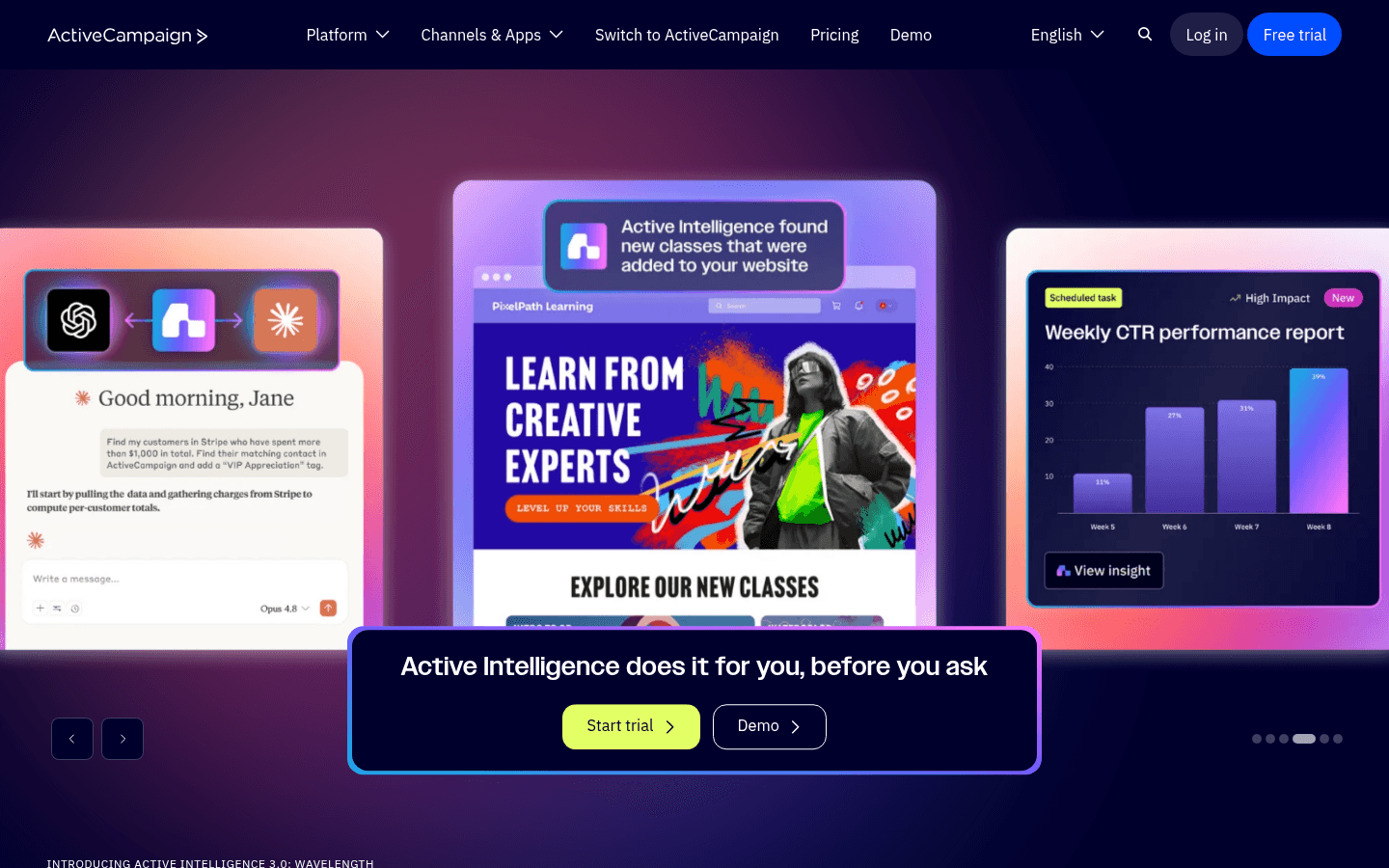
ActiveCampaign is the most complete B2B email marketing and sales platform on this list. The built-in CRM tracks every prospect interaction - email opens, website visits, content downloads - and aggregates it into a lead score that identifies sales-ready leads automatically. The automation builder creates sophisticated nurture paths that branch based on engagement level, industry, company size, and buying stage. The sales pipeline gives reps visibility into where every deal stands. For B2B companies that want marketing and sales operating from the same platform with shared data, ActiveCampaign eliminates the integration headaches between separate tools. The trade-off is complexity - expect a meaningful setup investment, and you will need someone on your team comfortable building automations. Not cheap either, especially as your contact list grows past 5,000.

Best for
B2B companies wanting integrated email marketing, CRM, and sales pipeline
Pricing
$29/month for 1,000 contacts

Pros

  • Integrated CRM and sales pipeline
  • Lead scoring
  • Most powerful automation
  • Sales and marketing alignment

Cons

  • Steep learning curve
  • Expensive at scale
  • Complex interface
  • No free tier
#3
Customer.io

Event-driven email automation for product and engineering teams.

Visit

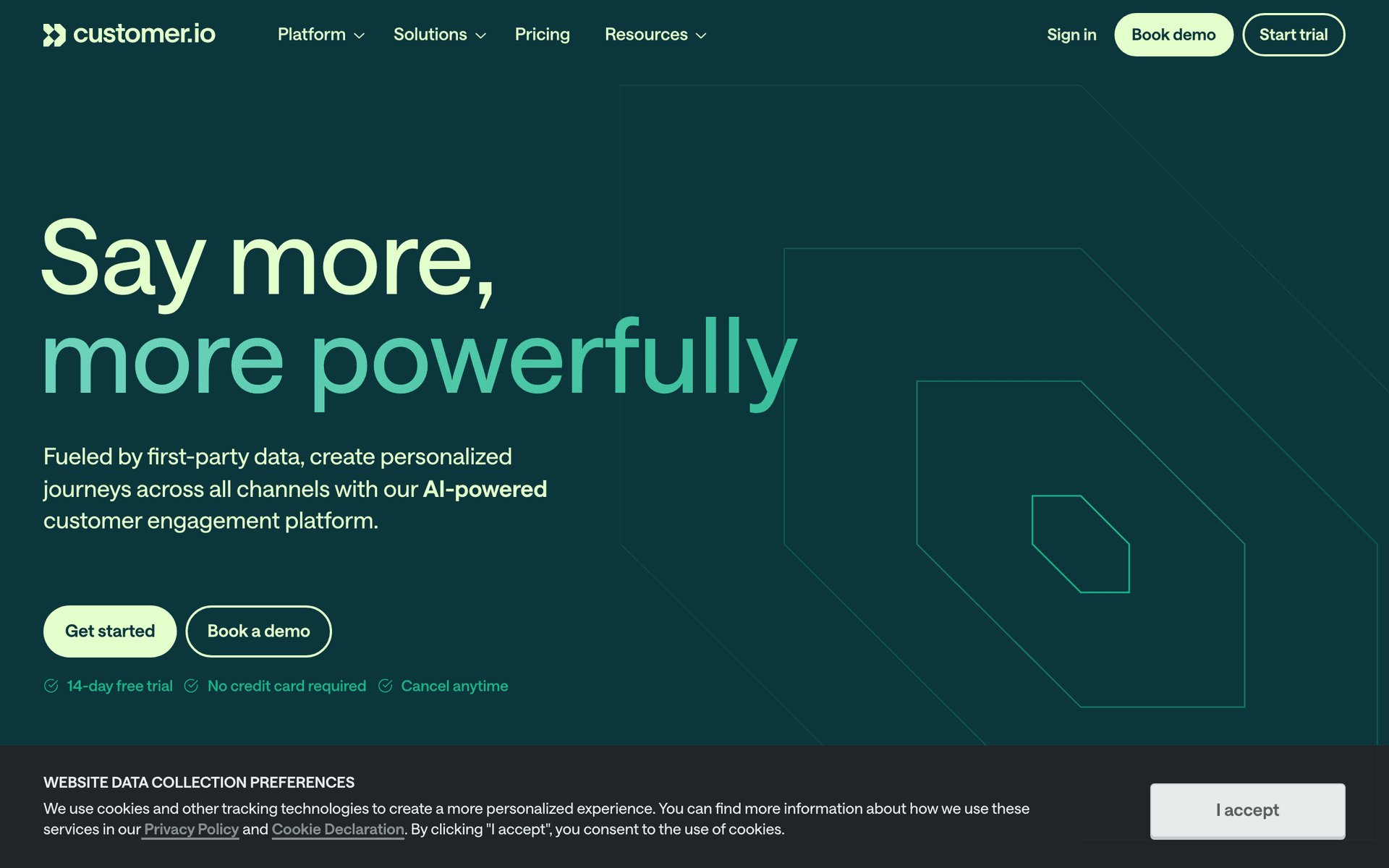
Customer.io excels for B2B SaaS companies with product-led growth motions where the product is the primary acquisition and conversion channel. Event-based triggers automate emails based on actual product usage - when a trial user activates a key feature, hits a usage threshold, or invites team members. For B2B companies where buying signals come from product behavior rather than content downloads, Customer.io provides the deepest behavioral automation available. The trade-off is that it requires engineering resources to implement properly - you need to instrument your product to send events. Starting at $100/month, it is positioned for B2B companies with real revenue and technical teams.

Best for
Product-led B2B SaaS companies with engineering resources
Pricing
From $100/month for 5,000 profiles

Pros

  • Event-driven automation
  • Product usage triggers
  • Complex workflows
  • API-first approach

Cons

  • Expensive
  • Requires developer setup
  • Steep learning curve
  • No CRM
#4
Mailchimp

The most recognized email marketing platform.

Visit

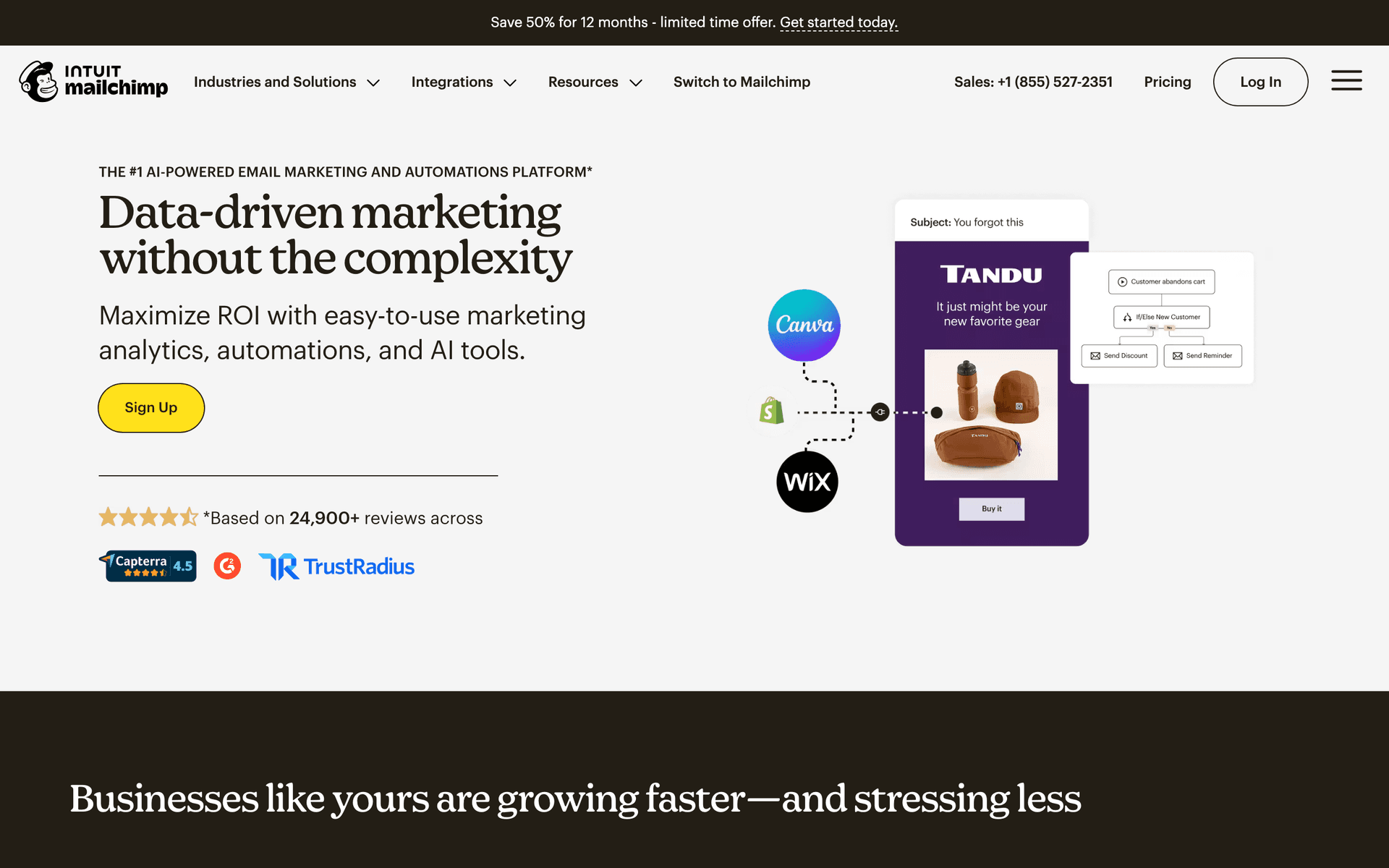
Mailchimp works for early-stage B2B companies that need basic email marketing running quickly. The free tier (500 contacts) and massive template library get you sending newsletters and simple nurture sequences within an hour. CRM integrations with Salesforce and HubSpot extend its capabilities for pipeline visibility. For B2B companies just starting their email program, Mailchimp is a familiar and low-risk starting point. The limitations show up as your program matures - basic automation cannot handle sophisticated multi-branch nurture sequences, there is no lead scoring, and pricing climbs steeply once you outgrow the free tier. Most growing B2B companies eventually migrate to more capable platforms.

Best for
Early-stage B2B companies wanting quick, familiar setup
Pricing
Free up to 500 contacts, then from $13/month

Pros

  • Free tier
  • CRM integrations
  • Easy to use
  • Wide ecosystem

Cons

  • Basic automation
  • No lead scoring
  • Steep pricing at scale
  • Not B2B specialized
#5
Brevo

Affordable email and SMS with CRM included.

Visit

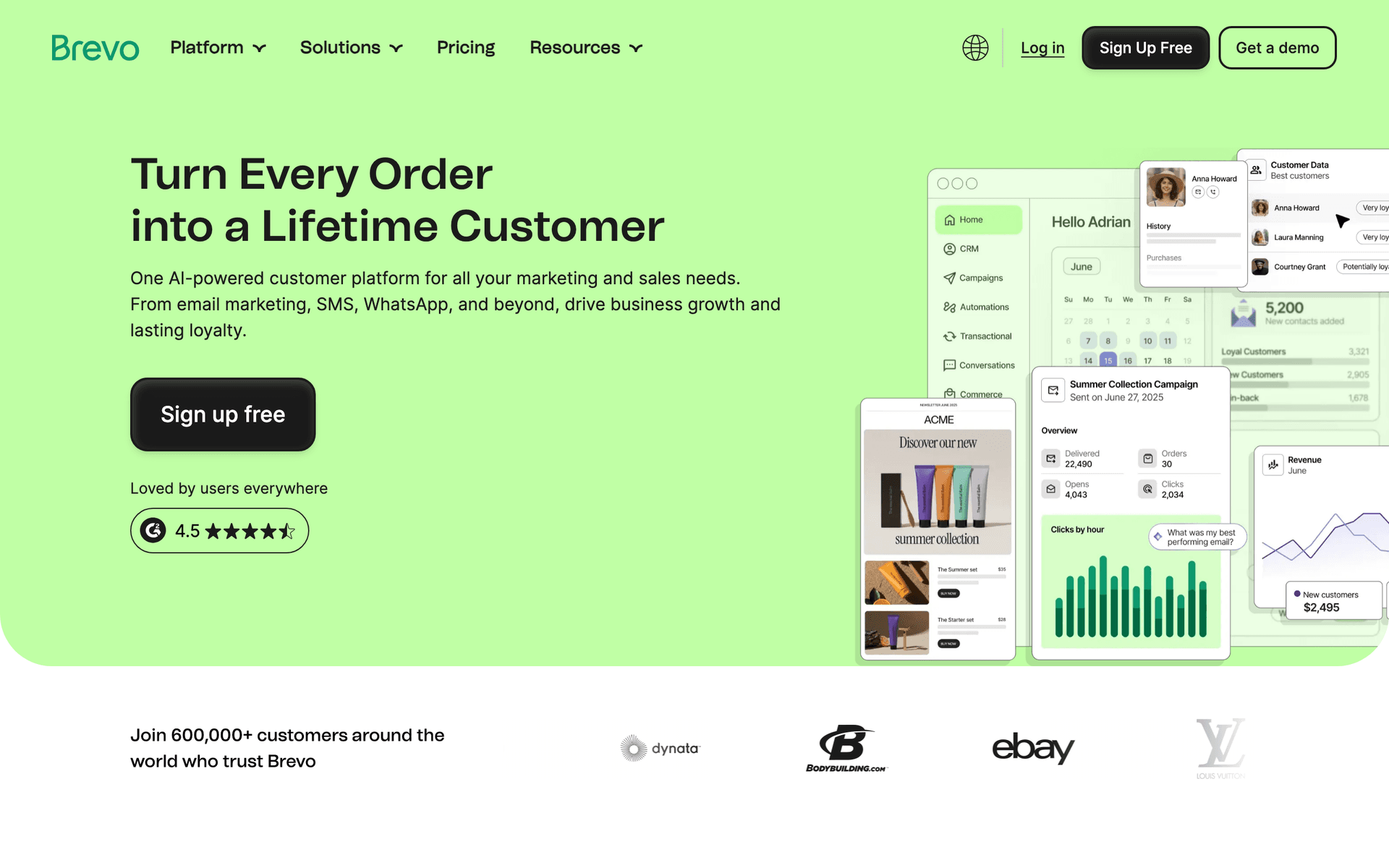
Brevo includes a basic CRM alongside email marketing at every tier, which is valuable for B2B companies that want prospect tracking without paying for a separate CRM tool. For early-stage B2B companies on a budget, having contact management, deal tracking, and email marketing in one platform simplifies the stack. Pay-by-email pricing keeps costs manageable when your contact list grows faster than your revenue. Transactional email handles account notifications. The automation is functional for basic nurture sequences but lacks the sophistication of ActiveCampaign for complex B2B buying journeys.

Best for
Budget-conscious B2B companies wanting email and CRM together
Pricing
Free up to 300 emails/day, then from $25/month

Pros

  • CRM included
  • Affordable
  • Transactional email
  • Pay by emails

Cons

  • Basic automation
  • Less polished
  • Daily limits
  • Brevo branding
#6
Kit

Creator-focused platform with generous free tier.

Visit

Kit (formerly ConvertKit) works for B2B companies with content-driven marketing strategies where the founder or team publishes thought leadership content regularly. The free tier supports 10,000 subscribers, which is generous for a B2B company building an audience through blog posts, podcasts, and LinkedIn content. Landing pages capture leads from content effectively. The tag-based subscriber management is clean and intuitive. For B2B companies where the primary marketing motion is content and thought leadership rather than demand generation, Kit handles newsletter and nurture basics well. It lacks CRM integration, lead scoring, and the B2B-specific features that sales-driven companies need.

Best for
Content-driven B2B companies building through thought leadership
Pricing
Free up to 10,000 subscribers, then from $25/month

Pros

  • Generous free tier
  • Landing pages
  • Content-focused
  • Simple tagging

Cons

  • No CRM
  • No lead scoring
  • Basic automation
  • Not B2B specialized
#7
MailerLite

Clean, simple email marketing.

Visit

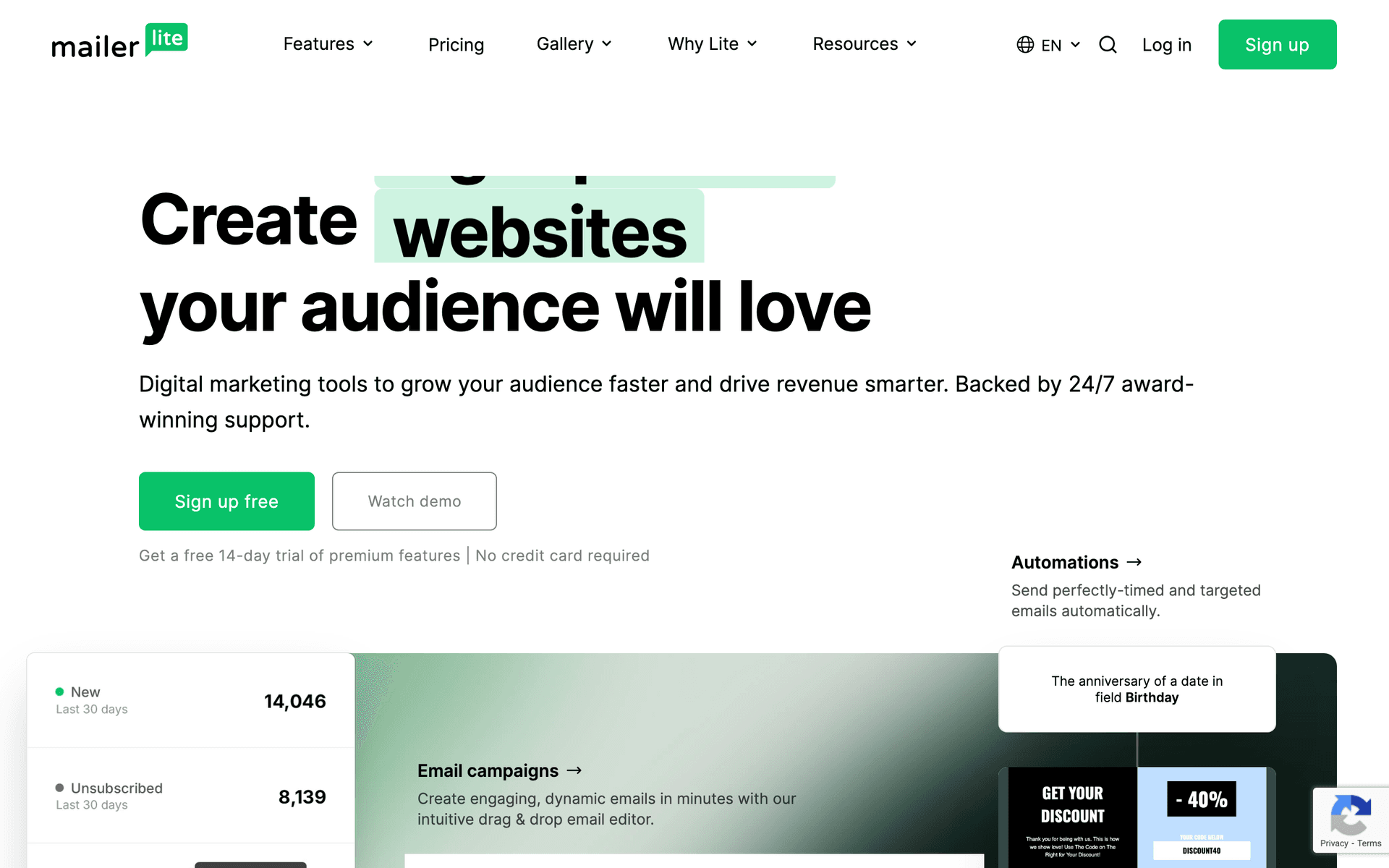
MailerLite provides affordable, clean email marketing for early-stage B2B companies that need to get an email program running without complexity. The free tier covers 1,000 subscribers with landing pages and basic automation. For a B2B startup sending weekly newsletters, capturing leads from blog posts, and running a simple nurture sequence, MailerLite does everything needed at the lowest cost. The interface is the cleanest on this list - no overwhelming feature menus or enterprise complexity. The limitation is that you will outgrow it as your B2B program matures - no CRM, no lead scoring, basic segmentation, and limited analytics compared to B2B-specialized tools.

Best for
Early-stage B2B companies wanting affordable simplicity
Pricing
Free up to 1,000 subscribers, then from $10/month

Pros

  • Very affordable
  • Clean interface
  • Landing pages
  • Good automation

Cons

  • No CRM
  • Limited B2B features
  • Basic analytics
  • Strict approval
#8
GetResponse

All-in-one platform with webinars for B2B lead generation.

Visit

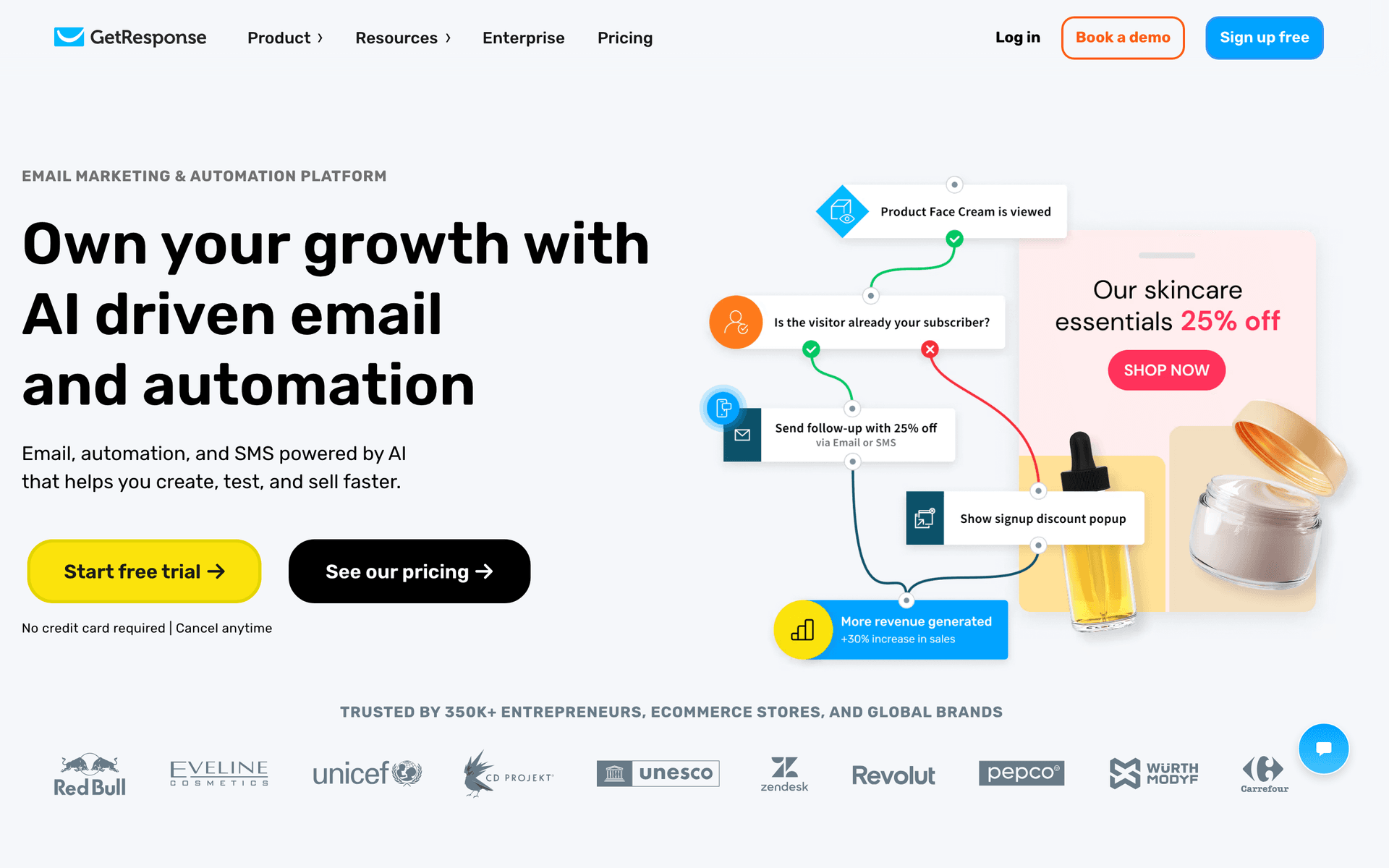
GetResponse stands out for B2B companies that use webinars as a primary lead generation channel. Hosting webinars, capturing registrant data, and automating follow-up sequences all happen within one platform, eliminating the need to connect separate webinar and email tools. If your B2B company runs monthly product demos, industry webinars, or thought leadership presentations, having the entire workflow in one tool saves time and prevents data silos. Landing pages capture registrants, automation handles reminder and follow-up sequences, and basic lead scoring identifies the most engaged attendees. For B2B companies that do not use webinars, the extra features add complexity without value.

Best for
B2B companies using webinars for lead generation
Pricing
From $15.60/month for 1,000 contacts

Pros

  • Webinar hosting
  • Landing pages
  • Follow-up automation
  • Good value

Cons

  • Average automation
  • Cluttered interface
  • Basic lead scoring
  • Not B2B specialized
#9
Loops

Modern email platform for SaaS companies.

Visit

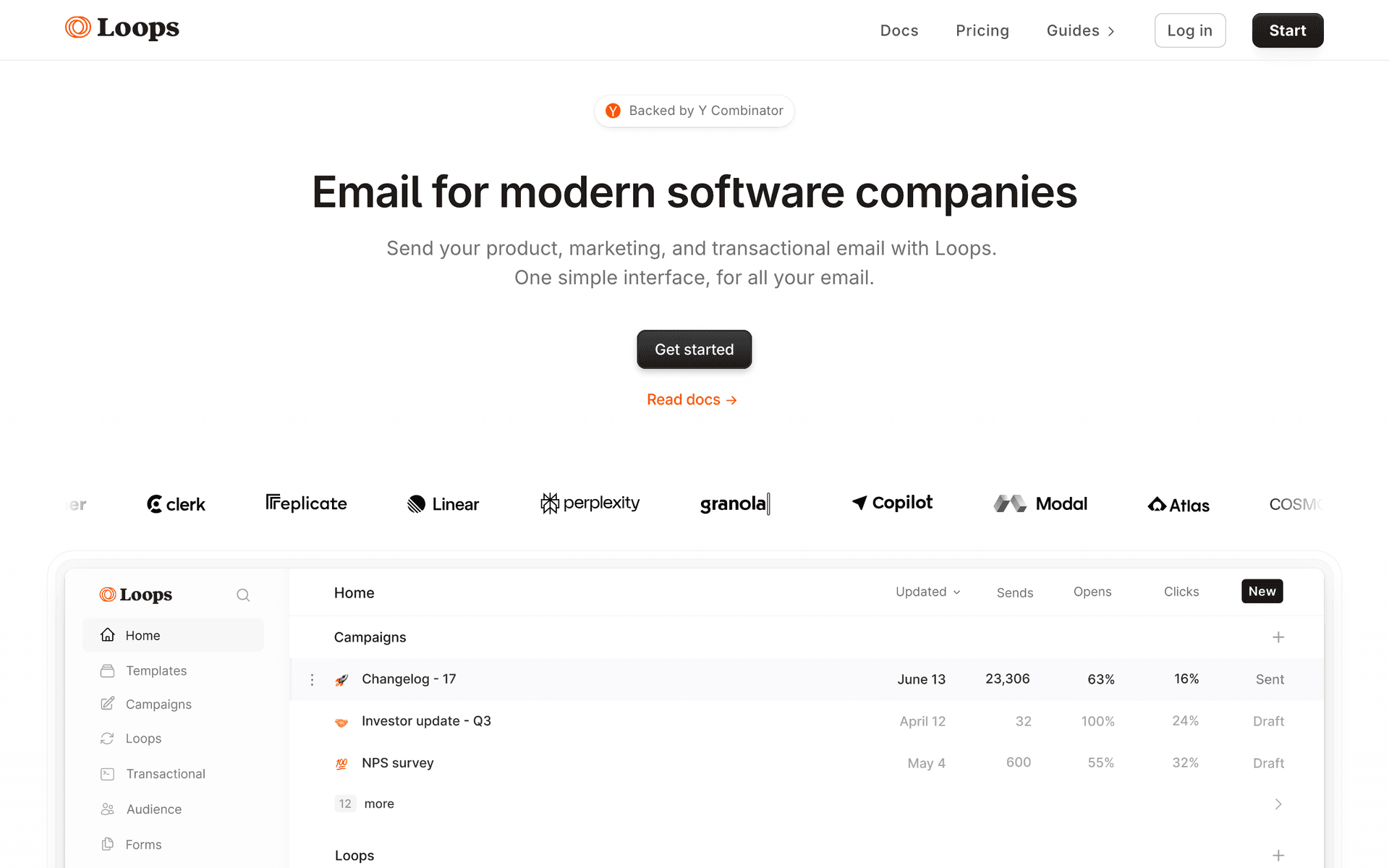
Loops is purpose-built for SaaS and subscription businesses, making it a natural fit for B2B SaaS companies that want a modern, clean email experience. Event-based automations trigger on product usage and user actions. The combined transactional and marketing approach means onboarding emails, product updates, and lifecycle sequences all live in one place. For B2B SaaS companies that value developer experience and clean design over enterprise complexity, Loops provides a refreshing alternative to older platforms. Still growing its feature set - no CRM, no lead scoring, and limited segmentation compared to mature B2B tools.

Best for
B2B SaaS companies wanting a modern, purpose-built platform
Pricing
Free up to 1,000 contacts, then from $49/month

Pros

  • Built for SaaS
  • Modern interface
  • Event triggers
  • Clean design

Cons

  • Newer platform
  • Limited features
  • Price jump after free
  • No CRM
#10
Campaign Monitor

Professional email with polished templates.

Visit

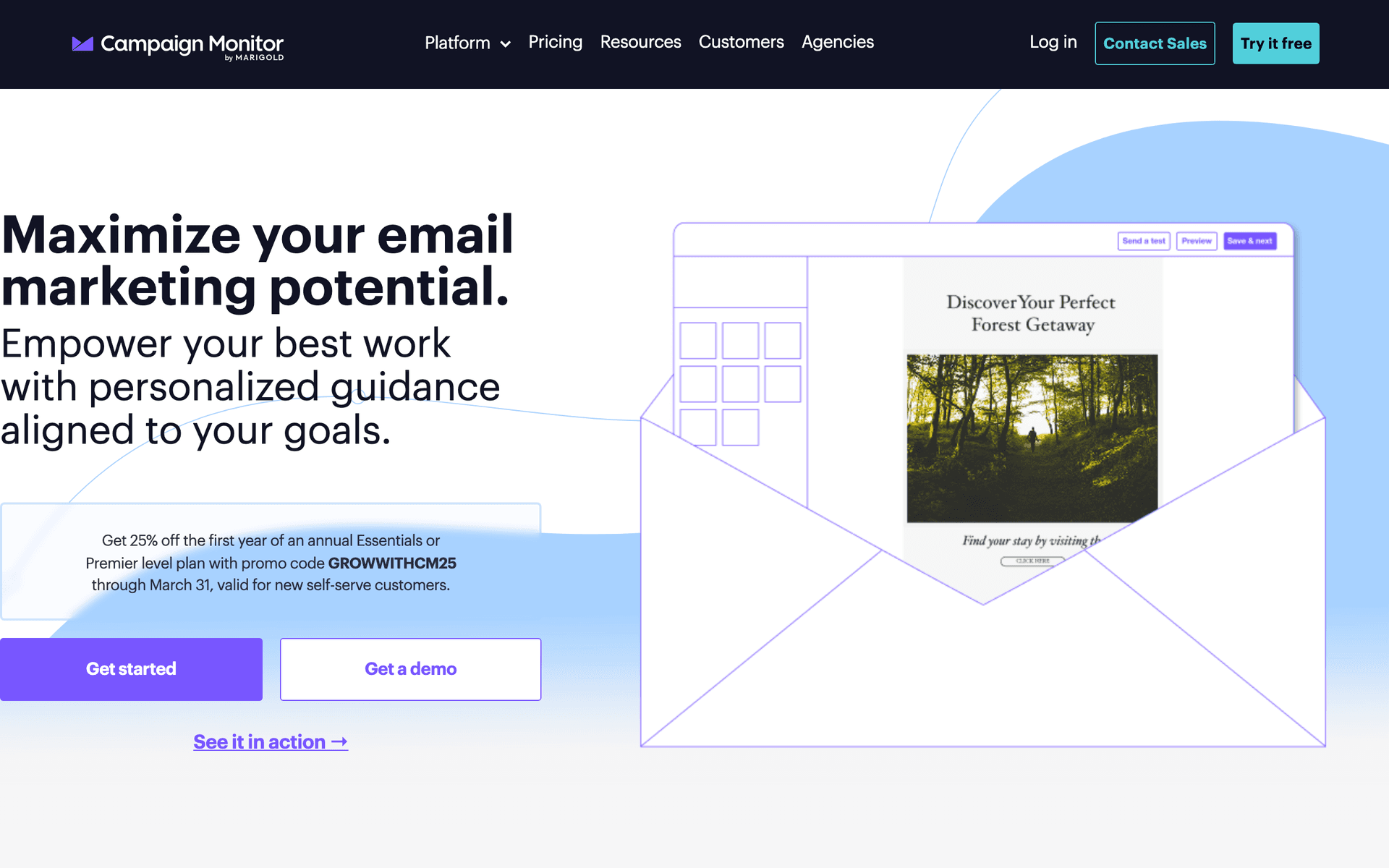
Campaign Monitor produces the most polished-looking emails on this list, which matters when you are emailing C-suite executives and senior decision-makers. In B2B, the quality of your communications reflects on your company's professionalism. Campaign Monitor's templates and editor make it easy to create emails that look enterprise-grade. The limitation is that beyond visual quality, Campaign Monitor lacks the B2B-specific features - no CRM, no lead scoring, no sales pipeline, and limited automation. It works as a newsletter and announcement tool for companies that need beautiful emails but handle lead management elsewhere.

Best for
B2B companies wanting professional, polished email communications
Pricing
From $9/month for 500 contacts

Pros

  • Professional quality
  • Beautiful templates
  • Reliable
  • Easy editor

Cons

  • Limited automation
  • Contact-based pricing
  • No CRM
  • No lead scoring
#11
Postmark

Transactional email specialist.

Visit

Postmark is not a marketing email tool - it is a transactional email specialist. For B2B SaaS companies where transactional email reliability is critical (account notifications, invoices, system alerts, password resets), Postmark delivers faster and more reliably than any marketing platform. If your B2B product sends time-sensitive notifications that users depend on, Postmark should handle those while a separate tool handles marketing. Combining Postmark for transactional with Sequenzy or ActiveCampaign for marketing gives you best-in-class reliability for both.

Best for
B2B SaaS where transactional email reliability is critical
Pricing
From $15/month for 10,000 emails

Pros

  • Best deliverability
  • Fast delivery
  • Excellent API
  • Reliable

Cons

  • No marketing automation
  • Not standalone
  • Strict policies
  • Limited features
#12
AWeber

Reliable basics with phone support.

Visit

AWeber provides basic email marketing for B2B companies with simple needs - a monthly newsletter and basic welcome sequence. Phone support is available when you need help, which smaller B2B companies without dedicated marketing staff appreciate. The deliverability is reliable. The honest assessment is that AWeber lacks the B2B-specific features that growing companies need - no lead scoring, no CRM, limited automation, and basic segmentation. For a solo consultant or small agency sending a weekly newsletter, it covers the basics. For any B2B company with a real pipeline to manage, look elsewhere.

Best for
B2B companies needing basic email with phone support
Pricing
Free up to 500 subscribers, then from $15/month

Pros

  • Phone support
  • Reliable
  • Free tier
  • Simple

Cons

  • No B2B features
  • Dated
  • Limited automation
  • Basic everything
#13
Moosend

Budget-friendly email marketing.

Visit

Moosend is the cheapest paid option for B2B companies that need more than free tiers offer. At $9 per month, it provides automation workflows, landing pages for lead capture, and reporting that covers the basics. For early B2B companies watching every dollar - bootstrapped startups, solo consultants, or small agencies - Moosend covers email marketing essentials at the lowest possible cost. The automation is surprisingly capable for the price. You will outgrow it as your B2B program matures, but it buys you time to validate your email strategy before investing in a more expensive platform.

Best for
Very budget-conscious B2B companies
Pricing
From $9/month for 500 subscribers

Pros

  • Very affordable
  • Decent automation
  • Landing pages
  • Good value

Cons

  • No B2B features
  • Less well-known
  • Limited integrations
  • Basic support

Feature Comparison

FeatureSequenzyActiveCampaignCustomer.ioGetResponse
Lead nurture automation
Yes
Advanced
Advanced
Yes
AI-powered sequences
Yes
No
No
No
Built-in CRM
No
Yes
No
No
Lead scoring
No
Yes
No
Basic
Sales pipeline
No
Yes
No
No
Pay-per-email pricing
Yes
No
No
No
Free tier available
Yes
No
No
No
Webinar hosting
No
No
No
Yes

Common Mistakes to Avoid

We see these mistakes over and over. Skip the learning curve and avoid these from day one.

Treating B2B email like B2C promotion

B2B buyers are not swayed by urgency tactics, flashy designs, or discount offers. They need evidence, expertise, and trust. An email that reads like a consumer promotion damages your credibility with professional buyers.

Nurturing too aggressively too early

Sending a demo request CTA in the second email of a nurture sequence pushes prospects away. They downloaded a white paper - they are in research mode, not buying mode. Match your CTAs to their stage: educational content early, case studies mid-funnel, and demo invitations late.

Ignoring the 'no decision' outcome

Most B2B deals are not lost to competitors - they are lost to no decision. Your email content should address the risk of inaction, not just the benefits of your solution. Help prospects build the internal case for change.

Sending the same content to every stakeholder

The technical evaluator needs different content than the budget holder. The end user needs different content than the executive sponsor. If you cannot segment by role within an account, at least create different content tracks for technical and business audiences.

Neglecting existing customers in email marketing

Most B2B companies focus email exclusively on prospects and forget that expansion revenue from existing accounts is cheaper and faster. Build email programs for upselling, cross-selling, and renewal alongside acquisition nurture.

Email Sequences Every B2B Companie Needs

These are the essential automated email sequences that will help you grow your business and keep clients coming back.

B2B Lead Nurture

Downloads white paper, case study, or attends webinar

Nurture new B2B leads with valuable content until they are sales-ready.

Immediately
Here is your {{resource_name}} - plus additional insights

Deliver the resource. Brief company introduction. Related content recommendations.

Day 3
How {{company}} solved {{challenge}} with our help

Relevant case study with specific results. Show ROI and business impact.

Day 7
{{industry}} trends that will shape your strategy

Industry insight that demonstrates expertise. Position your company as a thought leader.

Day 14
Want to explore how we can help {{company_name}}?

Soft CTA to book a consultation or demo. Include brief overview of what the call covers.

Post-Demo Follow-Up

Demo or consultation completed

Keep momentum after a demo and advance the deal.

Same day
Great meeting - here is a recap and next steps

Recap key points discussed. Address any questions raised. Clear next steps.

Day 3
Resources to share with your team

Provide materials the prospect can use internally to build consensus. ROI calculator, comparison sheets, implementation timeline.

Day 7
How are things progressing on your end?

Check-in on their decision timeline. Offer to address concerns from other stakeholders.

Thought Leadership Newsletter

Weekly or biweekly schedule

Build authority and keep your company top of mind with prospects and customers.

Biweekly
{{topic}} - insights for {{audience}}

One valuable industry insight, original data point, or expert analysis. Make it worth reading every time.

Customer Expansion

Customer for 90+ days with high usage

Encourage existing customers to expand their usage or upgrade.

90 days
You are getting great results - here is how to do even more

Usage stats and achievements. Introduction to advanced features or higher tiers.

120 days
Companies like yours are seeing {{X}} with our {{plan}} plan

Case study of a similar company that upgraded. Specific results they achieved.

Choosing the Right Platform for Your B2B Company

The best tool depends on your sales motion, team size, and technical resources.

If you want marketing and sales aligned in one platform, ActiveCampaign provides CRM, lead scoring, and sales pipeline alongside powerful email automation. One platform for the full buyer journey, from first touch through closed deal to expansion.

If you are product-led, Customer.io gives you the deepest behavioral triggers based on actual product usage. Loops is a modern alternative for B2B SaaS companies that value clean design and developer experience.

If you want efficiency and speed, Sequenzy's AI generates professional B2B nurture sequences in seconds. The pay-per-email pricing works well for smaller, targeted B2B lists where you are sending to hundreds or low thousands, not millions.

If you are just getting started, Mailchimp or MailerLite get your first newsletter and nurture sequence running within an hour at minimal cost. Upgrade to more capable tools as your program matures.

The B2B Email Revenue Engine

Three strategies drive the most pipeline for B2B companies.

Lead Nurturing

Lead nurturing moves prospects from awareness to consideration to decision. A content-driven sequence of case studies, industry insights, and educational resources builds trust and keeps your company in the conversation during long buying cycles. The companies that do this well provide genuine value in every email - original research, actionable frameworks, and expert analysis that the reader would find useful even if they never bought.

Sales Enablement

Sales enablement email supports active deals. Automated follow-ups after demos maintain momentum. Stakeholder-specific content (technical deep-dives for evaluators, ROI summaries for executives) helps your champion build internal consensus. Resource packages with implementation timelines, comparison sheets, and case studies give your sales team ammunition at every deal stage.

Customer Expansion

Customer expansion grows revenue from existing accounts more efficiently than new acquisition. Usage-based triggers identify accounts that are ready for more - growing teams, increasing usage, hitting plan limits. Milestone emails celebrate achievements and naturally introduce the next tier. The best B2B companies treat customer email as seriously as prospect email.

Industry-Specific B2B Email Strategies

For B2B SaaS Companies

Focus on product-triggered emails alongside marketing content. When a trial user activates a key feature, send educational content about advanced use cases. When usage approaches plan limits, introduce the next tier. When a team adds new members, share onboarding best practices. Combine behavioral triggers from your product with marketing nurture for the most effective B2B SaaS email program.

For Professional Services and Consulting

Thought leadership is your primary email strategy. Weekly or biweekly newsletters with original insights, methodology explanations, and client success stories build the expertise trust that drives consulting engagements. Include a "book a call" CTA in every newsletter, but make the content valuable enough that readers forward it to colleagues regardless of whether they need your services.

For B2B Manufacturers and Distributors

Focus on product catalog updates, specification changes, and availability alerts. Segment by industry vertical so each customer segment receives relevant product information. Seasonal campaigns around industry events, regulatory changes, and budget cycles align your outreach with buying patterns.

Getting Started With B2B Email

  1. Create a lead nurture sequence with 6-12 emails of genuinely valuable B2B content - case studies, frameworks, and insights your audience can act on
  2. Set up lead scoring to identify sales-ready prospects automatically based on email engagement and website behavior
  3. Build post-demo follow-up to maintain momentum after sales conversations with recap emails and stakeholder resources
  4. Commit to a regular newsletter with industry insights and thought leadership - consistency builds trust
  5. Align with sales on lead handoff criteria so marketing-qualified leads reach reps at the right moment with full context

The B2B companies that generate the most pipeline from email are the ones that provide genuine value in every message. Buyers can instantly detect self-serving content. Lead with expertise, provide frameworks and data they can use today, and the sales conversations follow naturally.

What a Healthy B2B Email Program Looks Like

After 6-12 months of consistent B2B email marketing:

  • List size: 2,000-20,000 contacts for most B2B companies (quality matters more than quantity)
  • Open rate: 23-30% for nurture sequences, 30-40% for thought leadership newsletters
  • MQL conversion: 5-15% of nurtured leads become marketing qualified
  • Pipeline contribution: 20-40% of pipeline should be influenced by email touchpoints
  • List growth: 200-1,000 new contacts per month from content downloads and events
  • Unsubscribe rate: Under 0.2% per email (B2B audiences have lower tolerance for irrelevant content)

If your metrics are below these ranges, the issue is almost always content quality, not platform capabilities. Invest in creating genuinely valuable content before upgrading your email tool.

How We Evaluated These Tools

I evaluated each platform by building a complete B2B email program: a 6-email lead nurture sequence, a post-demo follow-up flow, and a weekly thought leadership newsletter. I scored platforms on CRM integration quality, lead scoring capabilities, automation sophistication for multi-stakeholder buying journeys, and the ability to hand leads to sales at the right moment.

Frequently Asked Questions

Ready to grow your b2b companie practice?

Start your free trial today. Set up your first email sequence in minutes with AI-powered content generation.

Related Industries

Sequenzy - Complete Pricing Guide

Pricing Model

Sequenzy uses email-volume-based pricing. You only pay for emails you send. Unlimited contacts on all plans — storing subscribers is always free.

All Pricing Tiers

  • 2.5k emails/month: Free (Free annually)
  • 15k emails/month: $19/month ($205/year annually)
  • 60k emails/month: $29/month ($313/year annually)
  • 120k emails/month: $49/month ($529/year annually)
  • 300k emails/month: $99/month ($1069/year annually)
  • 600k emails/month: $199/month ($2149/year annually)
  • 1.2M emails/month: $349/month ($3769/year annually)
  • Unlimited emails/month: Custom pricing (Custom annually)

Yearly billing: All plans offer a 10% discount when billed annually.

Free Plan Features (2,500 emails/month)

  • Visual automation builder
  • Transactional email API
  • Reply tracking & team inbox
  • Goal tracking & revenue attribution
  • Dynamic segments
  • Payment integrations
  • Full REST API access
  • Custom sending domain

Paid Plan Features (15k - 1.2M emails/month)

  • Visual automation builder
  • Transactional email API
  • Reply tracking & team inbox
  • Goal tracking & revenue attribution
  • Dynamic segments
  • Payment integrations (Stripe, Paddle, Lemon Squeezy)
  • Full REST API access
  • Custom sending domain

Enterprise Plan Features (Unlimited emails)

  • Visual automation builder
  • Transactional email API
  • Reply tracking & team inbox
  • Goal tracking & revenue attribution
  • Dynamic segments
  • Payment integrations
  • Full REST API access
  • Custom sending domain

Important Pricing Notes

  • You only pay for emails you send — unlimited contacts on all plans
  • No hidden fees - all features included in the price
  • No credit card required for free tier

Contact

  • Pricing Page: https://sequenzy.com/pricing
  • Sales: hello@sequenzy.com