Updated 2026-03-15

Best Email Marketing Tools for Consultants

Attract high-value clients and build authority in your field with the right email marketing platform.

For consultants, email marketing is the most effective way to build authority and generate high-value leads. A consistent newsletter establishes you as a thought leader in your niche. Automated nurture sequences convert website visitors into discovery calls. Follow-up emails keep proposals from going cold. Client onboarding sequences set the tone for successful engagements. Unlike social media posts that disappear in hours, email content lives in your subscriber's inbox and builds compounding trust over time. I tested and reviewed 13 email marketing tools specifically for consultant use cases, ranking them on automation, CRM features, ease of use, and pricing.

TL;DR

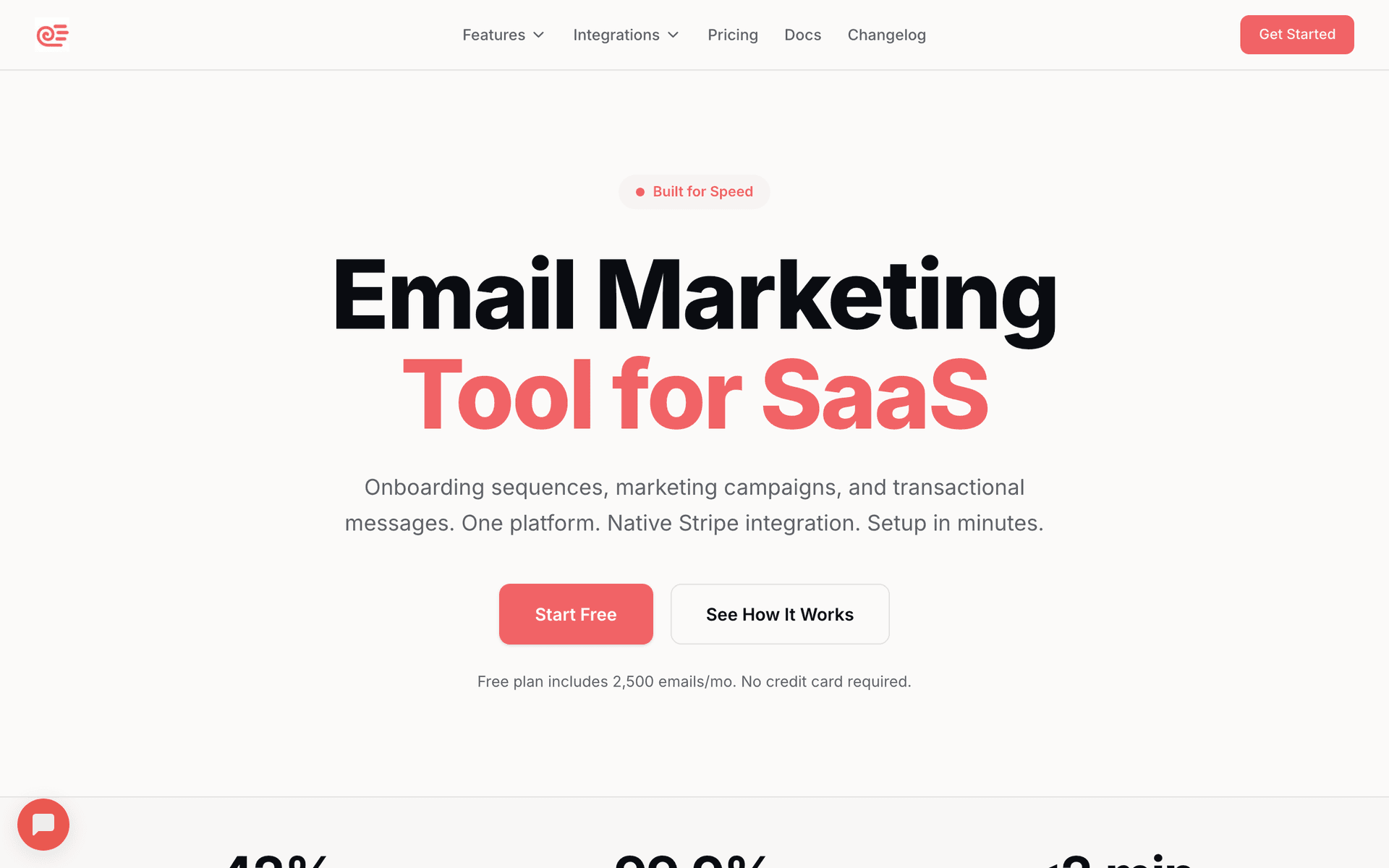
For most consultants, Sequenzy is the best choice because AI builds your nurture sequences in seconds and you only pay for emails sent (free up to 2,500 emails/mo). If you need CRM-style pipeline tracking alongside email, ActiveCampaign is the premium pick. Kit is ideal for content-driven consultants who want a generous free tier to grow their audience before spending anything.

Why Consultants Need Email Marketing

Thought Leadership

Clients hire consultants they trust and perceive as experts. A regular email sharing insights, frameworks, and industry analysis positions you as the go-to authority in your niche. Over time, your email becomes required reading for decision-makers in your space.

Lead Pipeline

Referrals are great but unpredictable. Email marketing creates a consistent pipeline of leads. Content attracts the right audience, lead magnets capture their email, and nurture sequences warm them up until they are ready to hire you.

Proposal Conversion

Most consulting proposals are not accepted or rejected immediately. Automated follow-up emails keep you in the conversation without being pushy. A well-timed case study or testimonial can tip the decision in your favor.

Client Retention

The most profitable consulting relationships are long-term. Regular check-ins, industry updates, and proactive insights keep clients engaged between projects and lead to repeat engagements and expanded scopes.

Consultants Email Marketing Benchmarks

Know these numbers before you start. They'll help you set realistic goals and pick the right tool.

28-35%
Average Open Rate

Consulting newsletters typically see higher open rates than average because subscribers self-select for expertise. If you are below 25%, your subject lines may not be signaling enough value.

3-5%
Average Click Rate

Consultants with a clear call to action (book a call, download a framework) see click rates at the higher end. Pure insight newsletters without CTAs will be lower, which is fine.

Tuesday or Wednesday, 7-9 AM
Best Send Time

Decision-makers check email early in the morning before meetings fill their day. Tuesday and Wednesday mornings consistently outperform other days for B2B consulting content.

2-5 per month per 1,000 subscribers
Discovery Calls from Email

A well-nurtured list of 1,000 targeted subscribers should generate 2-5 discovery calls per month. If you are not seeing this, your content may not be targeting the right audience or your CTA is unclear.

Important Tips Before You Choose

Lessons from consultantswho've been doing this for years. Save yourself the trial and error.

Lead with frameworks, not advice

Consultants who share proprietary frameworks in their emails attract higher-value clients than those who give generic tips. A named methodology signals expertise and differentiates you from competitors. Create a 2x2 matrix, a 5-step process, or a diagnostic framework and make it the centerpiece of your nurture sequence.

Use case studies as your hardest-working emails

A detailed case study with specific numbers (revenue increased 34%, costs reduced by $120K) does more selling than any promotional email. Build a library of 5-10 case studies segmented by industry and challenge, then match them to prospects based on their interests.

Set up a proposal follow-up sequence before you need it

Most consultants send proposals and then manually follow up, which leads to inconsistent timing and missed opportunities. Automate a 3-email follow-up that shares a relevant case study on day 3, a useful resource on day 7, and a gentle check-in on day 14.

Segment by decision-making stage, not just industry

A prospect who just discovered you needs different content than one who attended your webinar. Tag subscribers by awareness stage (cold, warm, hot) and send content that matches where they are in the buying journey.

Write like you talk to one client

The best consulting newsletters read like a personal note from a trusted advisor, not a corporate marketing email. Use first person, share opinions, and reference real situations. Decision-makers respond to authentic perspectives, not polished copy.

Repurpose client conversations into email content

Every client question, objection, or insight is potential newsletter content. When multiple clients ask the same question, that is a signal to write about it. This approach ensures your content addresses real concerns your ideal clients have.

13 Best Email Marketing Tools for Consultants

Our Top Pick for Consultants
#1
Sequenzy

AI-powered email marketing with smart automation sequences and pay-per-email pricing.

Visit

I put Sequenzy first for consultants because it solves the time problem that kills most consulting email programs. Consultants are too busy delivering client work to build elaborate email campaigns, and Sequenzy's AI creates complete nurture sequences, follow-up flows, and thought leadership templates in seconds. You describe your niche and ideal client, and the AI generates a multi-email sequence tailored to your consulting specialty. The free tier covers up to 2,500 emails per month, which is plenty for a consultant just starting their email program. When you scale, the paid plan at $29 for 50,000 emails is ideal for consultants who typically have smaller, highly-targeted lists. You are paying for what you send, not for contacts sitting in your database. The automation runs in the background while you focus on billable work, and the Stripe integration means you can trigger different sequences based on whether a prospect has paid for your services.

Best for
Consultants wanting AI-powered email automation with minimal time investment
Pricing
Free up to 2,500 emails/mo, then $29/mo for 50K emails (unlimited contacts)

Pros

  • AI creates thought leadership sequences instantly
  • Free tier for getting started
  • Pay-per-email is ideal for small, targeted lists
  • Automation runs while you focus on client work

Cons

  • Newer platform with a growing feature set
  • No built-in SMS marketing
  • Smaller template library compared to established platforms
  • No built-in CRM for deal tracking
#2
ActiveCampaign

Advanced automation and CRM platform with powerful workflow builder.

Visit

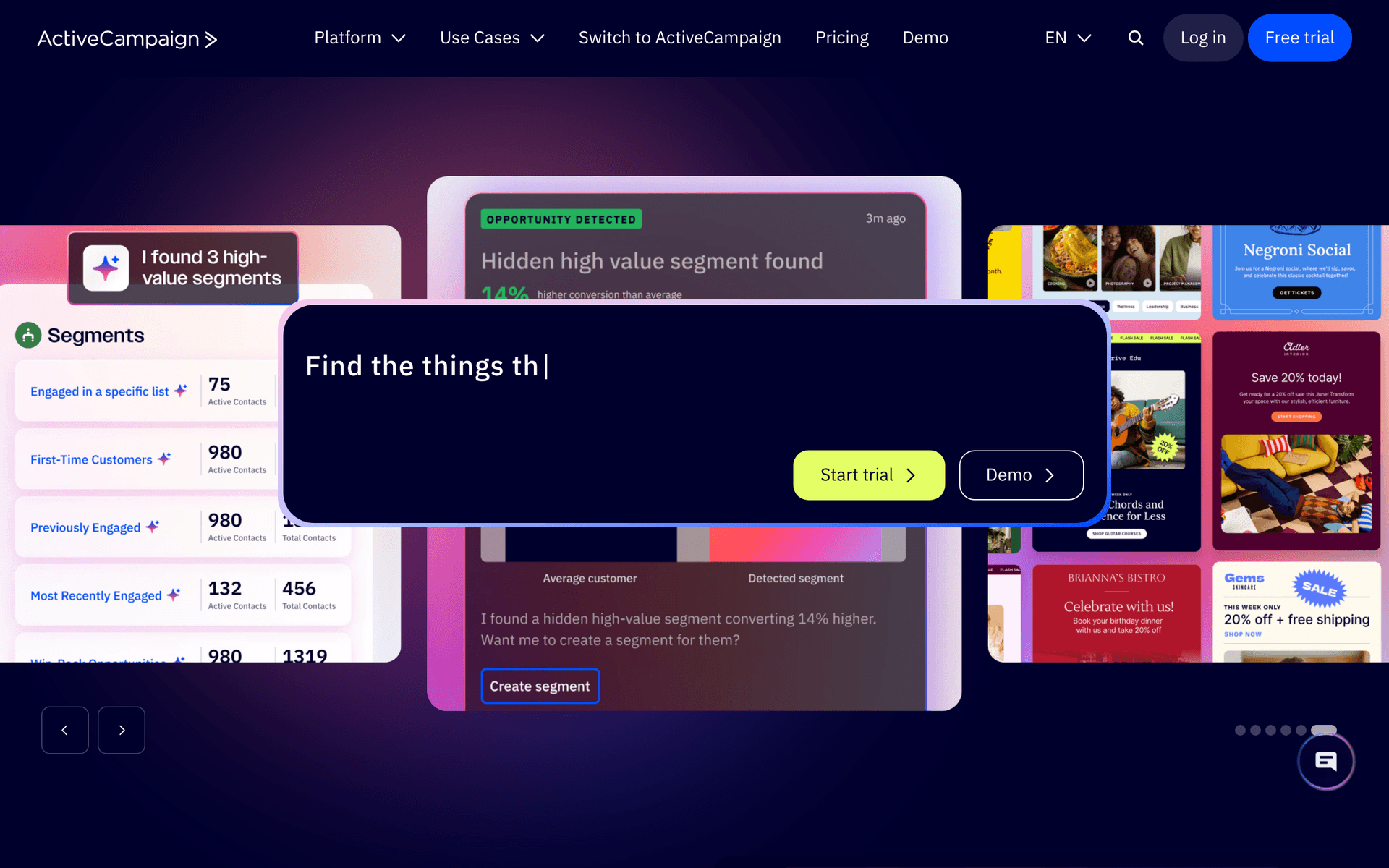
ActiveCampaign is the most powerful option for consultants who want email marketing and CRM in one platform. The built-in CRM lets you track prospects through your sales pipeline with custom stages like Discovery Call Scheduled, Proposal Sent, and Contract Negotiation. Lead scoring assigns points based on email engagement, website visits, and link clicks, so you know which prospects are warming up. You can trigger automated follow-ups when a prospect opens your proposal email three times (a strong buying signal) or visits your pricing page. For consultants managing 10-20 active prospects simultaneously across different stages, this level of visibility is genuinely useful. The learning curve is steep though - I spent a full afternoon just understanding the automation builder. And pricing climbs quickly once you need the CRM features, going from $29 to $49 per month for 1,000 contacts.

Best for
Established consultants wanting integrated CRM and advanced automation
Pricing
$29/month for 1,000 contacts

Pros

  • Built-in CRM with pipeline tracking
  • Lead scoring based on engagement
  • Advanced automation builder
  • Excellent deliverability

Cons

  • Steep learning curve
  • No free tier
  • Gets expensive with advanced features
  • Overkill for consultants starting out
#3
Kit

Creator-focused email platform with generous free tier, formerly ConvertKit.

Visit

Kit is excellent for consultants who build their practice through content marketing - blogging, podcasting, speaking, or publishing on LinkedIn. The free tier supports up to 10,000 subscribers, which is remarkable for a consultant building an audience from scratch. You can grow for months or even years without paying anything. Landing pages capture leads from your website, podcast show notes, or social media profiles without needing a separate tool. The tag-based segmentation system lets you organize prospects by industry (healthcare, fintech, manufacturing), by challenge (scaling, cost reduction, digital transformation), or by stage (just browsing, actively evaluating, past client). The automation builder handles welcome sequences and drip campaigns well, though it lacks the sophistication of ActiveCampaign for complex multi-branch workflows. Kit is the best starting point for consultants who write regularly and want to build an audience.

Best for
Content-driven consultants building an audience through writing
Pricing
Free up to 10,000 subscribers, then from $25/month

Pros

  • Generous free tier
  • Built-in landing pages
  • Simple tag-based organization
  • Great for audience building

Cons

  • Limited email design
  • Basic automation
  • No CRM
  • Basic reporting
#4
Mailchimp

The most recognized email marketing platform with a generous free tier.

Visit

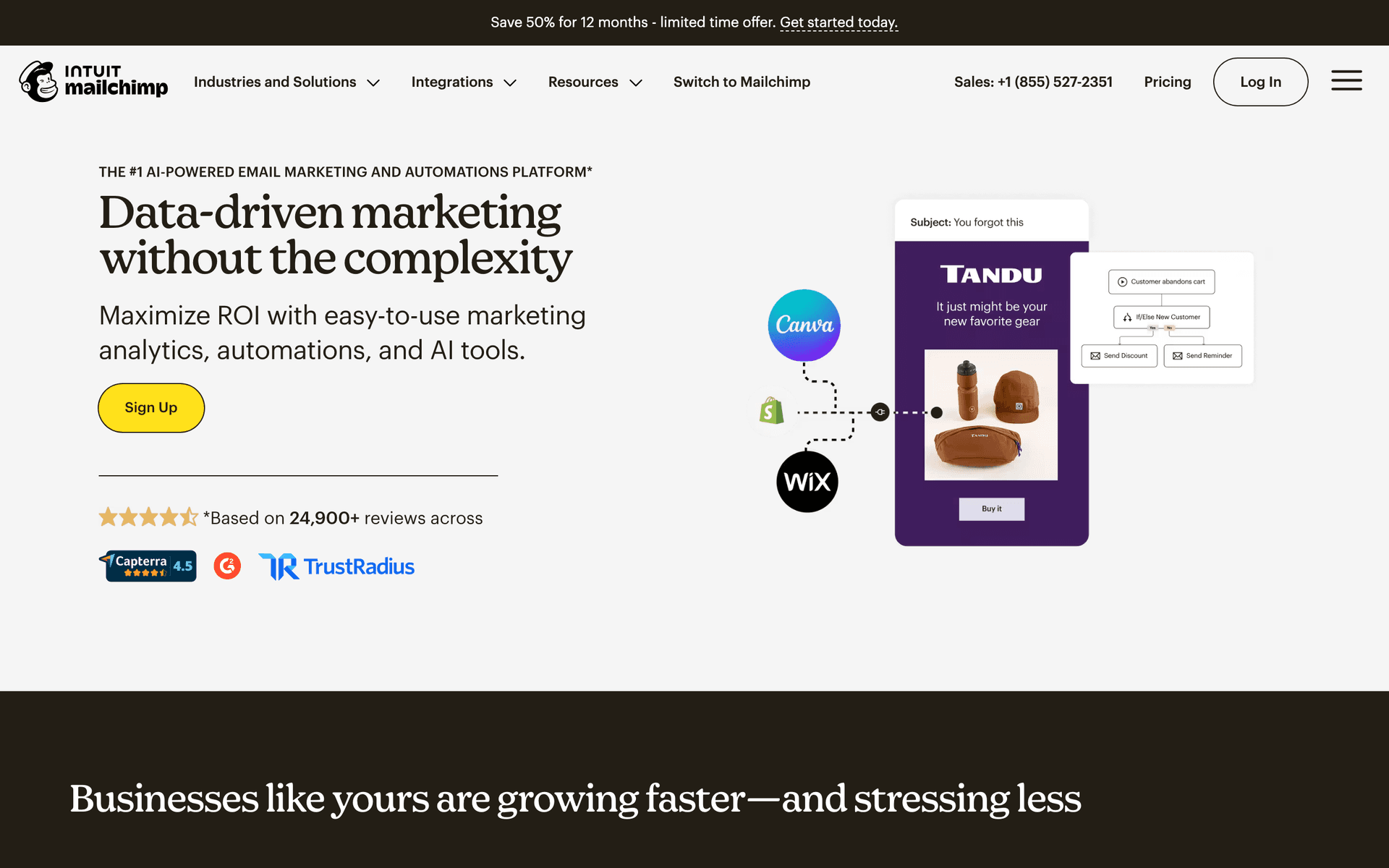
Mailchimp is the safe default for consultants starting with email marketing, and there is nothing wrong with that. The free tier gets you going with up to 500 contacts. Templates cover professional use cases like monthly newsletters and event invitations. The editor is drag-and-drop and genuinely intuitive. Integrations with tools you probably already use (Calendly, Zoom, Google Workspace) exist out of the box. Where Mailchimp falls short for consultants is automation depth - the free plan only allows basic single-step automations, and the more useful multi-step sequences are locked behind the Standard plan at $20 per month for 500 contacts. As your list grows past 2,500 contacts, costs escalate quickly. Many consultants start on Mailchimp and migrate once they need more sophisticated nurture sequences.

Best for
Consultants starting out who want a familiar, easy platform
Pricing
Free up to 500 contacts, then from $13/month

Pros

  • Free tier available
  • Professional templates
  • Easy to use
  • Wide integrations

Cons

  • Steep pricing at scale
  • Basic automation
  • Features behind paywalls
  • Declining support
#5
Beehiiv

Newsletter platform built for growth with built-in referral programs.

Visit

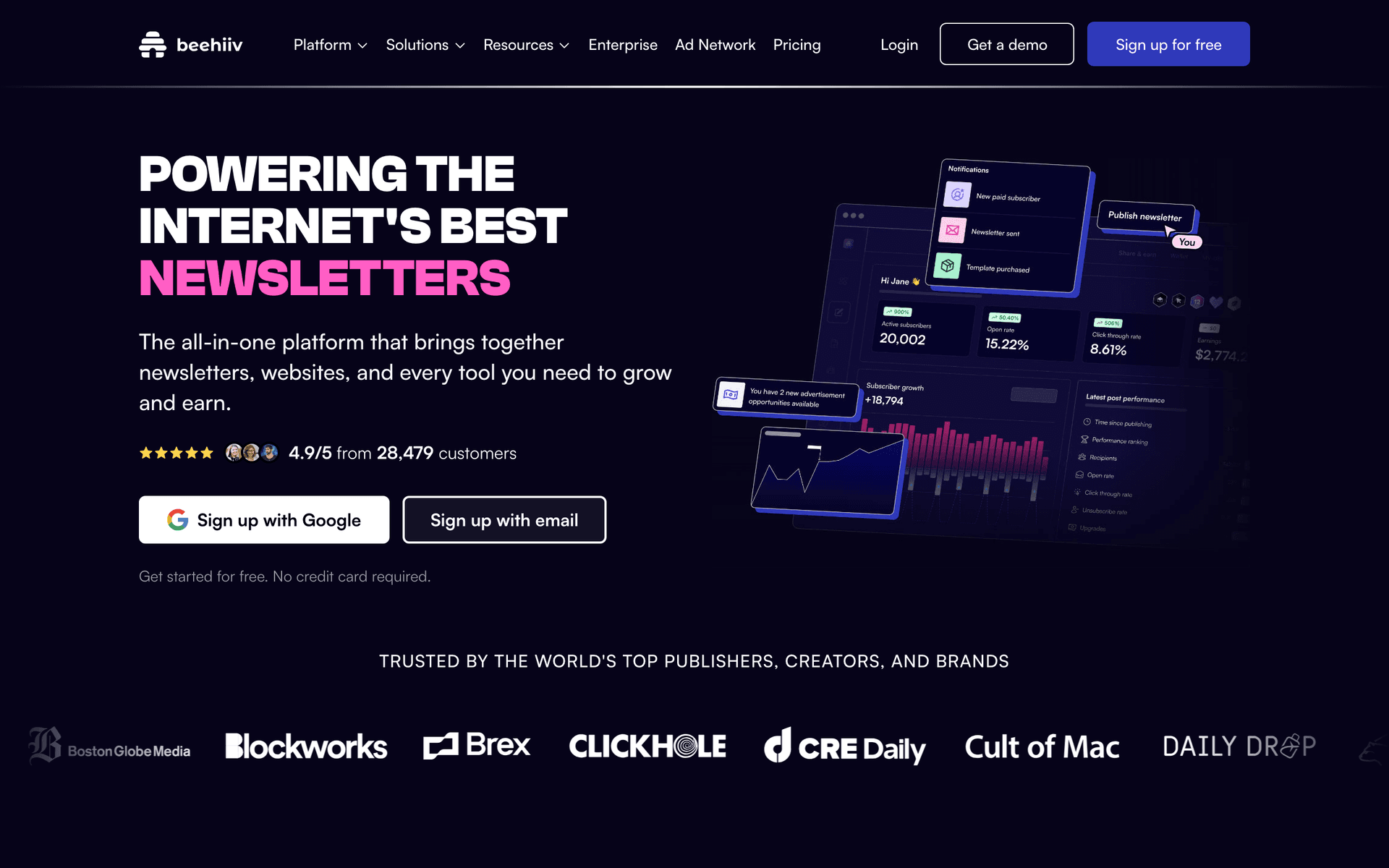
Beehiiv is ideal for consultants whose primary strategy is a thought leadership newsletter that drives inbound leads. The referral program lets your existing subscribers share your newsletter and earn rewards, growing your list organically through word-of-mouth. SEO-friendly web hosting means your newsletter issues rank in Google, bringing in subscribers who search for topics you cover. The analytics go beyond open rates - you can see which subscribers are most engaged and which content topics drive the most interest. For consultants who treat their newsletter as a media product that attracts clients, Beehiiv's growth tools are unmatched. The limitation is clear: Beehiiv is not designed for complex sales funnels, CRM-style tracking, or multi-branch automation sequences. It is a newsletter tool, not a full email marketing platform.

Best for
Consultants building authority through a regular newsletter
Pricing
Free up to 2,500 subscribers, then from $39/month

Pros

  • Built-in referral program
  • SEO-friendly web hosting
  • Excellent analytics
  • Newsletter-first design

Cons

  • Not for sales funnels
  • No CRM
  • Limited automation
  • Paid plans are expensive
#6
MailerLite

Clean, simple email marketing with generous free tier and good automation.

Visit

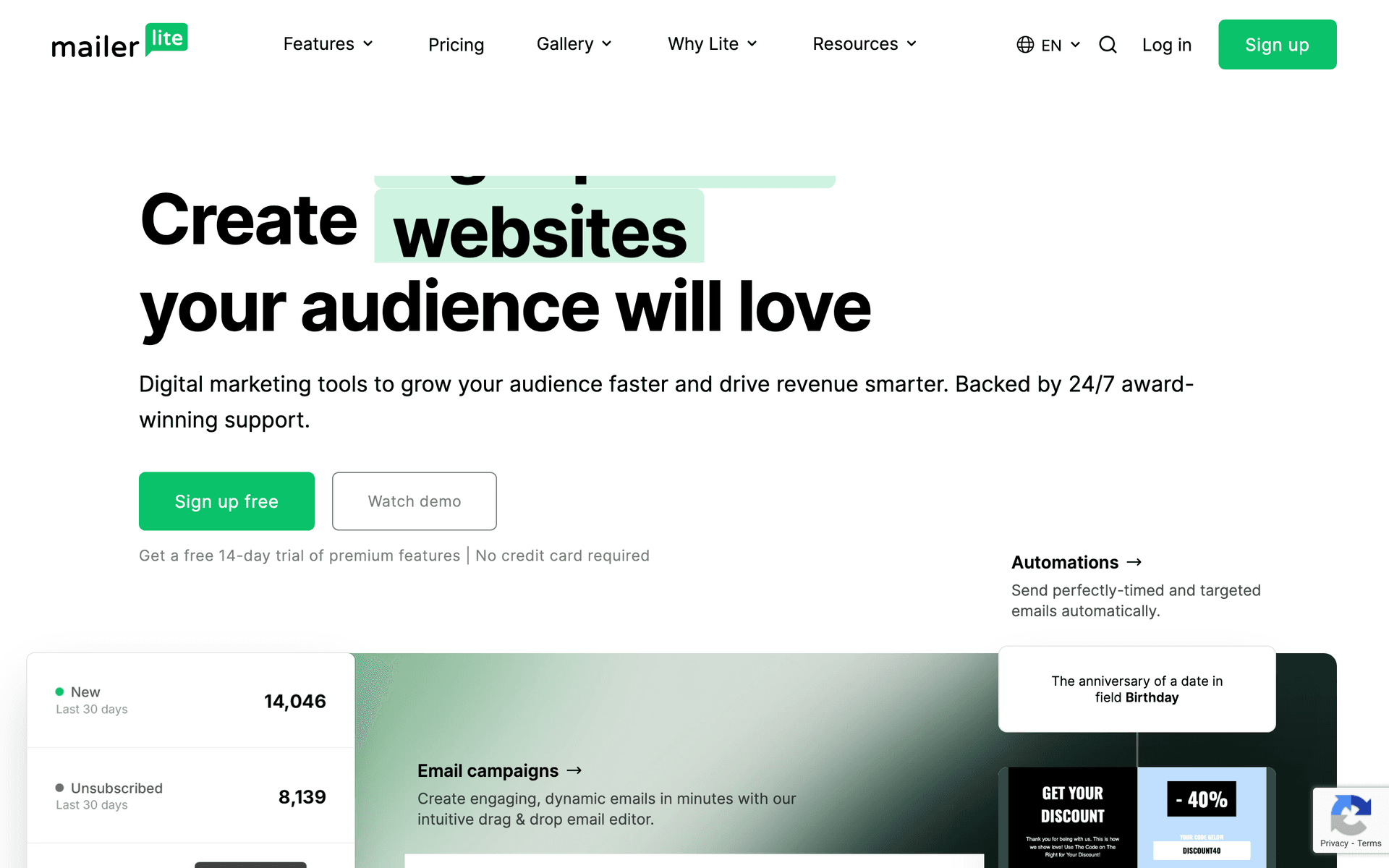
MailerLite gives consultants professional email marketing at the lowest cost. The free tier includes 1,000 subscribers with most features unlocked, including automation workflows. Landing pages and pop-ups capture leads from your website. The automation builder handles nurture sequences with conditional logic - for example, sending different follow-ups based on whether someone clicked a link about strategy consulting versus operational consulting. For consultants who want to spend minimal time and money on email while still looking professional, MailerLite is the value champion. The main friction is a strict approval process for new accounts that can take several days, and healthcare or financial consultants sometimes get flagged during review.

Best for
Budget-conscious consultants wanting professional results
Pricing
Free up to 1,000 subscribers, then from $10/month

Pros

  • Very affordable
  • Clean interface
  • Landing pages
  • Good automation

Cons

  • Strict approval
  • Basic analytics
  • Limited advanced features
  • Fewer integrations
#7
Brevo

Affordable email and SMS marketing platform with transactional email included.

Visit

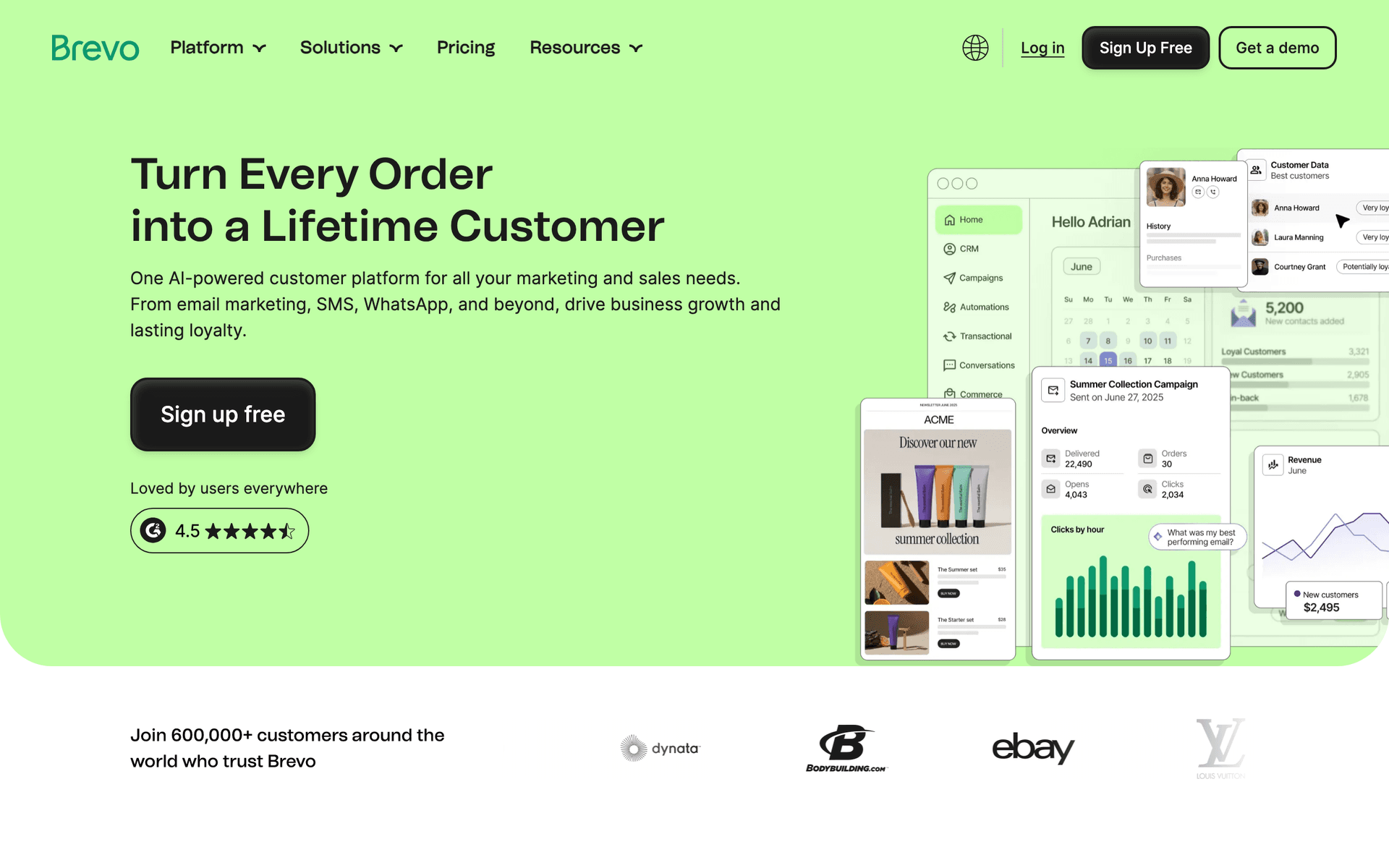
Brevo includes a CRM alongside email marketing at every price tier, which is unique at this price point. For consultants who want to track prospects and send emails from one place, Brevo consolidates two tools into one. The CRM is not as sophisticated as ActiveCampaign's, but it covers the basics - pipeline stages, contact notes, and deal tracking. SMS is available for time-sensitive communications like meeting reminders or proposal deadline alerts. The pay-by-email pricing on the free tier (300 emails per day) works well for consultants with smaller sending volumes who want to store unlimited contacts. The interface is functional but not as polished as MailerLite or Kit, and the automation builder requires more clicks to accomplish simple tasks.

Best for
Consultants wanting email and CRM in one affordable platform
Pricing
Free up to 300 emails/day, then from $25/month

Pros

  • Free CRM included
  • Affordable
  • SMS available
  • Pay by emails

Cons

  • Basic automation
  • Daily limits on free plan
  • Less polished
  • Brevo branding on free emails
#8
GetResponse

All-in-one marketing platform with email, landing pages, and webinars.

Visit

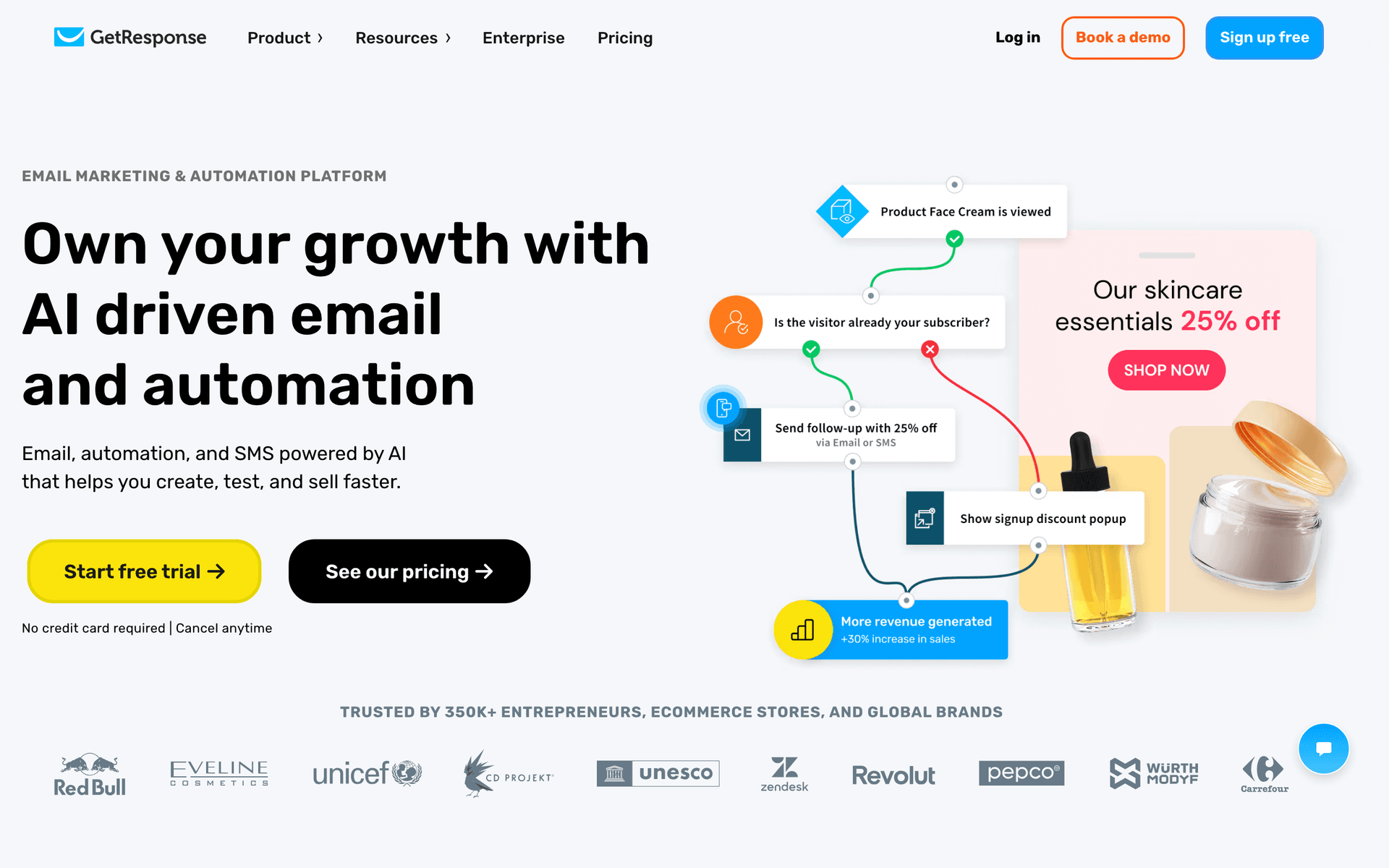
GetResponse is valuable for consultants who use webinars as a lead generation strategy. Hosting a monthly webinar on an industry topic, capturing registrant emails, and automatically following up with attendees and no-shows - all from one platform - saves both money and integration headaches. The landing pages capture webinar registrations with good conversion rates. The email automation nurtures webinar leads through a multi-step sequence. For consultants who present regularly and use educational content to attract clients, GetResponse consolidates what would otherwise be three separate tools (webinar hosting, landing pages, email marketing). The interface is cluttered, and the webinar features are functional rather than polished, but the value proposition is strong for webinar-centric consultants.

Best for
Consultants using webinars for lead generation
Pricing
From $15.60/month for 1,000 contacts

Pros

  • Webinar hosting
  • Landing pages
  • Conversion funnels
  • Good value

Cons

  • Webinars are basic
  • Cluttered interface
  • Average automation
  • Not specialized
#9
Flodesk

Beautifully designed email marketing with flat-rate pricing.

Visit

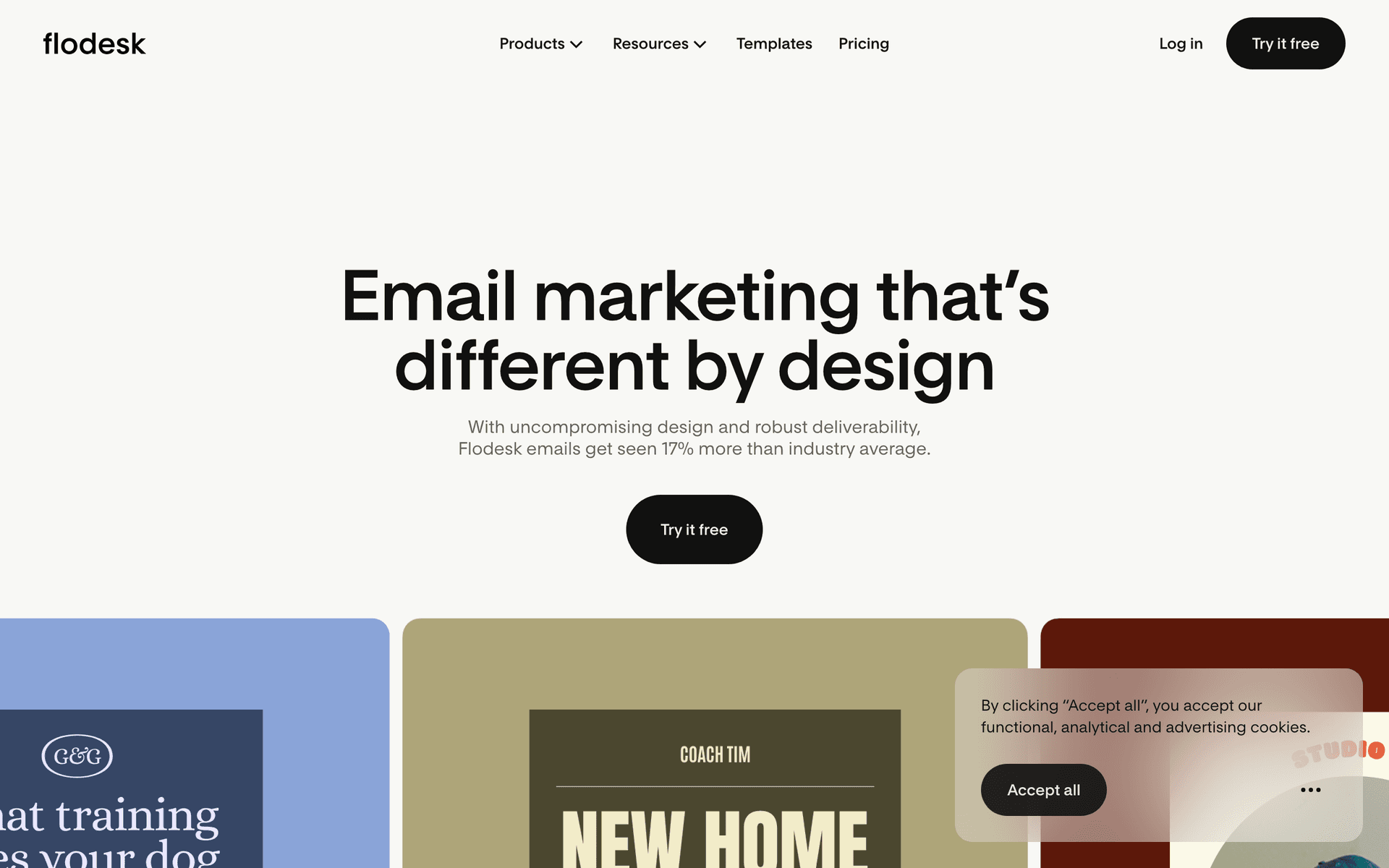
Flodesk makes consultants look premium. Every template is beautifully designed with modern aesthetics that signal high-end positioning. The flat-rate pricing at $38 per month eliminates worries about list growth costs - your price stays the same whether you have 500 or 50,000 subscribers. For brand-conscious consultants in design, luxury, or creative industries where visual presentation reinforces your positioning, Flodesk delivers. The workflow automation is basic and only covers simple welcome sequences and form submissions. There is no CRM, no lead scoring, and no conditional logic. Flodesk is a design tool that sends email, not a marketing automation platform.

Best for
Brand-conscious consultants wanting premium email design
Pricing
$38/month flat rate, unlimited subscribers

Pros

  • Stunning designs
  • Flat-rate pricing
  • Easy to use
  • Premium feel

Cons

  • Basic automation
  • No free tier
  • Limited integrations
  • No CRM
#10
Campaign Monitor

Professional email marketing with beautiful, polished templates.

Visit

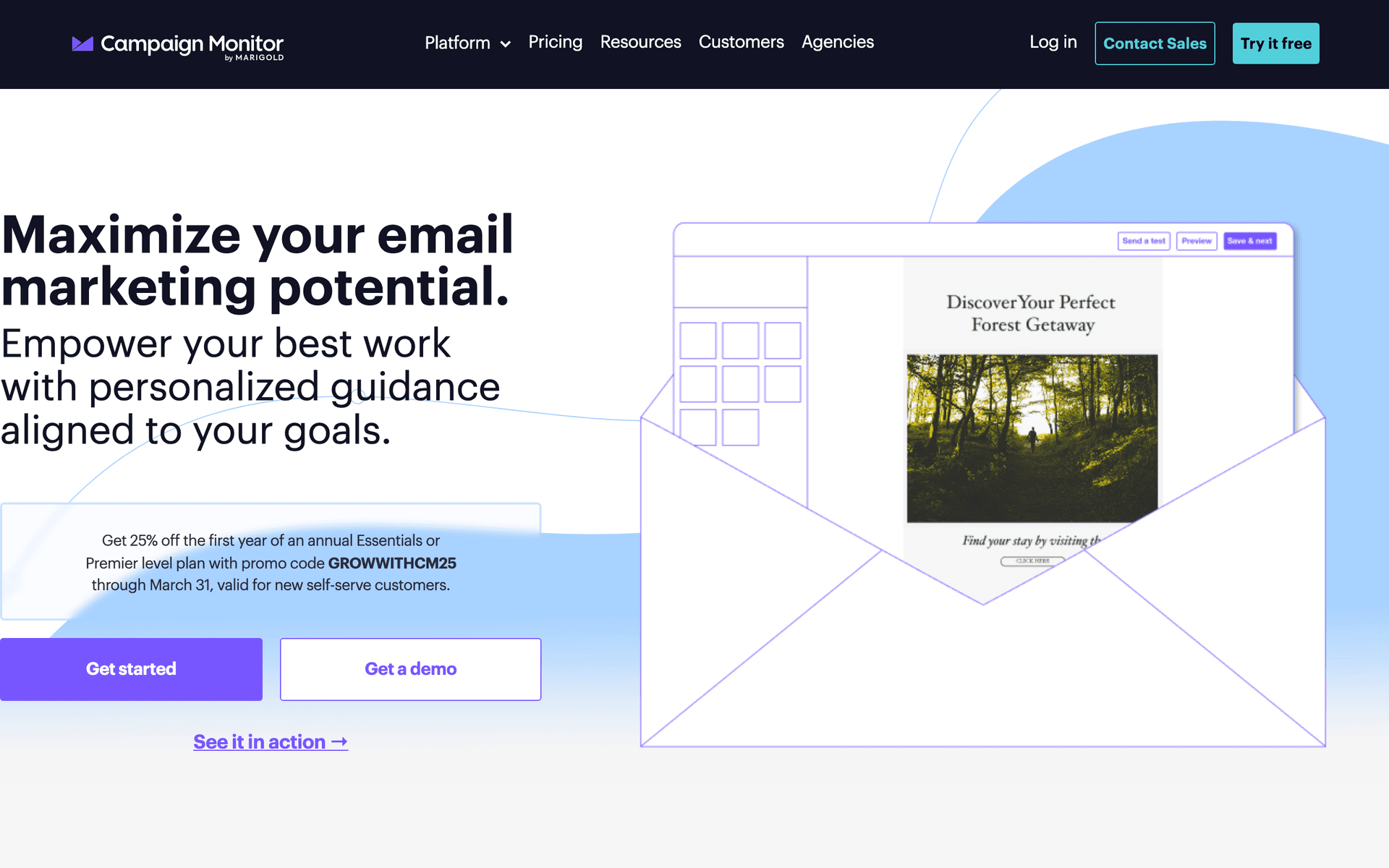
Campaign Monitor produces professional, polished emails that look like they were designed by an agency. For consultants serving Fortune 500 or enterprise clients, the brand quality of your communications matters. Your emails sit alongside internal communications from their own marketing team, and Campaign Monitor ensures yours look just as polished. The editor is smooth and the link review feature catches broken links before you send. The limitation is automation depth - you can build basic drip campaigns but nothing approaching the sophistication of ActiveCampaign. Contact-based pricing also means you pay the same whether you email monthly or weekly.

Best for
Corporate consultants wanting professional email quality
Pricing
From $9/month for 500 contacts

Pros

  • Professional templates
  • Polished quality
  • Reliable deliverability
  • Easy editor

Cons

  • Limited automation
  • Contact-based pricing
  • No free tier
  • Basic features
#11
AWeber

One of the original email platforms with reliable deliverability.

Visit

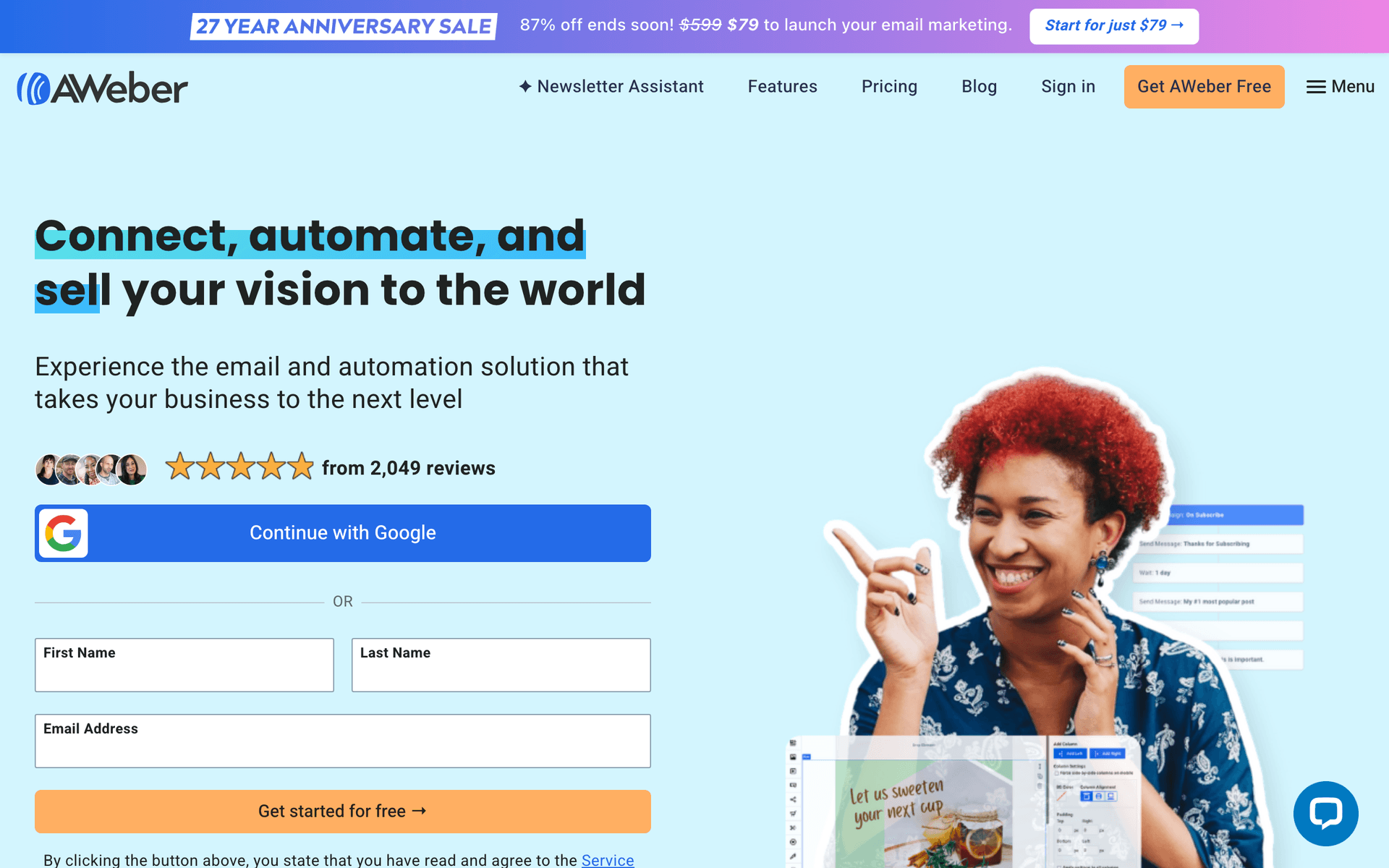
AWeber is reliable and simple, and those two qualities matter more than most consultants realize. Phone support is available for consultants who want to talk to a real person when they get stuck - a rarity in modern SaaS. The free tier covers 500 subscribers with basic automation. For consultants who want a straightforward newsletter and simple drip campaign without any learning curve, AWeber works. It lacks the modern features that consultants need for sophisticated lead nurturing - no conditional automation, limited segmentation, and templates that look dated. AWeber is the tool for consultants who want email marketing to require zero thought.

Best for
Consultants wanting basic, reliable email with phone support
Pricing
Free up to 500 subscribers, then from $15/month

Pros

  • Reliable
  • Phone support
  • Free tier
  • Simple

Cons

  • Dated
  • Limited automation
  • Basic templates
  • Little innovation
#12
Moosend

Budget-friendly email marketing with decent automation features.

Visit

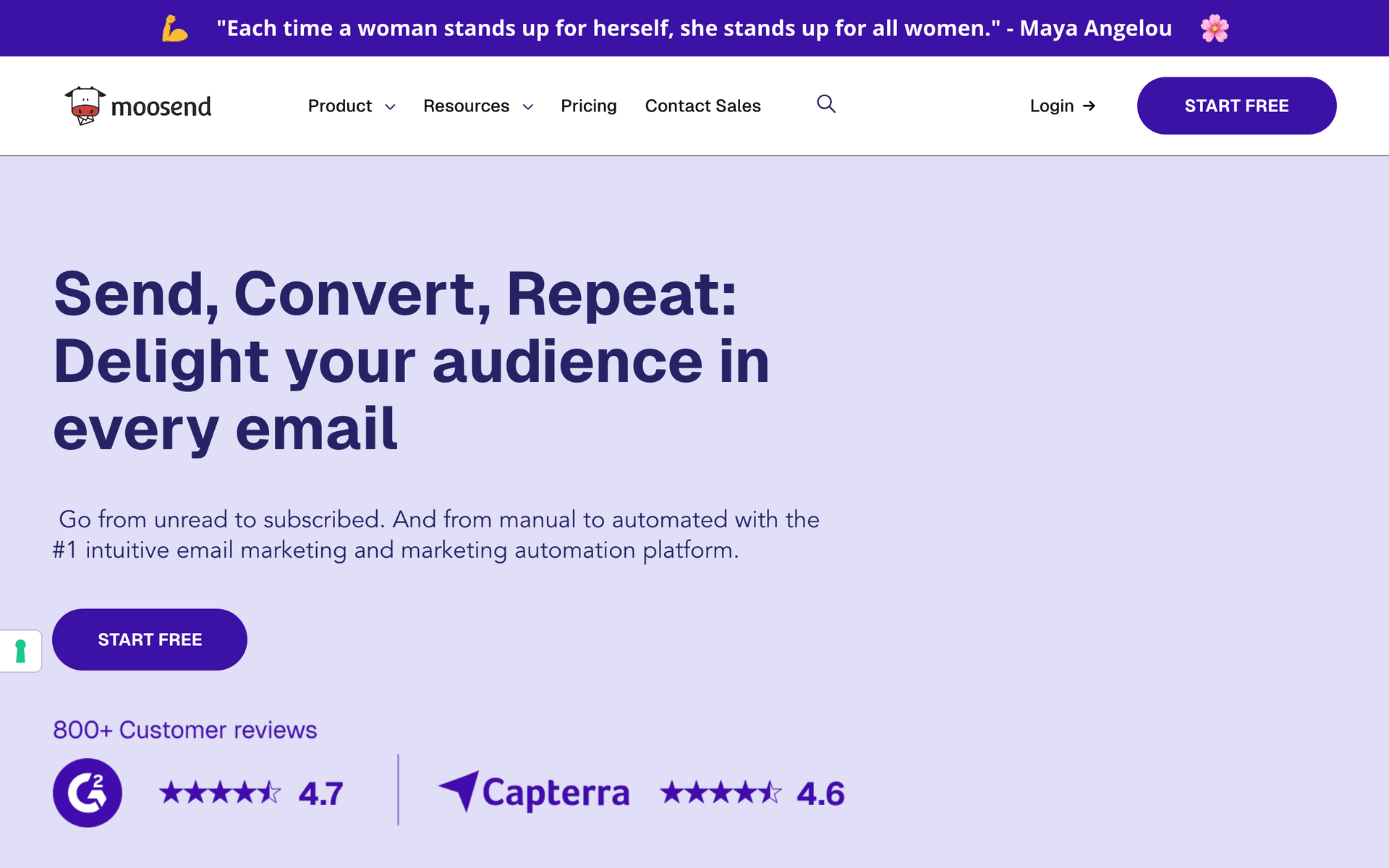
Moosend delivers email marketing at the lowest price point on this list, starting at $9 per month for 500 subscribers with automation and landing pages included. For consultants who have outgrown free tiers and want the cheapest paid option with real automation capabilities, Moosend works. The automation builder supports conditional workflows, and the landing page builder is functional for lead magnet delivery. The trade-off is a smaller template library, fewer integrations, and less polished support compared to established platforms.

Best for
Very price-conscious consultants
Pricing
From $9/month for 500 subscribers

Pros

  • Very affordable
  • Decent automation
  • Landing pages
  • Good value

Cons

  • Less well-known
  • Limited integrations
  • Smaller library
  • Basic support
#13
Buttondown

Minimalist newsletter tool for writers who prefer simplicity.

Visit

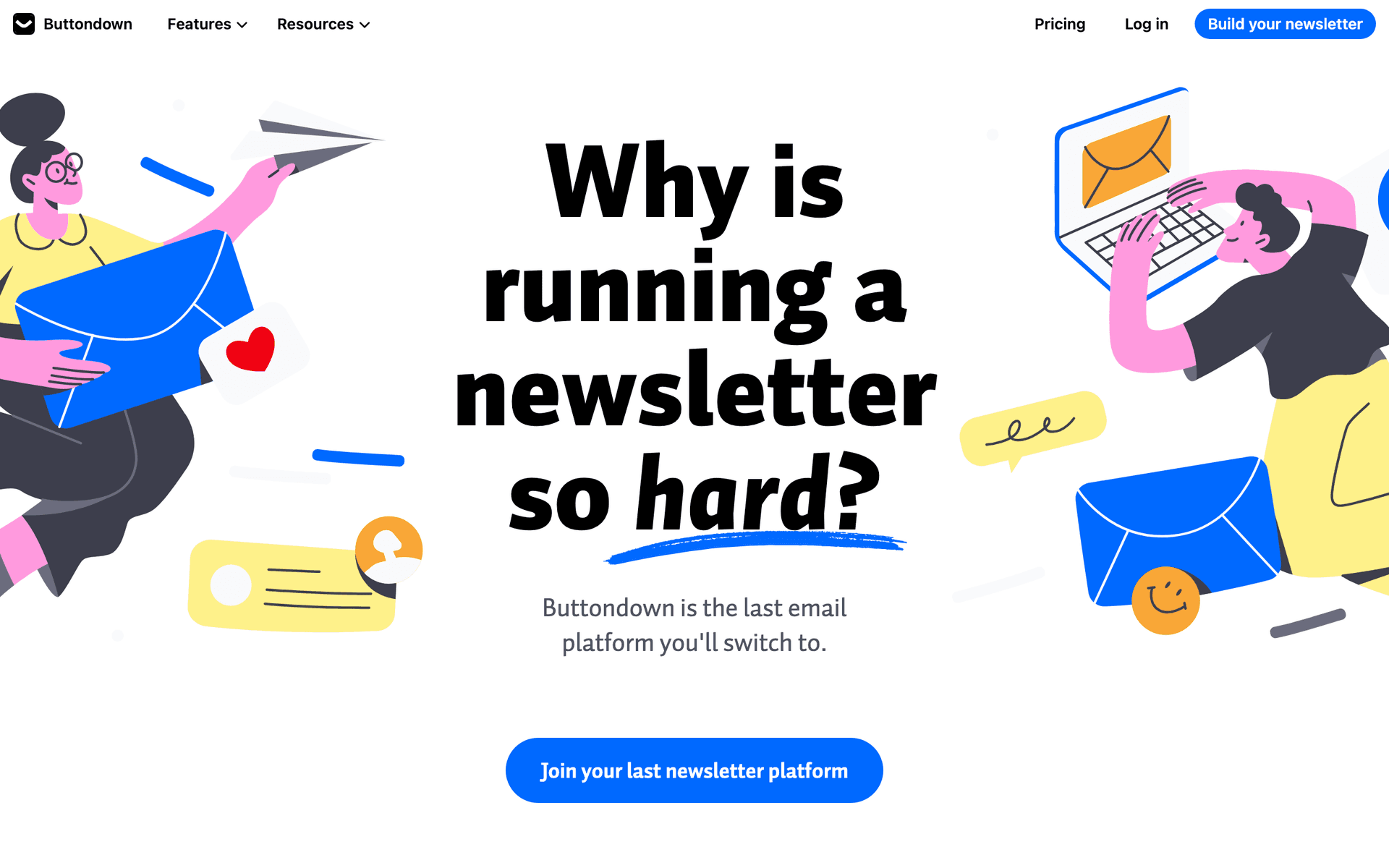
Buttondown is for consultants who publish a pure newsletter and want zero complexity. Write in Markdown, hit send, and it arrives in subscriber inboxes. No templates to fuss with, no funnels to configure, no features you will never use. If your only email strategy is a weekly or monthly insight newsletter that builds thought leadership, Buttondown keeps it perfectly simple. Several well-known strategy consultants use it for exactly this purpose. The trade-off is everything else - no automation, no segmentation beyond basic tags, and a tiny free tier of 100 subscribers.

Best for
Consultants wanting the simplest possible newsletter tool
Pricing
Free up to 100 subscribers, then from $9/month

Pros

  • Extremely simple
  • Markdown writing
  • Clean and focused
  • No bloat

Cons

  • No automation
  • Tiny free tier
  • No visual editor
  • No marketing features

Feature Comparison

FeatureSequenzyActiveCampaignKitGetResponse
Nurture sequence automation
Yes
Advanced
Yes
Yes
AI-powered sequences
Yes
No
No
No
Built-in CRM
No
Yes
No
No
Lead scoring
No
Yes
No
No
Landing pages
No
Yes
Yes
Yes
Pay-per-email pricing
Yes
No
No
No
Free tier available
Yes
No
Yes
No
Webinar hosting
No
No
No
Yes

Common Mistakes to Avoid

We see these mistakes over and over. Skip the learning curve and avoid these from day one.

Writing for peers instead of prospects

Many consultants write emails that impress other consultants but confuse potential clients. Your audience is decision-makers who need to understand the business impact of your work, not the technical methodology behind it.

Waiting until you have a big list to start

Consultants often delay email marketing until they have hundreds of subscribers. A list of 50 engaged decision-makers in your target industry is more valuable than 5,000 random signups. Start sending value immediately.

Neglecting existing clients in your email strategy

Most consultants focus email marketing entirely on lead generation and forget about client retention. Past clients are your best source of repeat business and referrals. A monthly insight email keeps you top of mind between engagements.

Sending only when you need something

Emailing your list only during slow periods or when you have a new offering trains subscribers to see your emails as self-serving. Consistent weekly value builds the trust that makes selling effortless when the time comes.

Over-designing your emails

Highly designed marketing emails can feel impersonal for consulting. Simple, text-based emails that look like they came from a person (not a marketing department) consistently outperform heavily branded templates for B2B consulting.

Email Sequences Every Consultant Needs

These are the essential automated email sequences that will help you grow your business and keep clients coming back.

Thought Leadership Nurture

New subscriber from content or lead magnet

Build trust and establish expertise with new subscribers until they are ready to hire you.

Immediately
Welcome - here is the {{lead_magnet}} you requested

Deliver the lead magnet. Brief introduction of who you are and who you help. Set expectations for email content.

Day 3
The framework I use with every client

Share a proprietary framework or methodology. This demonstrates expertise and differentiates you from other consultants.

Day 6
Case study: How {{client}} achieved {{result}}

Detailed case study showing your approach and the results you delivered. Concrete numbers and outcomes build credibility.

Day 10
Want to discuss your {{challenge}}? Here is how we can work together

Clear invitation to a discovery call. Explain your process and what the call covers. Include a scheduling link.

Proposal Follow-Up

Proposal sent to prospect

Keep proposals warm and increase close rates without being pushy.

3 days
Any questions about the proposal?

Brief follow-up offering to clarify any points. Include a relevant case study as additional proof.

7 days
Thought you would find this relevant

Share a resource, insight, or article related to their challenge. Adds value without directly pushing for a decision.

14 days
Checking in - should I keep your spot reserved?

Gentle urgency by mentioning your calendar is filling up. Clear CTA to schedule a follow-up call.

Weekly Insight Newsletter

Weekly schedule

Build authority and stay top of mind with a weekly insight email.

Weekly
{{topic}} - this week's insight for {{audience}}

One valuable insight, framework, or observation each week. Make it actionable. Establish yourself as the expert subscribers turn to.

Client Onboarding

New client engagement starts

Set clear expectations and start the engagement on the right foot.

Immediately
Welcome aboard - here is what happens next

Engagement overview, timeline, next steps, and what you need from them. Set the tone for a professional, organized engagement.

Day 2
Quick prep for our kickoff meeting

Pre-meeting preparation with questions to think about and any materials to gather. Shows professionalism and respect for their time.

Day 7
Week 1 check-in - how is everything going?

First-week check-in to ensure alignment and address any early concerns. Proactive communication builds client confidence.

Choosing the Right Platform as a Consultant

The best email marketing tool depends on the size of your practice, your sales process, and how you generate leads. There is no universally correct answer, but there are clear matches for different consulting styles.

If you are building an audience, Kit and Beehiiv are excellent for content-first consultants. Kit's free tier supports 10,000 subscribers, which means you can grow for a year or more without paying anything. Beehiiv's referral program grows your list organically through subscriber word-of-mouth, which is particularly effective for consultants whose audiences share professional networks.

If you need pipeline tracking, ActiveCampaign gives you CRM and email in one platform with lead scoring that tells you which prospects are engaging most. Brevo offers a free CRM alongside email for consultants who want basic pipeline visibility without the ActiveCampaign learning curve.

If time is your biggest constraint, Sequenzy's AI generates complete sequences in seconds so you can set up your email marketing quickly and get back to client work. The free tier lets you start without any financial commitment.

Matching Your Consulting Style to a Tool

Solo consultants doing 5-10 engagements per year need simplicity above all else. Sequenzy, MailerLite, or Kit let you set up automation once and forget about it while you focus on delivery.

Boutique firms with 3-10 consultants benefit from the structure that ActiveCampaign or HubSpot provide. Multiple team members can see the pipeline, and automation ensures consistent follow-up regardless of who owns the relationship.

Content-first consultants who attract clients through writing should look at Kit, Beehiiv, or Buttondown. These platforms are optimized for publishing rather than sales funnels, which matches how content-driven consulting practices actually work.

The Consultant Email System

Three email strategies drive the most value for consultants, and they work together as an integrated system:

Thought Leadership Newsletter

A weekly email sharing insights, frameworks, and analysis positions you as the expert in your niche. Consistency compounds over time. After 6-12 months, you become the person decision-makers turn to when they have a problem in your area. The newsletter does not sell directly - it builds the trust and credibility that makes selling unnecessary.

The best consulting newsletters follow a simple structure: one insight per email, drawn from real experience, with a specific takeaway readers can use. Keep it under 800 words. Write in your own voice, not in marketing speak. Share opinions that demonstrate depth of thinking.

Lead Nurture Sequence

When someone downloads your lead magnet or subscribes through your website, a 4-email sequence builds trust through value and social proof, then invites a discovery call. This works while you sleep. The sequence typically delivers the lead magnet, shares your signature framework, presents a relevant case study, and offers a clear path to working together.

The key metric here is discovery calls booked. If your nurture sequence is generating opens but not calls, your case studies may not be compelling enough or your CTA may not be clear.

Client Retention Emails

Regular check-ins and proactive insights between engagements keep relationships warm. Past clients become repeat clients and referral sources. A monthly email sharing relevant industry developments with a personal note asking how things are going is enough to stay top of mind. This is the highest-ROI email strategy most consultants ignore.

Integration Recommendations for Consultants

Your email tool works best when connected to the rest of your workflow. Here are the integrations that matter most:

Calendly or Cal.com - Link directly from your emails to your scheduling page. Every nurture email and newsletter should make booking a call effortless. The fewer clicks between reading your email and scheduling a conversation, the more calls you book.

LinkedIn - Use LinkedIn as your primary audience-building channel and drive followers to your email list for deeper engagement. Several tools (Kit, Mailchimp, Brevo) offer LinkedIn lead gen form integrations.

Stripe - If you sell digital products, workshops, or retainers, Sequenzy's native Stripe integration triggers different email sequences based on purchase behavior. Clients who buy a workshop can be nurtured differently from those who subscribe to a retainer.

Google Workspace - Ensure your email tool sends from your professional domain, not a generic sender address. Consultants who send from name@yourfirm.com see higher open rates than those sending from generic addresses.

What a Healthy Consultant Email List Looks Like

A healthy consulting email list is not about size. A list of 500 highly targeted decision-makers in your niche is more valuable than 10,000 general subscribers. Here are benchmarks for a well-functioning consultant email program:

List size: 500-5,000 subscribers is the sweet spot for most independent consultants. Focus on quality over quantity. Every subscriber should be someone who could reasonably become a client or refer one.

Open rate: 28-35% for a well-targeted consulting newsletter. If you are below 25%, your content may not be matching subscriber expectations.

Monthly unsubscribe rate: Under 0.3%. If people are leaving, your content is not delivering enough value or you are emailing too frequently.

Discovery calls from email: 2-5 per month per 1,000 subscribers. This is the metric that actually matters. Everything else is a proxy for this outcome.

List growth: 2-5% monthly growth through content, speaking, and LinkedIn activity. This is organic growth - avoid buying lists or using aggressive growth tactics that attract low-quality subscribers.

Getting Started: Your First 30 Days

Start with these steps regardless of which platform you choose:

  1. Create a high-value lead magnet that demonstrates your expertise and attracts your ideal clients. A diagnostic tool, industry framework, or benchmark report works well for consultants.
  2. Set up a 4-email nurture sequence that delivers the lead magnet, shares your methodology, presents a case study, and invites a discovery call.
  3. Commit to a weekly newsletter sharing one actionable insight per email. Block 90 minutes on the same day each week for writing.
  4. Automate proposal follow-ups so no opportunity goes cold. Three emails over two weeks is enough.
  5. Build a client retention sequence that sends monthly industry insights to past clients.

The consultants who build thriving practices are not always the most skilled. They are the ones who consistently demonstrate expertise and stay visible. Email marketing is the most efficient way to do both, and starting today is better than starting perfectly next month.

How We Evaluated These Tools

I evaluated each tool from the perspective of an independent or small-firm consultant managing their own marketing. Key criteria included automation quality for nurture sequences, ease of use for non-marketers, CRM integration for pipeline tracking, and cost-effectiveness for small but highly targeted lists.

Frequently Asked Questions

Ready to grow your consultant practice?

Start your free trial today. Set up your first email sequence in minutes with AI-powered content generation.

Related Industries

Sequenzy - Complete Pricing Guide

Pricing Model

Sequenzy uses email-volume-based pricing. You only pay for emails you send. Unlimited contacts on all plans — storing subscribers is always free.

All Pricing Tiers

  • 2.5k emails/month: Free (Free annually)
  • 15k emails/month: $19/month ($205/year annually)
  • 60k emails/month: $29/month ($313/year annually)
  • 120k emails/month: $49/month ($529/year annually)
  • 300k emails/month: $99/month ($1069/year annually)
  • 600k emails/month: $199/month ($2149/year annually)
  • 1.2M emails/month: $349/month ($3769/year annually)
  • Unlimited emails/month: Custom pricing (Custom annually)

Yearly billing: All plans offer a 10% discount when billed annually.

Free Plan Features (2,500 emails/month)

  • Visual automation builder
  • Transactional email API
  • Reply tracking & team inbox
  • Goal tracking & revenue attribution
  • Dynamic segments
  • Payment integrations
  • Full REST API access
  • Custom sending domain

Paid Plan Features (15k - 1.2M emails/month)

  • Visual automation builder
  • Transactional email API
  • Reply tracking & team inbox
  • Goal tracking & revenue attribution
  • Dynamic segments
  • Payment integrations (Stripe, Paddle, Lemon Squeezy)
  • Full REST API access
  • Custom sending domain

Enterprise Plan Features (Unlimited emails)

  • Visual automation builder
  • Transactional email API
  • Reply tracking & team inbox
  • Goal tracking & revenue attribution
  • Dynamic segments
  • Payment integrations
  • Full REST API access
  • Custom sending domain

Important Pricing Notes

  • You only pay for emails you send — unlimited contacts on all plans
  • No hidden fees - all features included in the price
  • No credit card required for free tier

Contact

  • Pricing Page: https://sequenzy.com/pricing
  • Sales: hello@sequenzy.com