21 Best AI Email Copywriting Tools (2026)

Quick Comparison
| Tool | Best For | Starting Price | Free Tier | AI Features |
|---|---|---|---|---|
| Sequenzy | SaaS lifecycle sequence generation | $19/mo | Yes (2.5k emails) | Full sequence generation, brand-aware |
| ChatGPT / Claude | Maximum flexibility | $20/mo | Yes | Open-ended, iterative refinement |
| Jasper | Brand voice consistency | $39/mo | No | Templates, brand training, knowledge base |
| Copy.ai | Quick batch generation | $36/mo | Yes | Workflow chaining, multi-language |
| Writesonic | Marketing copy at scale | $19/mo | No | Sonic Editor, quality scoring |
| Anyword | Data-driven optimization | $49/mo | No | Performance prediction, custom models |
| Wordtune | Sentence refinement | $10/mo | Yes | Rewriting, tone shifting |
| Mailchimp | Non-technical users | $13/mo | Yes (500 contacts) | In-editor AI, subject line suggestions |
| ActiveCampaign | Workflow-aware generation | $29/mo | No | Predictive content, CRM context |
| Klaviyo | E-commerce product copy | $20/mo | Yes (250 contacts) | Catalog-aware, flow optimization |
| HubSpot | CRM + email combo | $20/mo | Yes | Data-backed personalization |
| GetResponse | Landing page + email AI | $19/mo | Yes | All-in-one generation |
| Brevo | Multichannel AI campaigns | $9/mo | Yes (300/day) | SMS + email coordination |
| Omnisend | Ecommerce automation | $16/mo | Yes (250 contacts) | Product-aware content |
| Drip | Ecommerce sequences | $39/mo | No | Behavioral triggers, RFM |
| Customer.io | Technical teams | $100/mo | No | Event-driven, conditional generation |
| ConvertKit (Kit) | Creator newsletters | $29/mo | Yes (10k subs) | Commerce integration, authentic voice |
| Beehiiv | Newsletter growth | $39/mo | Yes (2.5k subs) | Growth-optimized, network insights |
| Iterable | Enterprise lifecycle | Custom | No | Cross-channel, custom model training |
| Braze | Real-time messaging | Custom | No | Mobile-first, Canvas journey AI |
| Phrasee | Enterprise language optimization | Custom | No | Purpose-built linguistic AI |
Writing email copy is the bottleneck for most SaaS founders. You know you should send a welcome sequence, a trial conversion series, weekly updates, and re-engagement campaigns. But writing 30+ emails takes time you don't have. AI copywriting tools are the practical solution.
Some are standalone writing tools (use them with any email platform). Others are built into email platforms (generate content where you send it). Both have gotten genuinely good. The generated copy isn't perfect, but it's a strong starting point that cuts writing time by 50-80%.
Standalone AI Writing Tools
These work with any email platform. Generate the copy, then paste it into your email tool.
1. Sequenzy
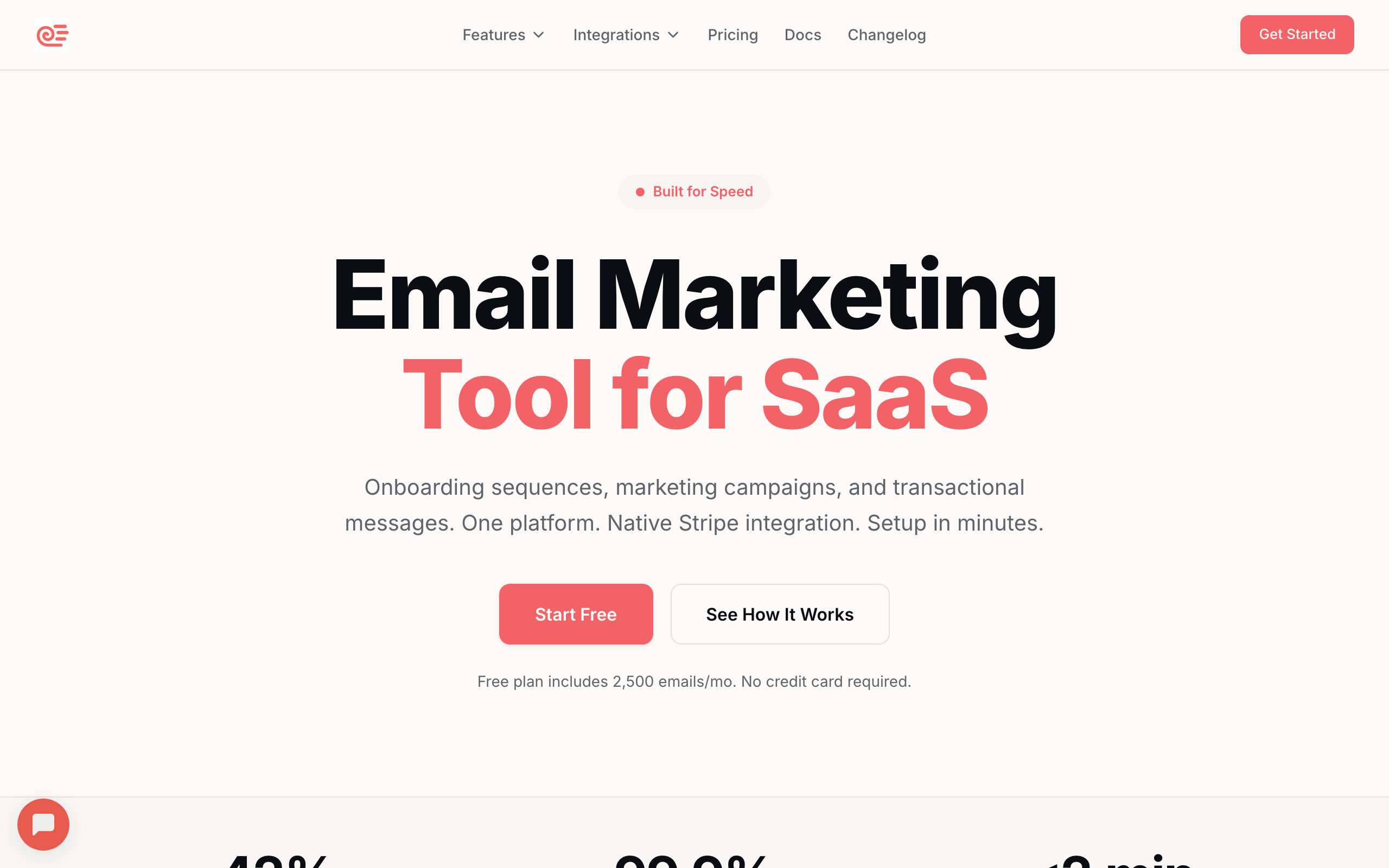
Best for: AI-generated SaaS email sequences that match your brand
Sequenzy's AI generates complete email sequences based on your goal ("convert trial users," "recover churned customers," "onboard new users"). It reads your website to understand your brand, product, and positioning, then generates multi-email sequences with appropriate subject lines, content, and timing.
The advantage over standalone AI tools is context. Sequenzy knows your brand, your email sending history, and SaaS email best practices. The generated sequences are designed for SaaS lifecycle email specifically, not generic marketing.
What makes this particularly powerful is the end-to-end workflow. You describe the goal, the AI generates the sequence, and you can deploy it directly into the automation engine. There's no copy-pasting between tools, no reformatting, no manually setting up timing and triggers. The entire process from idea to live automation takes about 10 minutes.
For specific use cases like dunning email sequences or onboarding sequences, the AI draws on SaaS best practices for timing, tone, and content structure.
- AI features: Full sequence generation, website scraping for brand context, SaaS lifecycle templates, subject line generation
- Pricing: Free up to 2,500 emails/month, paid plans from $19/month
- Pros: Generates complete sequences, brand-aware, SaaS lifecycle focus, deploy directly, subject lines included
- Cons: Limited to Sequenzy platform, needs review before activating, generated content may need editing
2. ChatGPT / Claude
Best for: General-purpose email copywriting with maximum flexibility
The large language models (ChatGPT, Claude) are the most flexible email copywriting tools available. Give them context about your product, audience, and goals, and they generate email drafts, subject lines, sequences, and entire campaigns.
The key is prompting. "Write a welcome email" produces generic output. "Write a welcome email for a developer tool that helps SaaS founders track subscription metrics. The tone should be casual and founder-to-founder. Keep it under 150 words. Include a clear CTA to connect Stripe." produces much better results.
Where these tools truly shine is iteration. You can ask the AI to rewrite a paragraph, shorten the email, make the CTA more urgent, add a postscript, or change the tone from formal to casual. That back-and-forth refinement is something template-based tools can't match.
For SaaS lifecycle emails specifically, you can feed the AI your entire customer journey and ask it to generate emails for each stage.
- AI features: Open-ended generation, iterative refinement, long-context understanding, multi-language support
- Pricing: Free tier available, paid plans from $20/month
- Pros: Most flexible, best at understanding context, iterative refinement, improving rapidly
- Cons: Requires good prompting, no email-specific features, output needs formatting for email
3. Jasper
Best for: Marketing teams wanting email-specific AI templates
Jasper offers email-specific templates: subject lines, promotional emails, newsletters, follow-ups, and cold outreach. The templates guide the AI with structured inputs (product description, target audience, tone, key points), which produces more consistent output than open-ended prompting.
Jasper also supports brand voice training. Feed it your existing emails and brand guidelines, and it generates content that matches your style. For teams that need consistent brand voice across many emails, this is valuable.
The campaign builder lets you plan multi-email sequences before generating content. Define the sequence goal, the number of emails, and the progression, and Jasper generates copy for each step.
One underrated feature is Jasper's knowledge base. Upload your product documentation, feature descriptions, case studies, and pricing pages. The AI draws from this context when generating emails.
- AI features: Email templates, brand voice training, campaign planner, knowledge base, team collaboration
- Pricing: From $39/month
- Pros: Email-specific templates, brand voice training, consistent output, team features, knowledge base
- Cons: Expensive for individual use, output can feel template-y, requires training for best results
4. Copy.ai
Best for: Quick email copy generation with workflow automation
Copy.ai generates email content with a focus on speed. Input your topic and tone, and it produces multiple variants in seconds. The workflow feature lets you chain multiple generations: create a subject line, then generate body copy that matches, then create a P.S. line.
For teams that need to produce many email variants (A/B testing, personalization) quickly, Copy.ai's batch generation is efficient. Generate 10 subject line variants in 30 seconds rather than brainstorming for an hour.
The workflow automation feature is what separates Copy.ai from basic AI chat. You can build reusable workflows that take minimal input and produce a complete email with subject line, preheader, body, and CTA.
Copy.ai also supports multi-language generation, which matters if you serve an international audience.
- AI features: Batch generation, workflow automation, multi-language, template library
- Pricing: Free tier available, from $36/month
- Pros: Fast generation, multiple variants, workflow chaining, batch production, multi-language
- Cons: Quality varies, less sophisticated than ChatGPT/Claude for complex asks
5. Writesonic
Best for: Marketing teams needing high-volume copy production
Writesonic specializes in marketing copy across channels, with strong email capabilities. The email generator produces subject lines, preheaders, and body copy with options for tone, length, and purpose. What distinguishes Writesonic is the quality at scale - you can generate dozens of email variants in minutes.
The Sonic Editor feature lets you edit and expand AI-generated content inline. If an email paragraph is close but not quite right, you can highlight it and ask for variations without regenerating the entire email. This saves significant time when refining copy.
Writesonic also offers quality scoring, predicting which generated variants will perform best based on engagement patterns. For teams doing heavy A/B testing, this pre-selection reduces the number of variants you need to test.
- AI features: High-volume generation, Sonic Editor, quality scoring, A/B test variants
- Pricing: From $19/month
- Pros: Fast batch generation, inline editing, quality predictions, affordable entry point
- Cons: Less sophisticated brand voice features than Jasper, can feel template-heavy
6. Anyword
Best for: Data-driven copy optimization and performance prediction
Anyword takes a quantitative approach to AI copywriting. Every piece of generated copy includes a performance score prediction based on historical data from similar emails. You can see which subject lines or body variations are predicted to perform best before sending.
The platform excels at creating multiple variations and scoring them. Generate 10 subject lines and Anyword ranks them by predicted performance. For teams running A/B tests, this reduces guesswork and focuses testing on the strongest candidates.
Anyword also offers custom models trained on your brand's historical email performance. Connect your email platform data, and Anyword learns what language patterns drive engagement for your specific audience.
- AI features: Performance prediction scoring, custom brand models, variation generation, data insights
- Pricing: From $49/month
- Pros: Data-driven approach, performance predictions, custom model training, strong for A/B testing
- Cons: Expensive, steeper learning curve, less effective without historical data
7. Wordtune
Best for: Sentence-level refinement and rewriting
Wordtune focuses on improving existing copy rather than generating from scratch. It's particularly useful for editing AI-generated or human-written emails to be clearer, shorter, or more compelling. Highlight any sentence and get alternatives that shift tone, length, or emphasis.
Where Wordtune shines is taking generic copy and making it specific. It can expand a generic benefit statement into specific examples, or condense a wordy paragraph into a punchy sentence. For teams who generate first drafts elsewhere (including from other AI tools), Wordtune is the polishing step.
The browser extension integrates with Gmail and web email editors, so you can refine copy without leaving your email interface.
- AI features: Sentence rewriting, tone shifting, expansion/condensation, browser integration
- Pricing: Free tier available, from $10/month
- Pros: Excellent for refinement, integrates with email interfaces, fast and lightweight
- Cons: Not for generating from scratch, limited context awareness compared to LLMs
Email Platforms With Built-In AI Copywriting
These generate email copy directly within the email tool, with brand context already loaded. The advantage is workflow efficiency.
8. Mailchimp
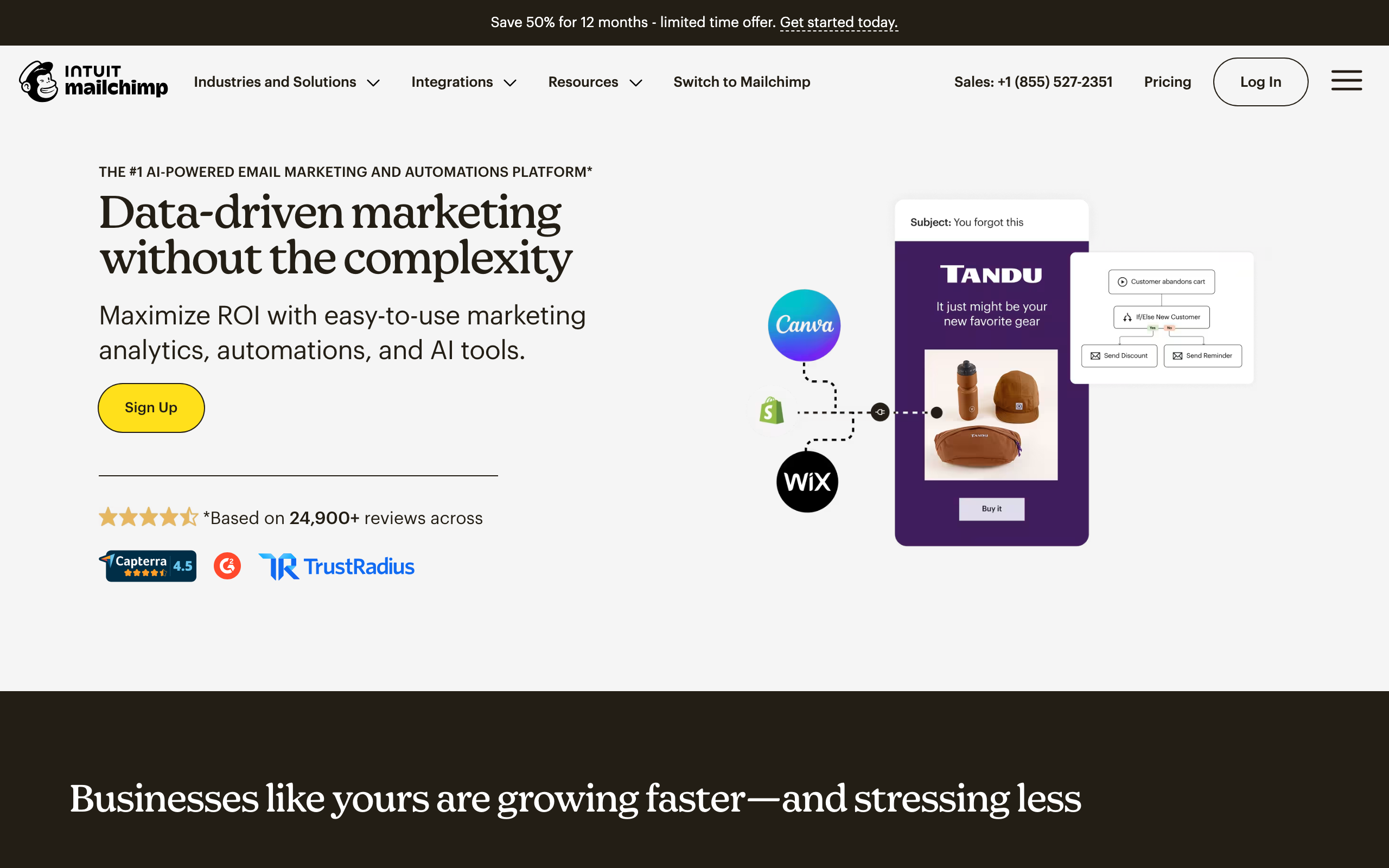
Best for: AI copywriting accessible to non-technical users
Mailchimp's Intuit Assist generates email content within the campaign builder. Describe what you want to say, choose a tone, and get a draft. The AI also suggests subject lines and preview text.
The generated content is decent for straightforward use cases: product announcements, promotional emails, and newsletters. It's less effective for nuanced SaaS lifecycle emails or technical content.
Where Mailchimp's AI helps most is with subject lines and preview text. These short-form elements are well-suited to AI generation, and Mailchimp's suggestions draw on engagement data from billions of emails sent through the platform.
- AI features: In-editor content generation, subject line suggestions, design generation, brand kit integration
- Pricing: Free up to 500 contacts, from $13/month
- Pros: Built into the editor, accessible, no prompting skills needed, brand suggestions
- Cons: Basic for complex email types, less sophisticated than dedicated AI tools, limited SaaS relevance
9. ActiveCampaign
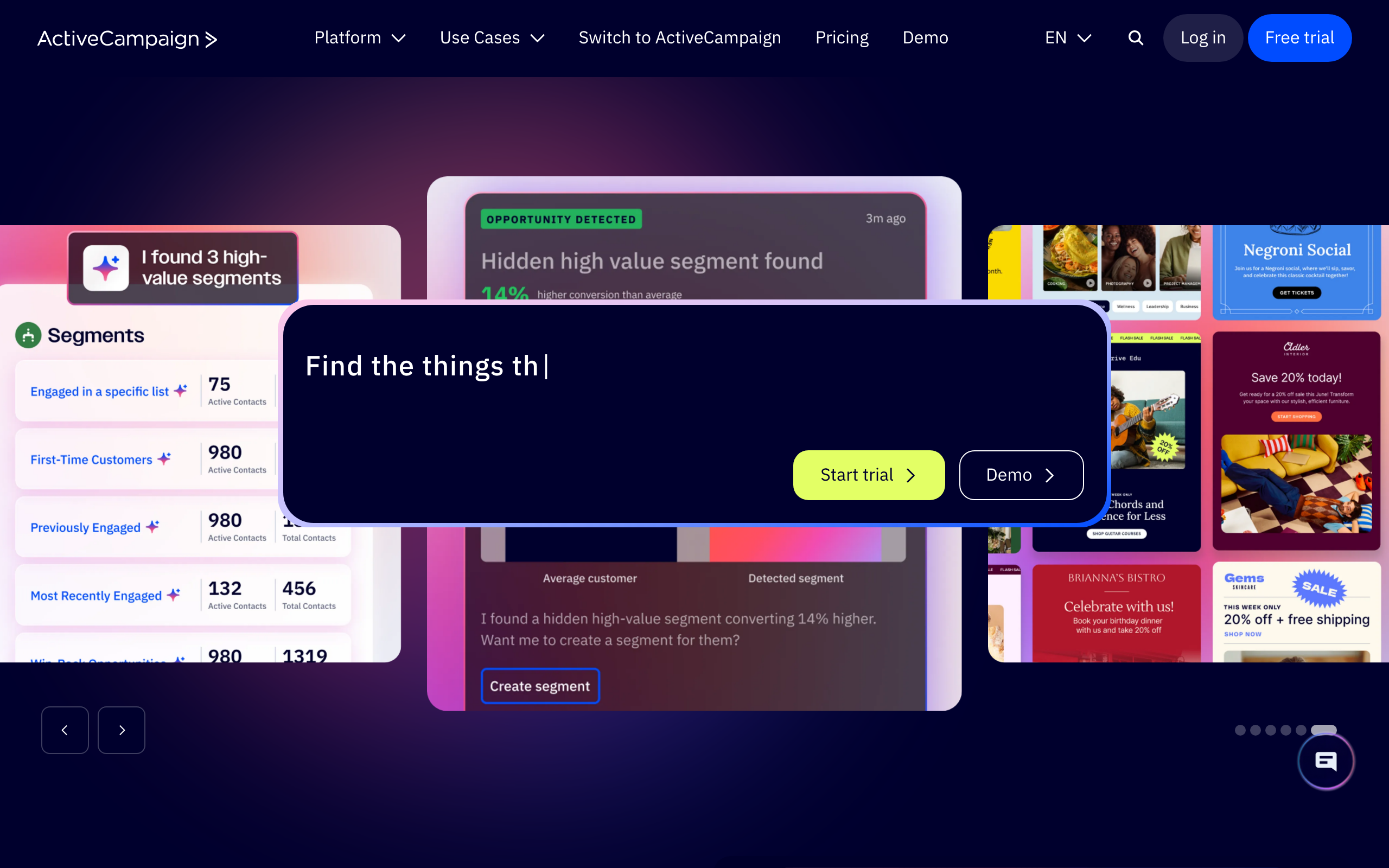
Best for: AI-generated content within automation workflows
ActiveCampaign's AI content generator works within the automation builder and campaign editor. Generate email content, subject lines, and automation messages with context from the workflow.
The workflow context makes ActiveCampaign's AI more useful than standalone tools for automation emails. When generating content for step 3 of a 5-email onboarding sequence, the AI considers what the previous emails covered.
ActiveCampaign also offers predictive content selection. Create multiple content variants for an email, and the AI automatically selects the best variant for each recipient based on their profile and behavior.
- AI features: Workflow-aware generation, predictive content selection, CRM data integration
- Pricing: From $29/month
- Pros: Workflow-aware AI, automation context, CRM data available, predictive content
- Cons: AI quality is supplementary, higher tiers for full AI features, complex interface
10. Klaviyo
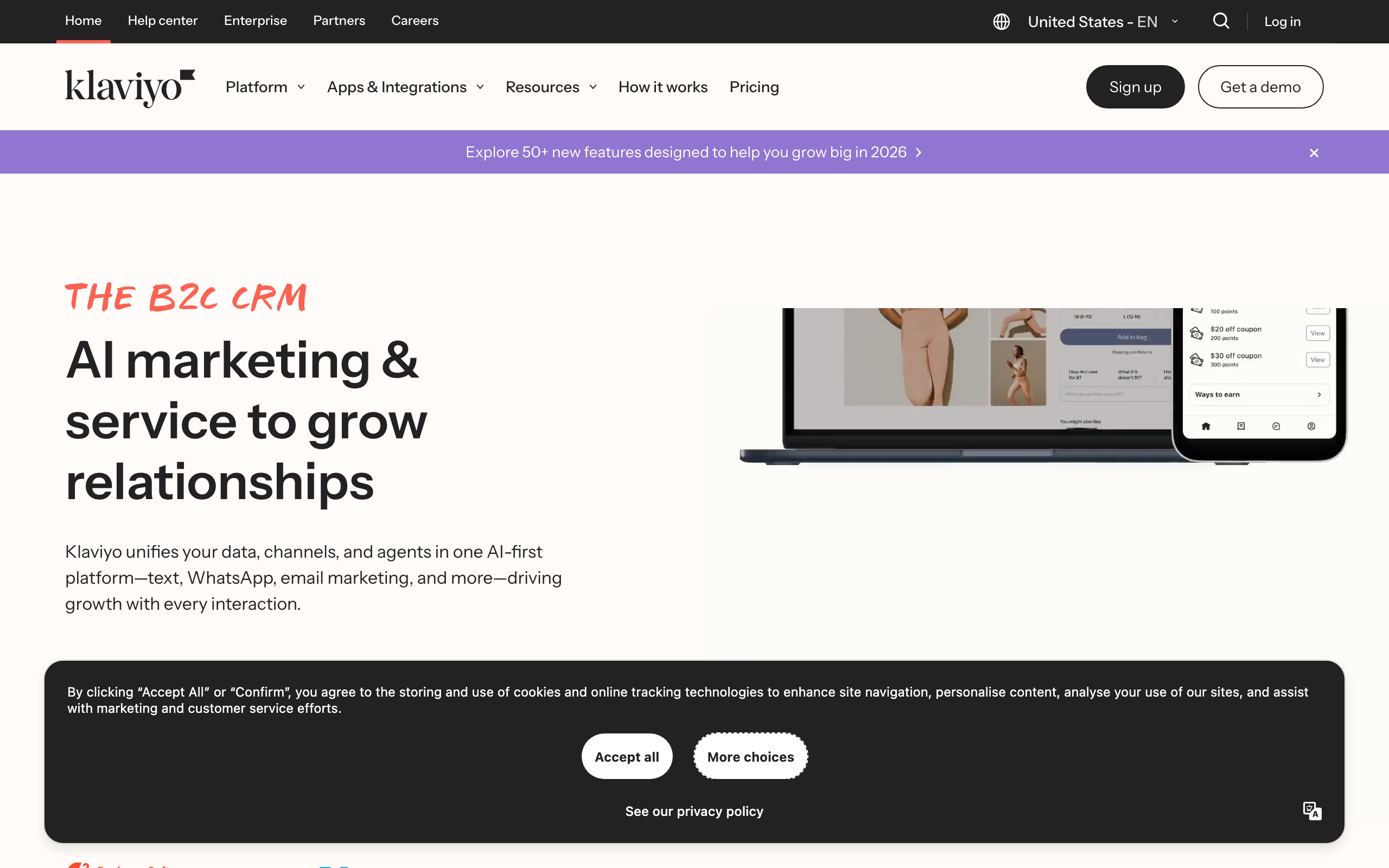
Best for: AI copywriting for e-commerce emails
Klaviyo's AI generates email content optimized for e-commerce: product announcements, promotional campaigns, abandoned cart sequences, and post-purchase follow-ups. The AI has access to your product catalog and customer data.
For e-commerce businesses, having AI that understands your products and customers produces more relevant email content than a generic AI tool. Product launch emails reference actual product details, and promotional emails can dynamically recommend products.
Klaviyo's AI also assists with flow optimization. It can suggest improvements to existing email sequences based on performance data.
- AI features: Product catalog integration, flow optimization, subject line AI, performance-based suggestions
- Pricing: Free up to 250 contacts, from $20/month
- Pros: Product catalog awareness, e-commerce-optimized, personalized recommendations, performance-trained
- Cons: E-commerce-focused, less useful for SaaS, pricing scales with contacts
11. HubSpot
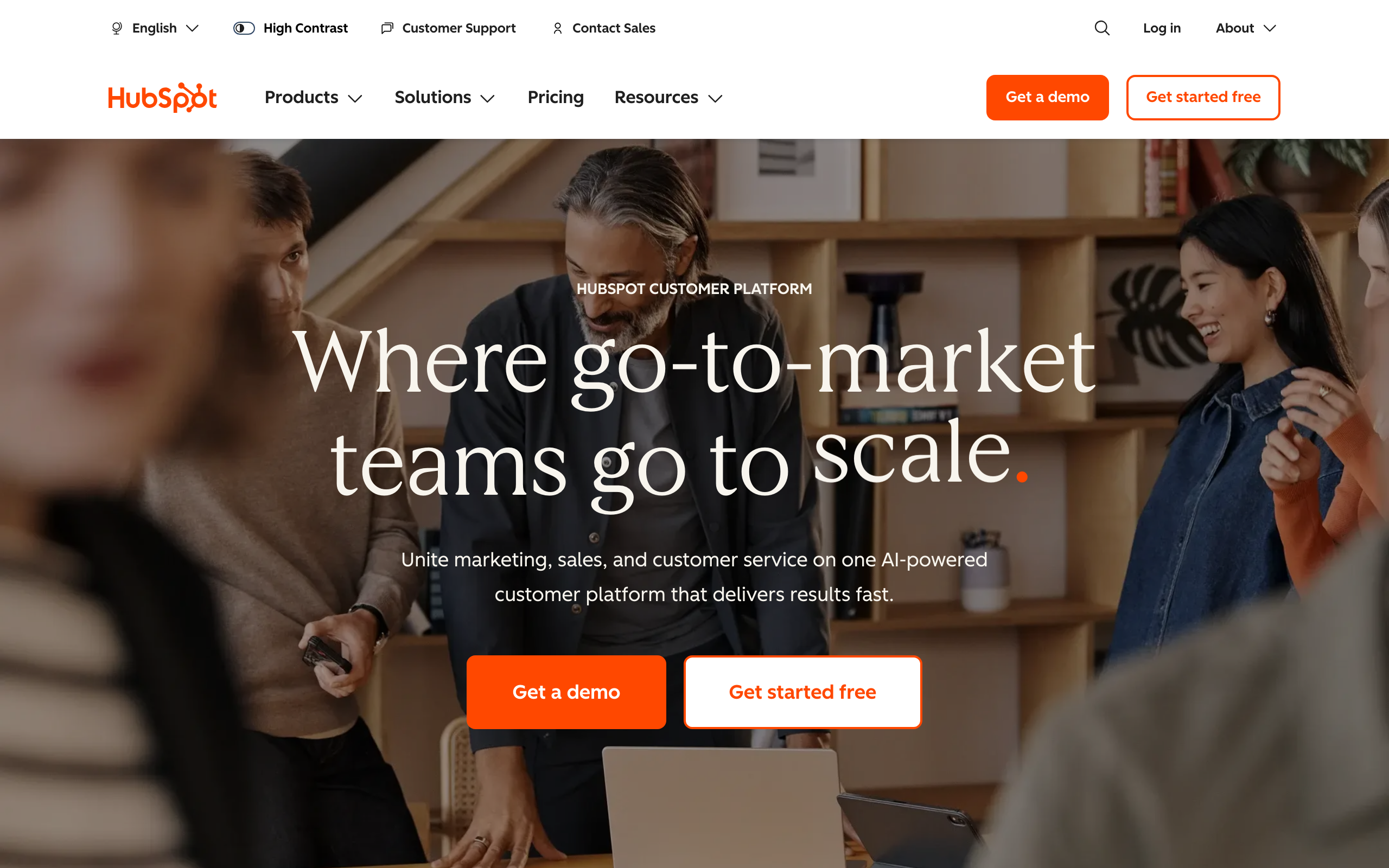
Best for: CRM-backed AI email generation
HubSpot's AI generates email content using CRM data as context. When creating emails, the AI can reference contact properties, deal stage, company information, and past engagement to personalize content dynamically.
The integration between CRM and email AI is the differentiator. Generate a follow-up email for a deal, and HubSpot's AI incorporates the prospect's industry, company size, previous interactions, and deal value into the content.
HubSpot also offers content generation for landing pages and ads alongside email, maintaining consistent messaging across channels.
- AI features: CRM-backed personalization, deal-stage awareness, cross-channel generation
- Pricing: Free tier available, from $20/month (Marketing Hub)
- Pros: Deep CRM integration, personalized based on contact data, all-in-one platform
- Cons: Expensive at scale, AI features gated to higher tiers, complex for simple needs
12. GetResponse
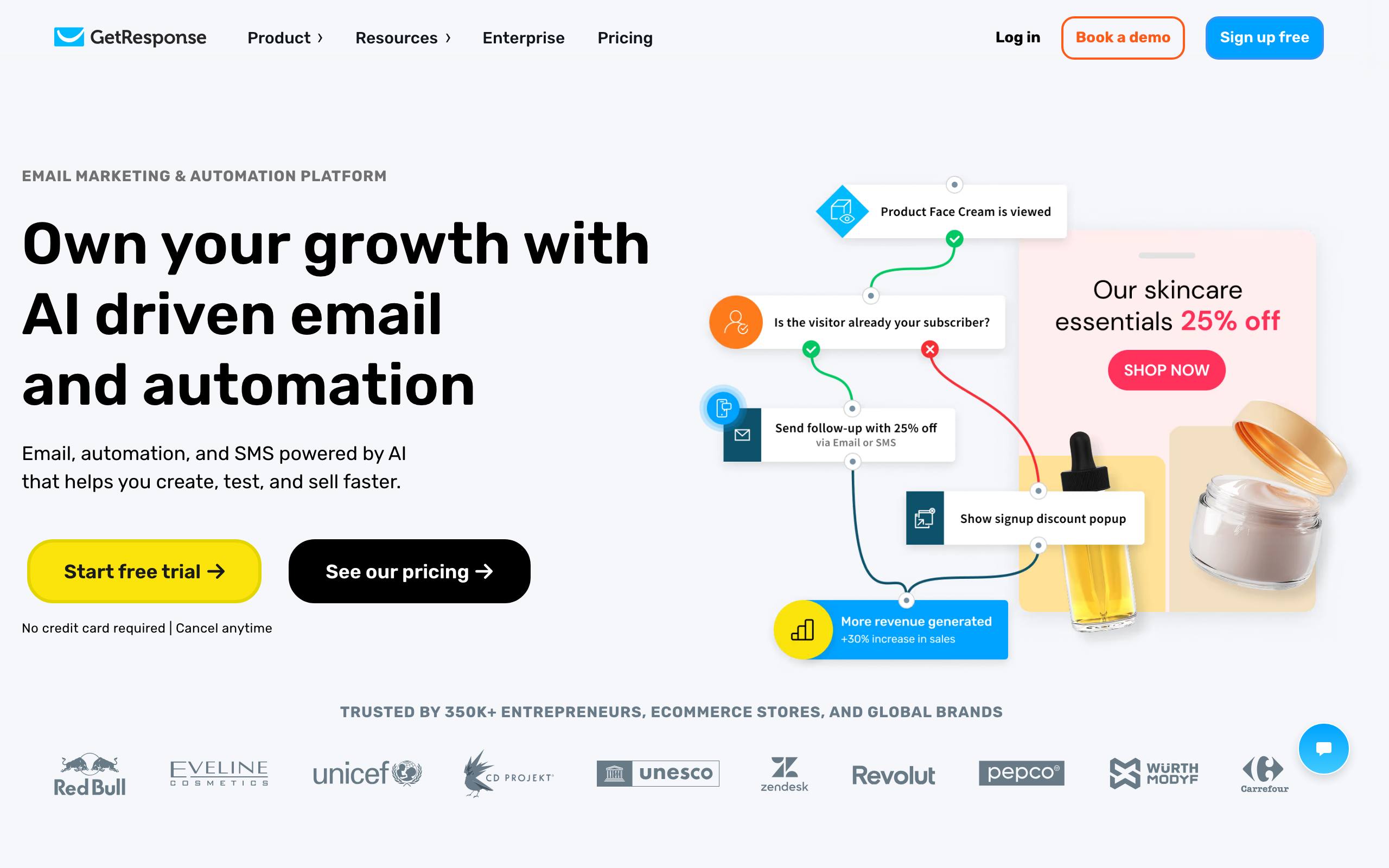
Best for: All-in-one marketing with AI across channels
GetResponse's AI generates email copy, landing page content, and even social media posts from a single prompt. The AI Content Generator creates subject lines, headlines, and body copy with options for tone and length.
The platform strength is the unified workflow. Generate an email campaign with AI, then use the same AI to create the landing page it links to, all within the same tool. The visual email editor integrates AI suggestions directly into the design process.
GetResponse also offers AI-powered send time optimization and list segmentation, complementing the copywriting features.
- AI features: Multi-channel content generation, in-editor AI suggestions, send time optimization
- Pricing: Free tier available, from $19/month
- Pros: All-in-one platform, landing page + email AI, send time optimization included
- Cons: AI quality is average, interface feels dated, less sophisticated than dedicated tools
13. Brevo (formerly Sendinblue)
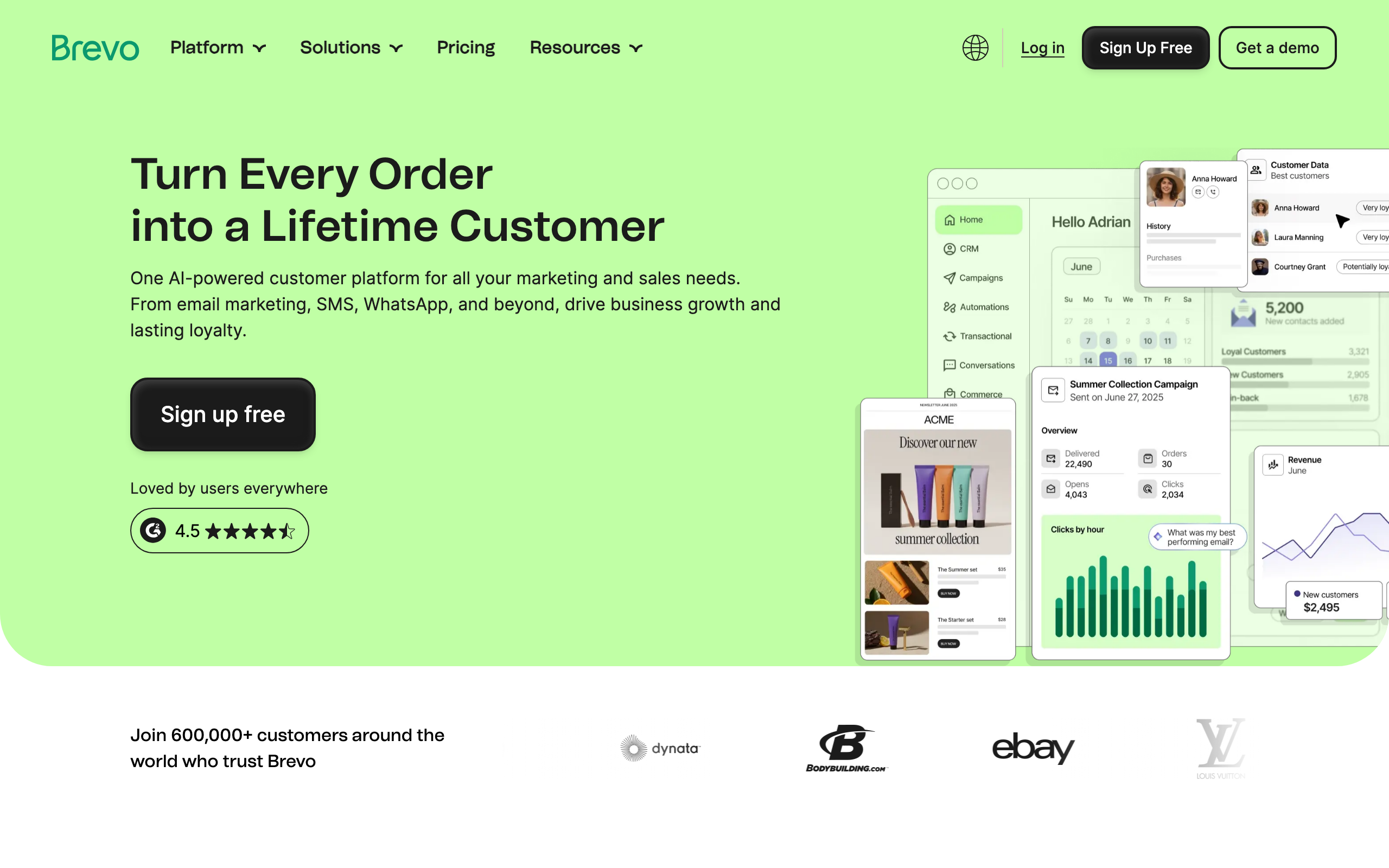
Best for: Multichannel campaigns with SMS + email AI
Brevo's AI generates content for email campaigns, SMS messages, and WhatsApp messages. The strength is consistent messaging across channels - generate a promotional campaign and get coordinated copy for email, SMS, and push notifications.
The email AI handles subject lines, preview text, and body copy with options for tone (formal, casual, urgent) and purpose (promotional, informational, transactional). For small businesses doing multichannel marketing, this unified approach saves time.
Brevo also offers AI-powered contact scoring and send time optimization as part of its broader automation platform.
- AI features: Multichannel content generation, send time optimization, contact scoring
- Pricing: Free tier available, from $9/month
- Pros: SMS + email AI combined, affordable, automation features included
- Cons: AI quality is basic, better for simple campaigns, less customization than premium tools
14. Omnisend
Best for: E-commerce automation with product-aware AI
Omnisend's AI generates email and SMS copy for e-commerce workflows, with deep integration to product catalogs and customer data. The AI can reference specific products, prices, and customer purchase history in generated content.
For product launches, promotions, and abandoned cart emails, Omnisend's AI produces relevant, specific content that goes beyond generic templates. The platform also offers AI-optimized sending times and product recommendation algorithms.
The omnichannel focus means generated email content can be automatically adapted for SMS, push notifications, and other channels with consistent messaging.
- AI features: Product-aware generation, omnichannel adaptation, sending time optimization
- Pricing: Free tier available, from $16/month
- Pros: Deep e-commerce integration, product-specific content, omnichannel coordination
- Cons: E-commerce focused, less useful for B2B or SaaS, can be complex to set up
15. Drip
Best for: E-commerce behavioral automation with AI
Drip's AI generates email content for behavioral triggers: browsed but didn't buy, abandoned cart, lapsed customers, and high-value customer segments. The AI considers purchase history, browsing behavior, and customer lifetime value in its content.
Where Drip's AI is strong is in revenue-focused messaging. Generated content emphasizes urgency, scarcity, and social proof in ways that align with e-commerce best practices. For product launches and promotional campaigns, the AI creates sophisticated multi-email sequences.
The platform also offers RFM (recency, frequency, monetary) segmentation, and the AI adapts content based on segment.
- AI features: Behavioral trigger content, RFM-aware generation, revenue-focused messaging
- Pricing: From $39/month
- Pros: Strong e-commerce automation, behavioral triggers, revenue-focused approach
- Cons: E-commerce only, expensive starting price, steep learning curve
16. Customer.io
Best for: Technical teams wanting event-driven AI generation
Customer.io's AI generates content within the context of event-driven automations. When creating emails triggered by specific user behaviors (trial signup, feature usage, payment failure), the AI incorporates event data into personalized content.
The technical audience focus means the AI handles complex conditional content well. Generate an email that changes based on user attributes, plan type, or usage patterns, and Customer.io's AI structures the logic and content appropriately.
The platform also supports liquid templating, and the AI can generate template code that incorporates dynamic data from your application.
- AI features: Event-driven content, conditional generation, technical template support
- Pricing: From $100/month
- Pros: Flexible event-based triggers, technical sophistication, strong personalization
- Cons: Expensive, technical learning curve, overkill for simple needs
17. ConvertKit (Kit)
Best for: Creator-focused newsletters with AI assistance
ConvertKit's AI generates subject lines and email content optimized for creator audiences. The AI understands creator economy patterns - sponsorships, product launches, community updates - and generates content that feels authentic rather than marketing-heavy.
For paid newsletters and digital product promotions, ConvertKit's AI creates urgency and social proof without feeling salesy. The platform also offers AI-suggested send times based on subscriber engagement patterns.
The integration with ConvertKit's commerce features means the AI can promote products, courses, and paid newsletters with content that matches each creator's voice.
- AI features: Creator-focused templates, commerce integration, send time suggestions
- Pricing: Free up to 10,000 subscribers, from $29/month
- Pros: Generous free tier, creator-focused, integrates with commerce, authentic voice
- Cons: Newsletter-focused, less sophisticated automation, not for technical teams
18. Beehiiv
Best for: Newsletter growth with AI-optimized content
Beehiiv's AI generates newsletter content optimized for engagement and growth. The AI understands newsletter-specific patterns - curated links, essays, sponsorships - and produces content that performs well in open rates and click rates.
The platform's AI also assists with subject line generation for newsletters, with recommendations based on what works for similar newsletters in the Beehiiv network. For newsletter operators focused on growth, this data-informed approach is valuable.
Beehiiv's referral program and recommendation network mean the AI can also generate content designed to drive referrals and cross-promotion.
- AI features: Newsletter-focused generation, growth-optimized suggestions, network data insights
- Pricing: Free up to 2,500 subscribers, from $39/month
- Pros: Newsletter specialist, growth-focused, data from network effects
- Cons: Newsletter only, not for SaaS lifecycle, expensive jump to paid
19. Iterable
Best for: Enterprise cross-channel AI orchestration
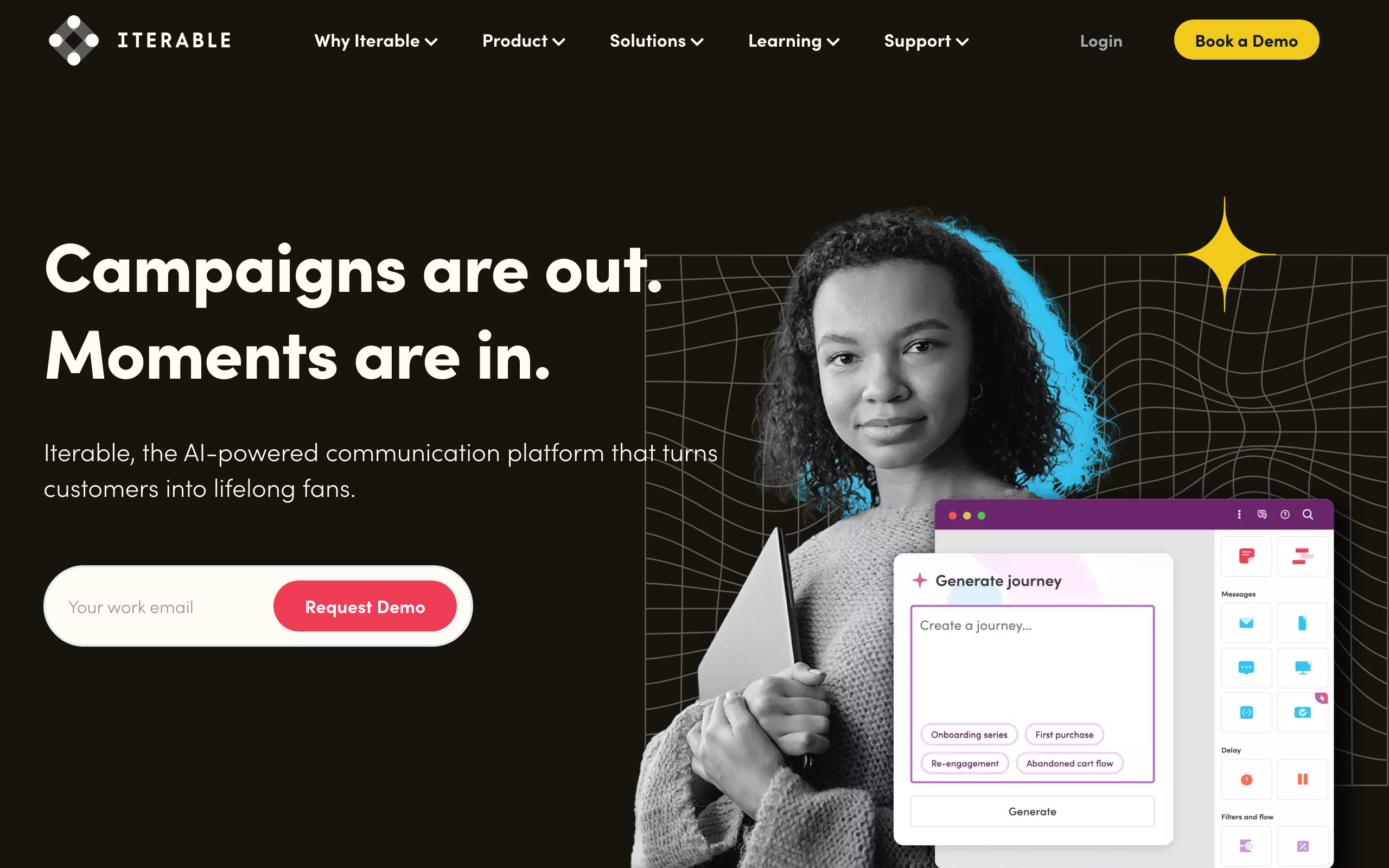
Iterable's AI generates content across email, mobile push, in-app messages, and SMS with consistent messaging. The enterprise focus means the AI can handle complex workflows involving multiple touchpoints and long customer journeys.
The platform's AI Studio allows for custom AI models trained on your brand's messaging and performance data. For large organizations with specific compliance or brand requirements, this customization is essential.
Iterable also offers AI-powered send time optimization, frequency management, and channel selection - deciding not just what to say, but where and when to say it.
- AI features: Cross-channel generation, custom model training, journey optimization, frequency management
- Pricing: Custom pricing (enterprise)
- Pros: Enterprise-grade, highly customizable, sophisticated orchestration
- Cons: Very expensive, complex implementation, overkill for small teams
20. Braze
Best for: Mobile-first messaging with AI personalization
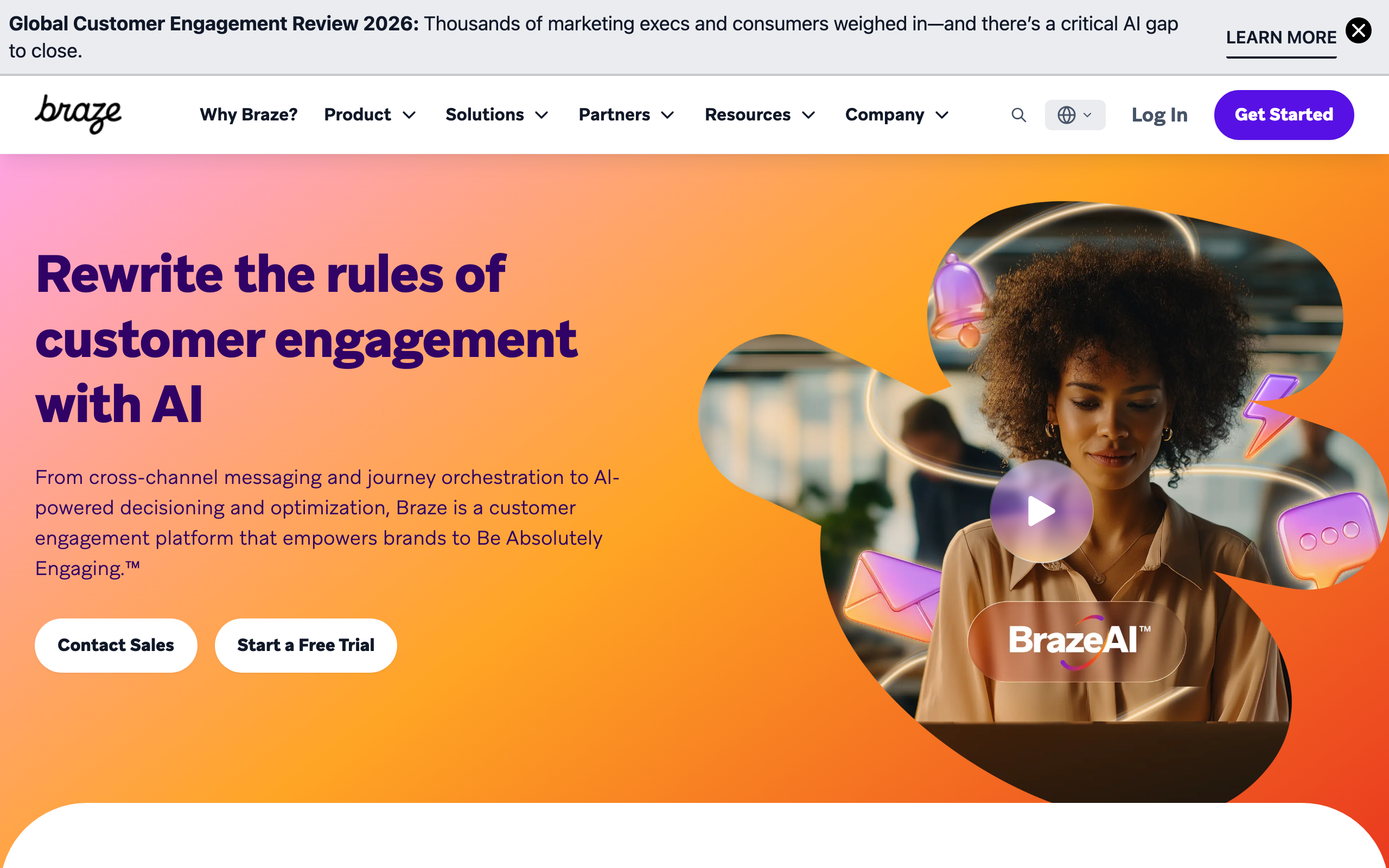
Braze's AI generates content optimized for mobile engagement, with particular strength in push notifications and in-app messages alongside email. The AI considers device type, engagement patterns, and mobile behavior when generating content.
The platform's intelligence suite includes AI-powered personalization, send time optimization, and frequency capping. For consumer apps with large mobile user bases, Braze's AI is tuned to the specific constraints and opportunities of mobile messaging.
Braze also offers Canvas AI, which can generate entire multi-step messaging journeys across channels based on campaign goals.
- AI features: Mobile-optimized generation, Canvas journey AI, personalization at scale
- Pricing: Custom pricing (enterprise)
- Pros: Mobile-first, sophisticated orchestration, strong personalization
- Cons: Enterprise pricing, mobile-focused, steep learning curve
21. Phrasee
Best for: Enterprise language optimization and brand consistency
Phrasee uses deep learning specifically trained on language optimization for marketing. Unlike general-purpose AI, Phrasee's model is purpose-built for marketing language, with particular strength in subject lines, CTAs, and promotional copy.
The platform's AI generates content that matches your brand voice guidelines and optimizes for engagement. Enterprise clients value Phrasee's ability to maintain consistent language across large teams while still generating creative variations.
Phrasee also offers A/B testing at scale, generating hundreds of variations and predicting top performers before sending.
- AI features: Marketing-specialized AI, brand voice enforcement, enterprise-grade testing
- Pricing: Custom pricing (enterprise)
- Pros: Purpose-built for marketing, strong brand consistency, enterprise features
- Cons: Very expensive, enterprise only, less flexible than general-purpose AI
How to Get the Best Results From AI Email Copywriting
Give Context, Get Quality
The number one factor in AI email quality is context. Always provide:
- Who you are: Product description, value proposition, brand voice
- Who you're writing to: Target audience, their pain points, their knowledge level
- What you want: The goal of this email, the desired action, the key message
- Constraints: Word count, tone (casual/professional), specific things to include or avoid
The more specific your input, the better the output.
Edit, Don't Just Generate
AI-generated email copy is a first draft. Always:
- Remove generic filler phrases ("In today's fast-paced world...")
- Add specific details about your product
- Check that the CTA is clear and specific
- Verify any claims or statistics the AI generated
- Read it aloud. Does it sound like you, or like a marketing robot?
Build a Prompt Library
Create reusable prompts for common email types:
- Welcome email prompt (with brand context and onboarding steps)
- Feature announcement prompt (with product details and benefits framework)
- Re-engagement prompt (with common reasons users disengage)
- Dunning prompt (with payment failure context)
- Newsletter prompt (with content curation guidelines)
Reuse these prompts with updated specifics each time.
How to Choose
SaaS lifecycle sequence generation: Sequenzy. Full sequences generated with brand and SaaS context.
Maximum flexibility: ChatGPT/Claude. Best understanding of context and iterative refinement.
Brand consistency for teams: Jasper. Brand voice training with email-specific templates.
Quick batch generation: Copy.ai. Fast multiple variants with workflow chaining.
Data-driven optimization: Anyword. Performance predictions and custom brand models.
Non-technical users: Mailchimp. Most accessible AI copywriting.
Workflow-aware generation: ActiveCampaign. AI content within automation context.
E-commerce product copy: Klaviyo. Product-aware content with catalog integration.
CRM + email combo: HubSpot. Data-backed content generation.
All-in-one marketing: GetResponse. Landing page + email AI together.
FAQ
Should I use a standalone AI tool or built-in AI? Both. Use built-in AI for quick generation while building campaigns. Use standalone tools (ChatGPT/Claude) for strategic planning and complex writing tasks.
How much should I edit AI-generated email copy? For high-volume operational emails, minimal editing is usually fine. For marketing campaigns and lifecycle sequences, expect to edit 30-50% of the content.
Can AI match my brand voice? With enough context and examples, yes. The best approach is to provide 3-5 example emails in your voice and ask the AI to match the style.
Will AI-generated emails hurt deliverability? No. Email deliverability is based on sending infrastructure and sender reputation, not content origin (AI vs. human), as long as you avoid spam trigger words.
Can AI write effective subject lines? Yes, and this is arguably AI's strongest email use case. AI can generate 10-20 variations in seconds, covering different angles.
How do I prevent AI-generated emails from sounding generic? Always provide specific details in prompts. After generation, replace generic phrases with specific ones. Add a personal touch that AI can't generate.