Choosing the Right Platform as a Solopreneur
The best email marketing tool depends on where you are in your journey and what you sell.
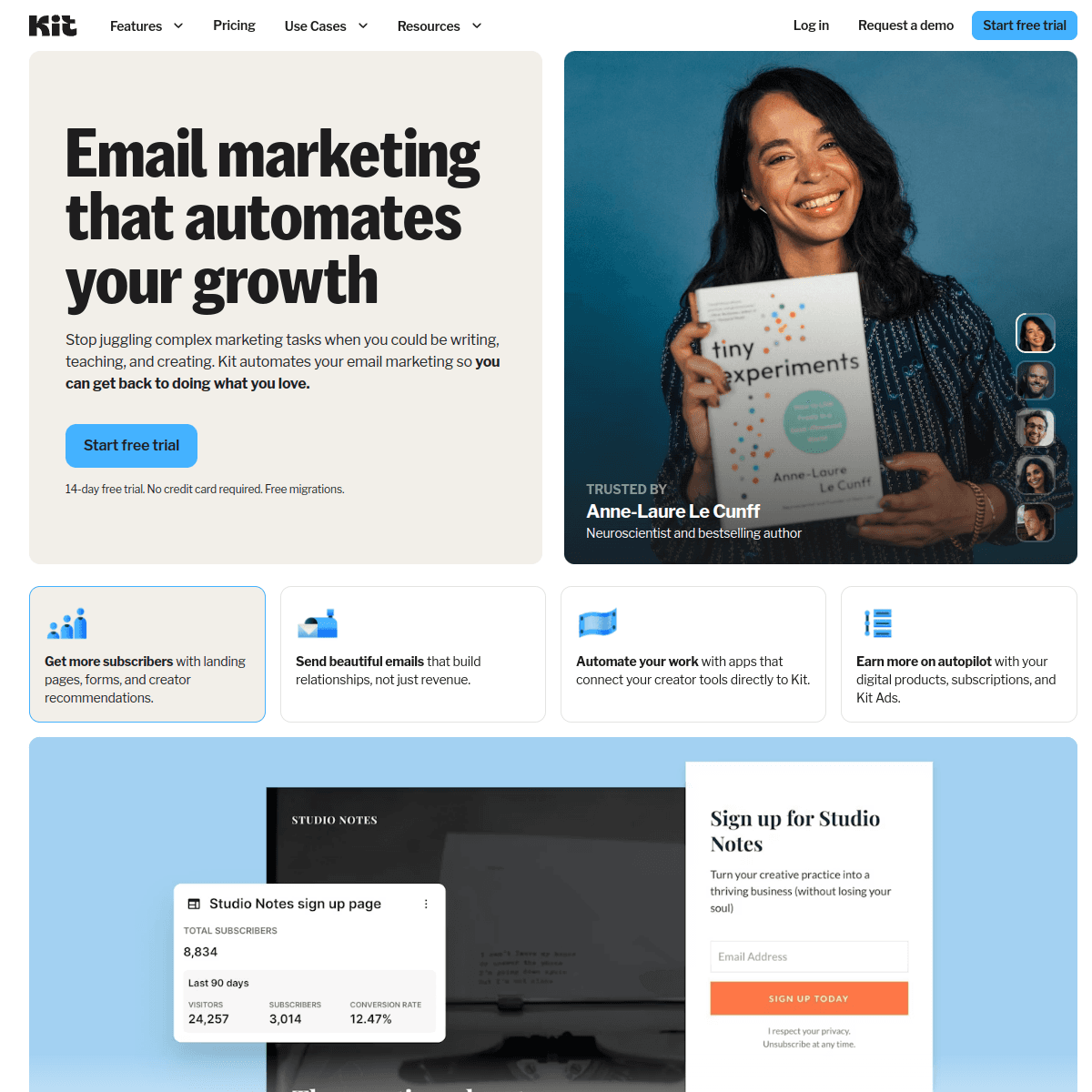
If you are just starting out, use a free tier. Kit at 10,000 free subscribers is the obvious choice for audience building. MailerLite at 1,000 free subscribers is better for general marketing. Build your list and learn the basics before paying for advanced tools.
If you sell digital products or courses, look for automation that handles sales funnels. Kit, Sequenzy, and ActiveCampaign all handle product launch sequences and ongoing sales automation. Sequenzy's AI generates these sequences for you, saving significant time when you are doing everything alone.
If your newsletter is your product, Beehiiv is purpose-built for newsletter businesses with built-in monetization and referral programs. Buttondown is the minimalist alternative for writers who just want to write.
The Solopreneur Email System
Three automations form the foundation of a solopreneur email system:
Welcome sequence converts subscribers into fans. New subscribers are at peak interest. A 4-7 email sequence that delivers value, tells your story, and introduces your offer capitalizes on that attention window. This is your most important automation.
Evergreen sales funnel sells while you sleep. After the welcome sequence, move subscribers into a nurture flow that periodically presents your products through stories, case studies, and value-driven content. Build desire over time rather than hard-selling immediately.
Re-engagement sequence keeps your list healthy. Subscribers who stop opening emails drag down your deliverability and cost money on per-contact plans. A simple three-email re-engagement sequence either wins them back or cleans them off your list.
Building Your First Welcome Sequence
Your welcome sequence is the first impression subscribers have of your email communication. Here is a proven framework:
Email 1 (Immediately): Deliver the promised lead magnet. Share a brief version of your story. Set expectations for what they will receive.
Email 2 (Day 2-3): Share your best free content. This establishes credibility and delivers immediate value beyond the lead magnet.
Email 3 (Day 4-5): Share a personal story or lesson that connects to their problem. Build emotional connection and demonstrate understanding.
Email 4 (Day 7): Introduce your paid offering naturally. Frame it as the next step for people who want to go deeper. Include social proof.
The Solopreneur Launch Calendar
Plan 3-4 launches per year with this framework:
Pre-launch (2 weeks): Tease what is coming. Share the problem you are solving. Build anticipation without revealing everything.
Launch week (5-7 days): Story email, announcement email, social proof email, FAQ email, final reminder email. Each serves a different purpose.
Post-launch (1 week): Thank buyers. Share early results. Ask for testimonials. Begin nurturing non-buyers back into your regular content.
Between launches: Weekly value emails. Share insights, tips, and stories that build trust and keep your audience engaged for the next launch.
Getting Started This Week
Start with these steps regardless of which platform you choose:
- Create a lead magnet that solves a specific problem for your ideal customer
- Set up a welcome sequence that delivers value and introduces your offer
- Commit to a consistent sending schedule - even if it is just once per week
- Build an evergreen sales funnel so you are not relying on manual launches for revenue
- Clean your list regularly by removing unengaged subscribers to maintain deliverability
The solopreneurs who win at email marketing are the ones who show up consistently, provide genuine value, and build automated systems that work without them. Start simple and improve over time.