Updated 2026-03-15

Best Email Marketing Tools for E-Commerce

Turn browsers into buyers and one-time customers into repeat purchasers with the right email marketing platform.

Email marketing is the single highest-ROI channel for e-commerce stores. Abandoned cart emails alone recover 5-15% of lost revenue. Post-purchase sequences build customer lifetime value. Welcome series convert first-time visitors into paying customers. Seasonal campaigns drive predictable revenue spikes. The challenge is picking the right platform from dozens of options. I tested and reviewed 13 email marketing tools specifically for e-commerce use cases, ranking them on automation capabilities, pricing, integrations, and ease of use.

TL;DR

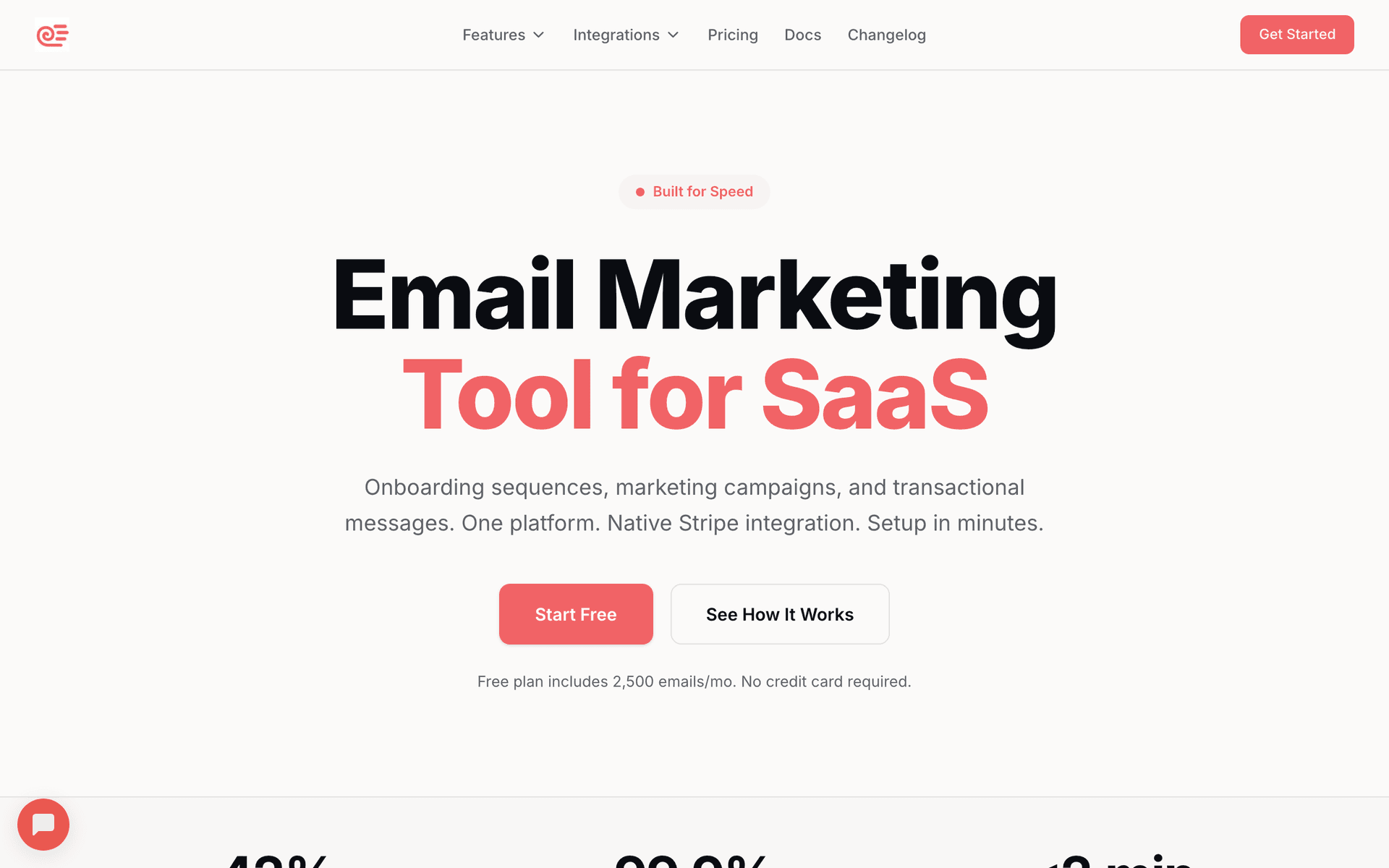
Sequenzy is the best overall pick for e-commerce stores - AI-powered sequences, pay-per-email pricing, and a free tier covering 2,500 emails per month make it ideal for stores of any size. For Shopify stores with budget for deep integration, Klaviyo's product recommendation engine is unmatched. Drip and Omnisend are strong mid-range alternatives with native e-commerce features.

Why E-Commerce Stores Need Email Marketing

Abandoned Cart Recovery

Around 70% of online shopping carts are abandoned before checkout. A well-timed cart recovery sequence with product images, social proof, and a small incentive can recapture 5-15% of those lost sales every month.

Customer Retention

Acquiring a new customer costs 5-7x more than keeping an existing one. Post-purchase follow-ups, loyalty rewards, and personalized recommendations keep buyers coming back and increase lifetime value.

Product Discovery

Most customers only see a fraction of your catalog. Email lets you showcase new arrivals, bestsellers, and personalized recommendations based on browsing and purchase history.

Seasonal Revenue

Black Friday, holiday shopping, back-to-school, and seasonal clearance events drive major revenue spikes. Email campaigns let you build anticipation, offer early access, and maximize sales during peak periods.

E-Commerce Stores Email Marketing Benchmarks

Know these numbers before you start. They'll help you set realistic goals and pick the right tool.

25-35%
Average Open Rate

E-commerce store emails typically see 25-35% open rates. Transactional and triggered emails (cart recovery, order confirmation) perform at the higher end. Promotional blasts tend toward the lower end.

3-5%
Average Click Rate

Click rates of 3-5% are typical. Personalized product recommendations and limited-time offers drive the highest click rates. Ensure every email has one clear, prominent call to action.

Tuesday-Thursday, 10am-2pm
Best Send Time

Tuesday through Thursday between 10am and 2pm performs well for most e-commerce promotional emails. Weekend sends work for leisure and lifestyle products. Use send-time optimization to personalize for each subscriber.

25-40% of total revenue
Email Revenue Share

Well-optimized e-commerce email programs generate 25-40% of total store revenue through a combination of campaigns, automations, and triggered sequences. Stores below 20% have significant room for improvement.

Important Tips Before You Choose

Lessons from e-commerce storeswho've been doing this for years. Save yourself the trial and error.

Start with cart recovery, welcome series, and post-purchase - in that order

These three automations drive the majority of email revenue for e-commerce stores. Cart recovery is the fastest path to ROI because you are recapturing money already on the table. Welcome series convert new subscribers. Post-purchase builds repeat buyers. Get these three running before adding anything else.

Use pay-per-email pricing if your list is larger than your sending volume

Contact-based pricing punishes stores with large lists that only buy seasonally. If you have 20,000 contacts but send 40,000 emails per month, pay-per-email pricing from Sequenzy or Brevo is significantly cheaper than contact-based pricing from Klaviyo or Drip.

Segment by purchase recency and frequency, not just total spend

RFM segmentation (Recency, Frequency, Monetary) is more actionable than simple spend-based segments. A customer who spent $500 last week is different from one who spent $500 a year ago. Tailor your campaigns based on when they last bought, how often they buy, and how much they spend.

Create a yearly email calendar covering all major shopping events

Plan Black Friday, holiday, Valentine's Day, Mother's Day, back-to-school, and any niche-specific events at least 4-6 weeks in advance. Start with teaser emails, offer VIP early access, then launch to your full list. Last-minute campaigns always underperform planned ones.

Test one variable at a time in your email campaigns

A/B testing subject lines, send times, product images, and CTAs gives you data to improve every future campaign. But test one variable at a time so you know what actually made the difference. Compound these small improvements over months and your revenue per email will increase steadily.

13 Best Email Marketing Tools for E-Commerce Stores

Our Top Pick for E-Commerce Stores
#1
Sequenzy

AI-powered email marketing with smart automation sequences and pay-per-email pricing.

Visit

I put Sequenzy at the top because of its combination of AI-powered sequences and genuinely fair pricing. The AI sequence builder creates cart recovery, post-purchase, and win-back flows in seconds, which saves hours of setup time. The free tier covers up to 2,500 emails per month, letting smaller stores get started at zero cost. The $29/month plan covers 50,000 emails with unlimited contacts - a standout for e-commerce stores with large subscriber lists that only buy seasonally. You are not paying for contacts sitting idle. The automation engine is powerful and the interface is clean. I do want to be honest though: Klaviyo and Drip have deeper native e-commerce integrations with platforms like Shopify and WooCommerce. Sequenzy connects via API and Stripe, which works great but requires a bit more initial setup for stores on Shopify. Where Sequenzy wins is simplicity, cost, and the ability to start free and scale affordably.

Best for
E-commerce stores wanting AI-powered automation with simple, affordable pricing
Pricing
Free up to 2,500 emails/mo, then $29/mo for 50K emails (unlimited contacts)

Pros

  • AI generates cart recovery and post-purchase sequences instantly
  • Free tier for up to 2,500 emails/month
  • Pay-per-email pricing keeps costs low for large lists
  • Clean, simple interface without a steep learning curve
  • Direct founder support when you need help

Cons

  • Newer platform with less track record than established players
  • No built-in SMS marketing
  • Smaller template library compared to Mailchimp or Klaviyo
  • No native Shopify integration yet
#2
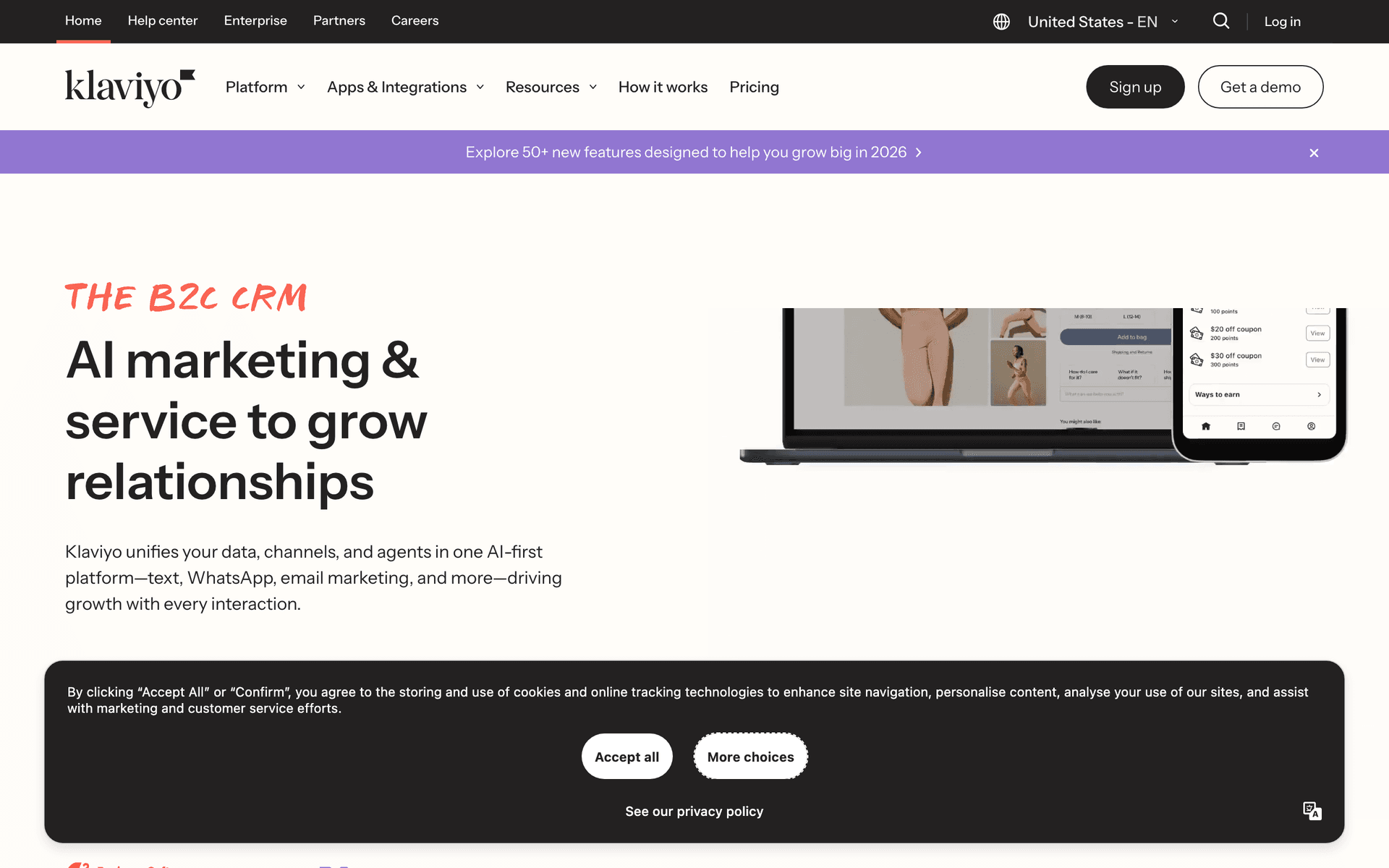
Klaviyo

The leading e-commerce email and SMS platform with deep store integrations.

Visit

Klaviyo is the heavyweight of e-commerce email. If you run a Shopify store, the integration is seamless - purchase data, browse behavior, and customer profiles sync automatically. The product recommendation engine uses machine learning to suggest items each customer is likely to buy based on their history. Predictive analytics flag customers at risk of churning before they disappear. Cart recovery, browse abandonment, and post-purchase flows come pre-built. The SMS add-on creates a true multi-channel experience. The downside is price - Klaviyo gets expensive fast as your list grows past 5,000-10,000 contacts, and the interface can feel overwhelming for smaller stores.

Best for
Shopify stores with $10K+ monthly revenue wanting deep e-commerce features
Pricing
Free up to 250 contacts, then from $20/month

Pros

  • Deep Shopify, WooCommerce, and BigCommerce integrations
  • AI-powered product recommendation engine
  • Predictive analytics for customer lifetime value
  • Built-in SMS marketing

Cons

  • Gets expensive as your list grows
  • Complex interface with steep learning curve
  • Overkill for smaller stores
  • SMS costs add up quickly
#3
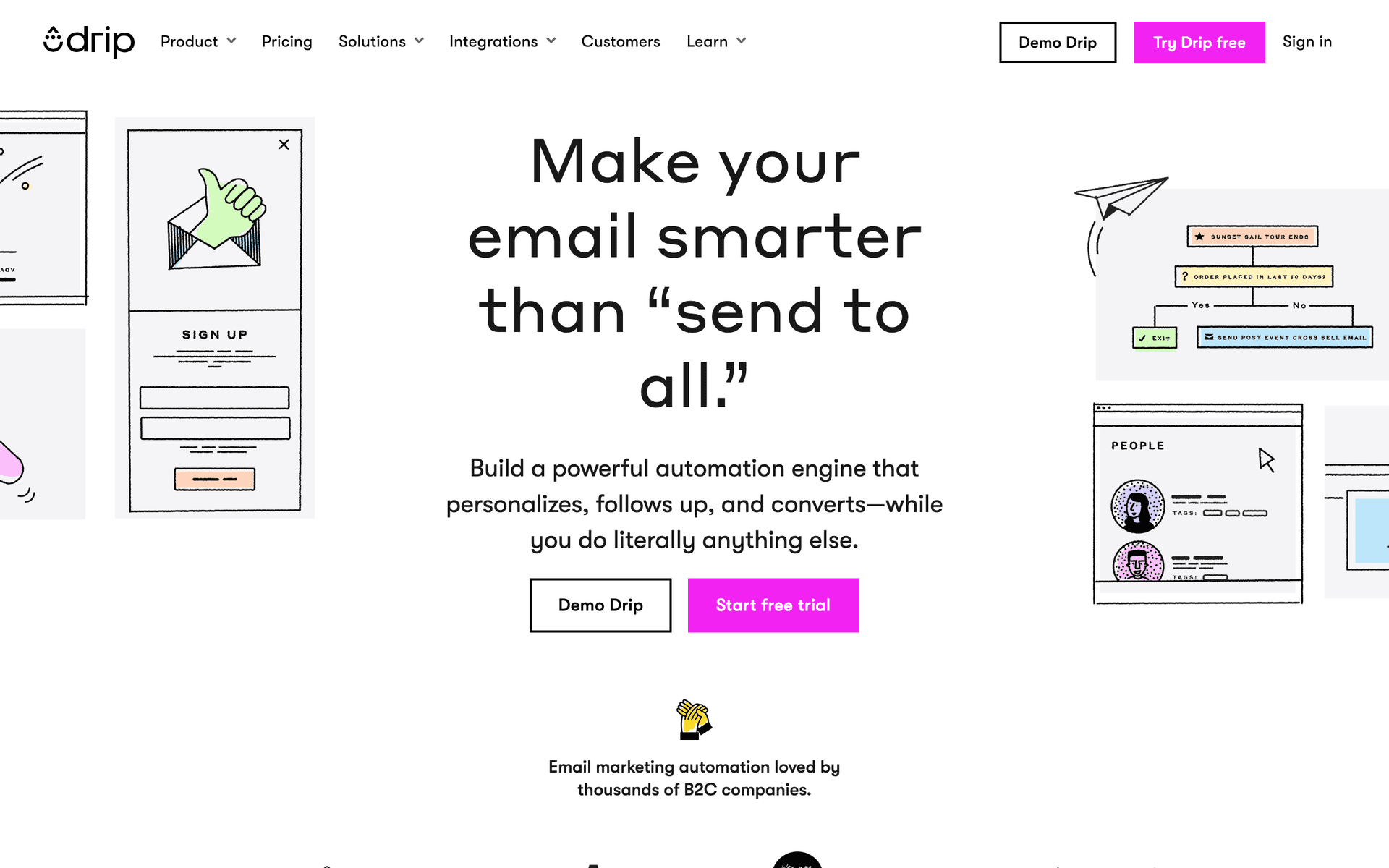
Drip

E-commerce focused email and automation built for online stores.

Visit

Drip is purpose-built for e-commerce with solid Shopify and WooCommerce integration. The visual workflow builder makes it easy to create customer journeys based on purchase behavior. Revenue attribution shows exactly which emails drive sales. It is a strong Klaviyo alternative at a slightly lower price point. The downside is it still charges by contacts and the starting price is higher than many competitors.

Best for
Mid-size e-commerce stores wanting Klaviyo-like features at a lower price
Pricing
$39/month for 2,500 contacts

Pros

  • Built specifically for e-commerce
  • Visual workflow builder for automation
  • Revenue attribution on every email
  • Good Shopify and WooCommerce integration

Cons

  • Expensive starting price for small stores
  • No free tier available
  • Fewer integrations than Klaviyo
  • Limited SMS features
#4
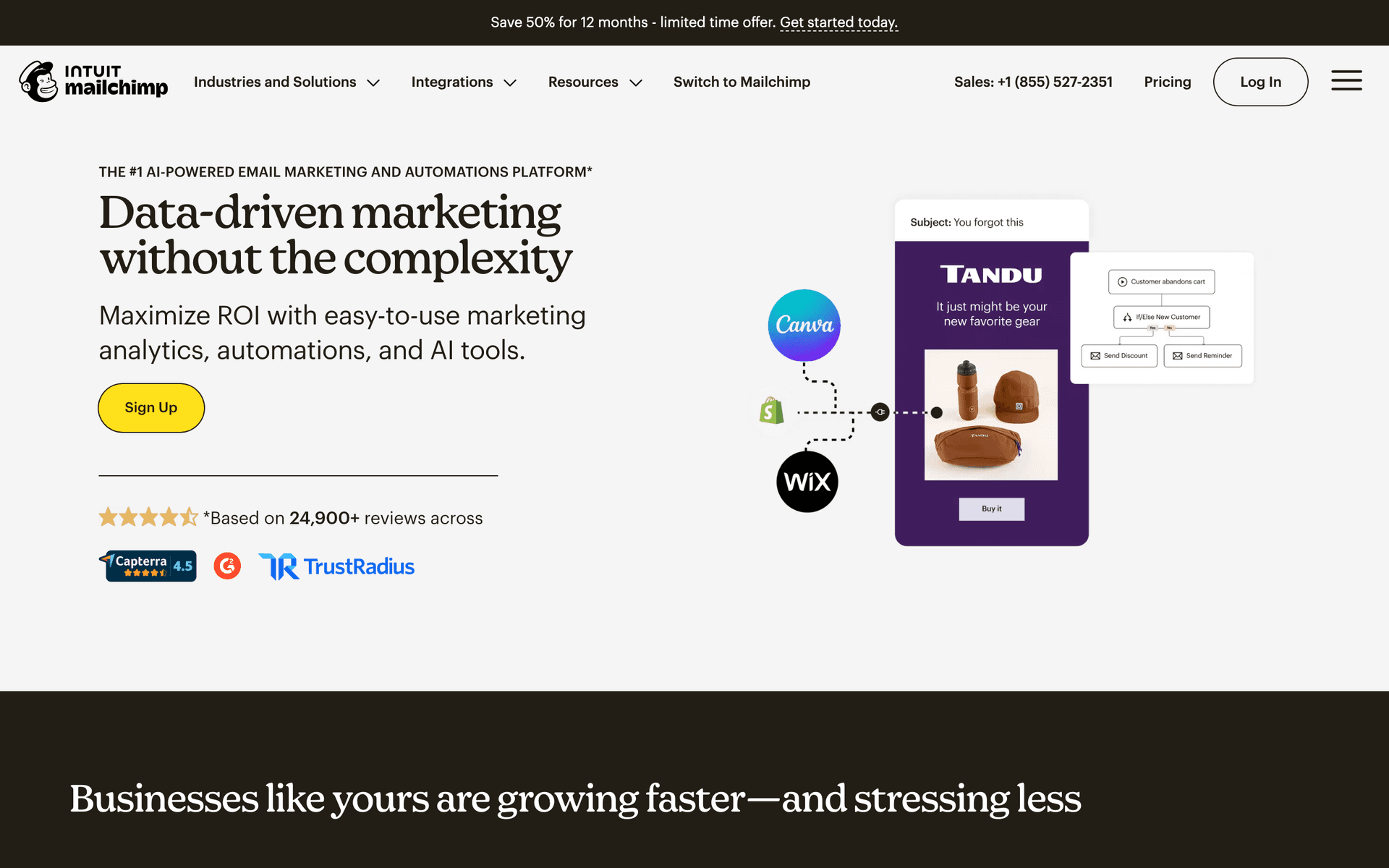
Mailchimp

The most recognized email marketing platform with a generous free tier.

Visit

Mailchimp is the name everyone knows and the free tier makes it tempting for new stores. The template library is massive and the drag-and-drop editor is easy. Basic e-commerce integrations exist for Shopify, WooCommerce, and others. Where Mailchimp falls short is automation - cart recovery and post-purchase flows are basic compared to Klaviyo or Drip. Pricing also climbs steeply once you outgrow the free tier.

Best for
Small e-commerce stores just getting started with email
Pricing
Free up to 500 contacts, then from $13/month

Pros

  • Generous free tier to start
  • Massive template library
  • Easy drag-and-drop editor
  • Wide range of integrations

Cons

  • Basic e-commerce automation
  • Pricing climbs steeply at scale
  • No product recommendation engine
  • Support quality has declined
#5
Omnisend

E-commerce marketing platform combining email, SMS, and push notifications.

Visit

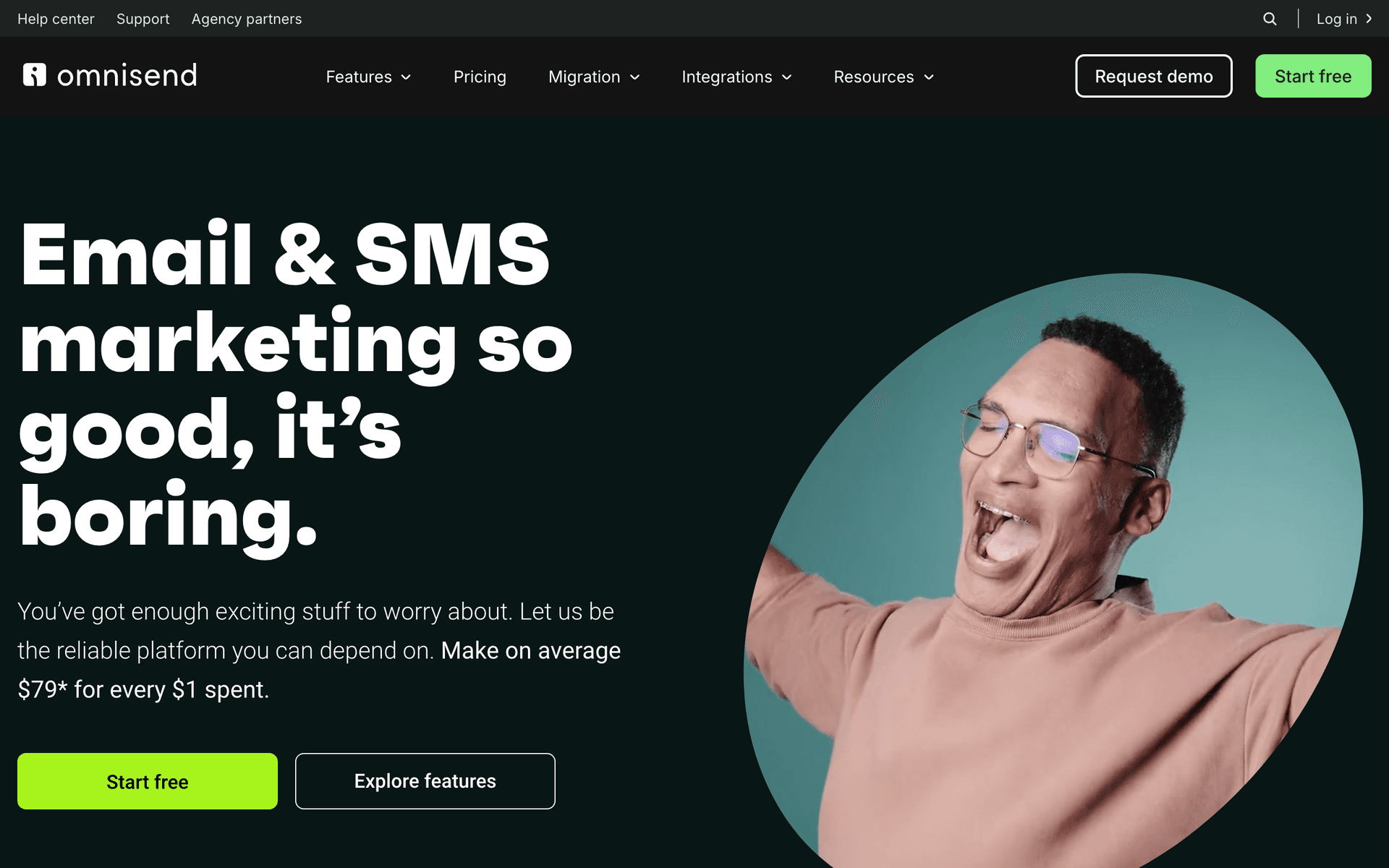
Omnisend is built for e-commerce and it shows. Pre-built automation workflows for cart abandonment, welcome series, and post-purchase are ready to go. The combination of email, SMS, and push notifications in one platform is convenient. Product picker pulls items directly from your store. The free tier is limited but the paid plans are competitive.

Best for
E-commerce stores wanting email, SMS, and push in one platform
Pricing
Free up to 250 contacts, then from $16/month

Pros

  • Email, SMS, and push notifications combined
  • Pre-built e-commerce automation workflows
  • Product picker from your store catalog
  • Competitive pricing for what you get

Cons

  • Less powerful than Klaviyo for advanced segmentation
  • Free tier is very limited
  • Reporting could be more detailed
  • Fewer third-party integrations
#6
ActiveCampaign

Advanced automation and CRM platform with e-commerce capabilities.

Visit

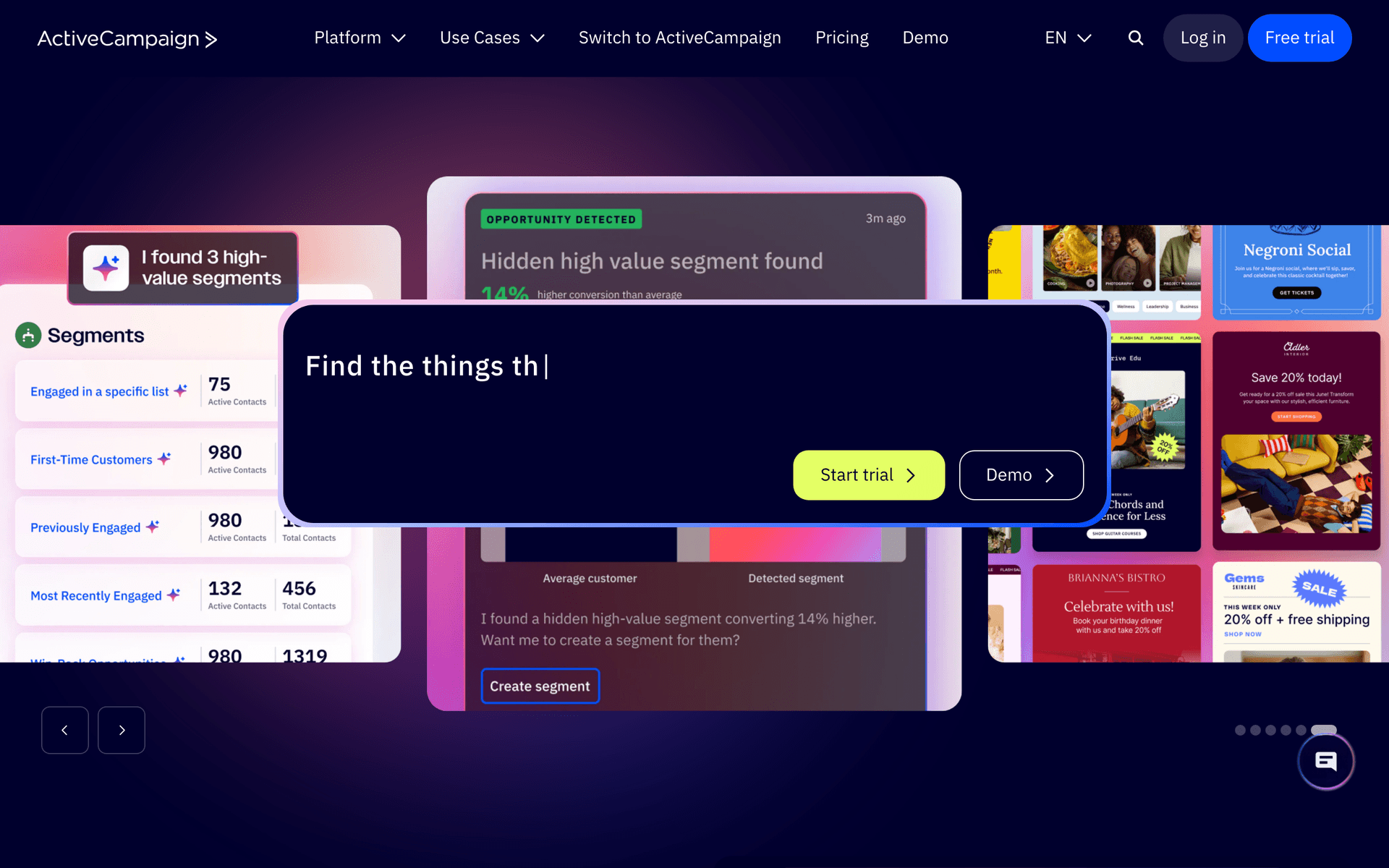
ActiveCampaign has the most powerful automation builder on this list. You can create incredibly detailed customer journeys based on any combination of actions. The CRM tracks customer lifetime value and purchase history. For stores with complex sales processes or B2B wholesale alongside retail, it is excellent. The downside is it is not e-commerce specialized so you need to build more from scratch.

Best for
E-commerce stores with complex customer journeys or B2B sales
Pricing
$29/month for 1,000 contacts

Pros

  • Most powerful automation builder available
  • Built-in CRM with deal tracking
  • Excellent deliverability rates
  • Predictive sending optimization

Cons

  • Not specialized for e-commerce
  • Steep learning curve
  • No native product recommendations
  • Higher price for advanced features
#7
Brevo

Affordable email and SMS marketing platform with transactional email included.

Visit

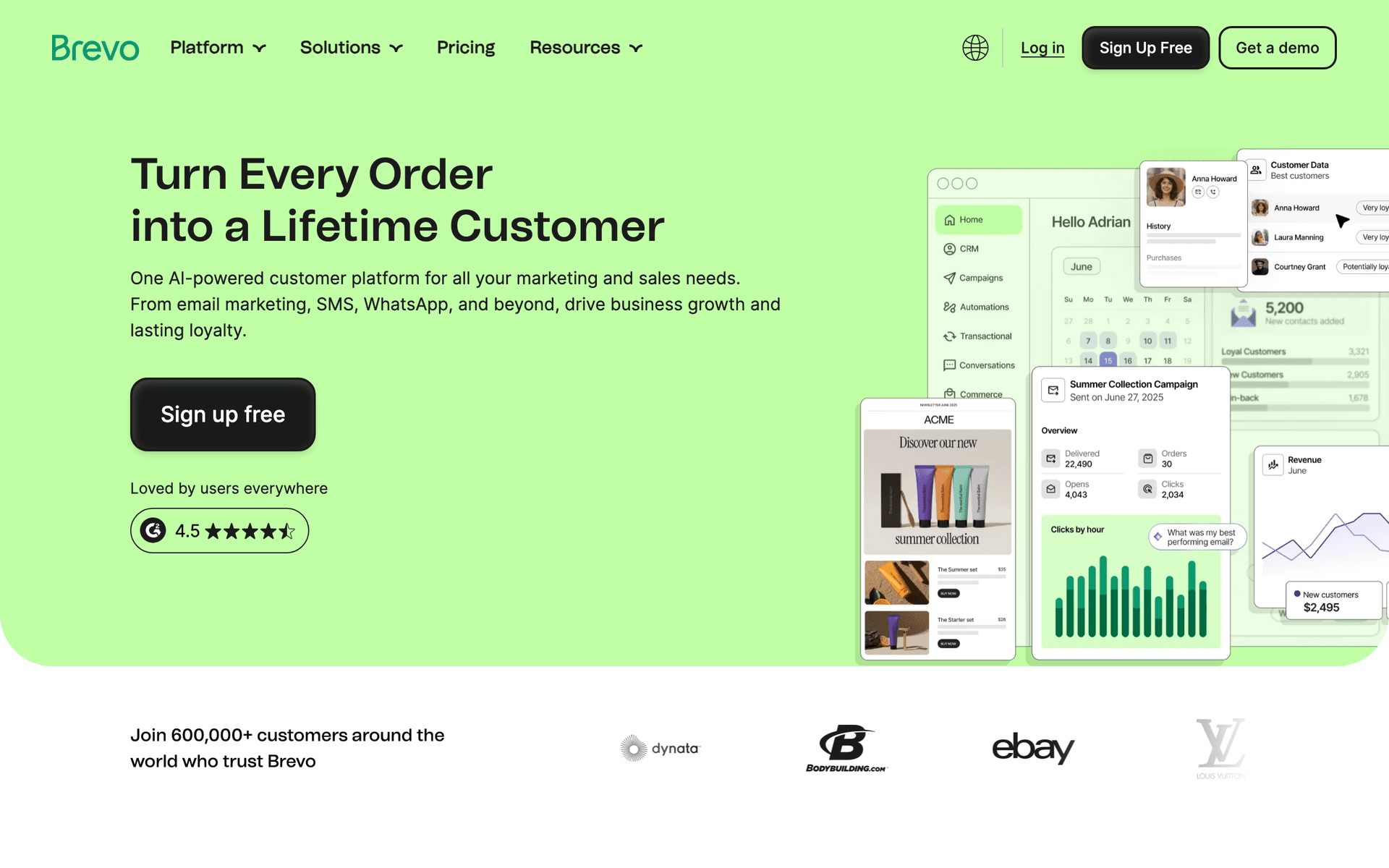
Brevo, formerly Sendinblue, is the budget-friendly choice. The free tier gives 300 emails per day. SMS is included for order confirmations and flash sale alerts. Transactional emails for order receipts and shipping updates are built in. For stores watching their budget, Brevo delivers solid value. The e-commerce features are basic compared to Klaviyo or Drip.

Best for
Budget-conscious e-commerce stores needing email and SMS
Pricing
Free up to 300 emails/day, then from $25/month

Pros

  • Very affordable with a useful free tier
  • SMS marketing included
  • Transactional email built in
  • Pay by email volume, not contacts

Cons

  • Basic e-commerce automation
  • Daily sending limits on free plan
  • Support can be slow on lower tiers
  • Brevo branding on free emails
#8
GetResponse

All-in-one marketing platform with email, landing pages, and e-commerce features.

Visit

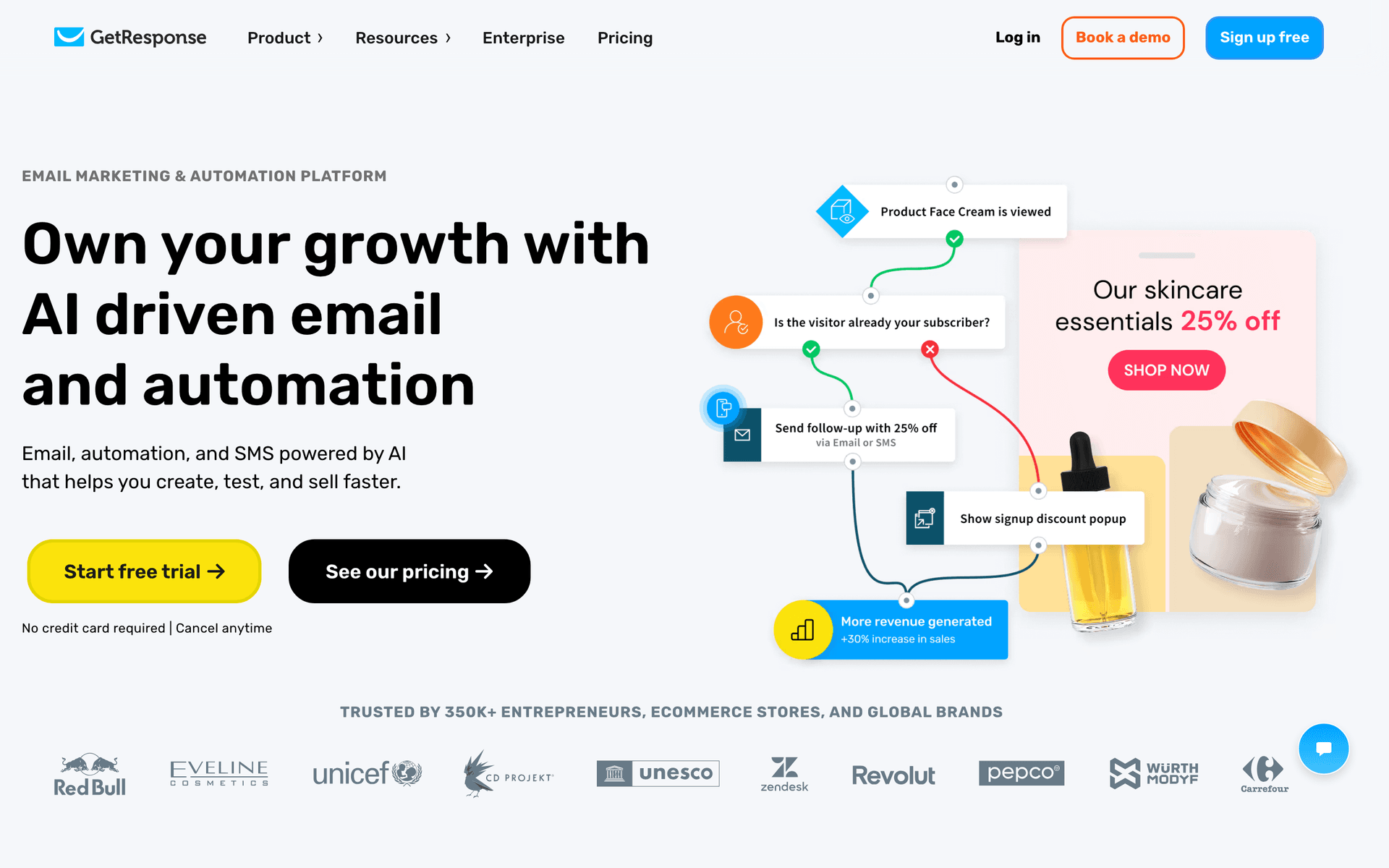
GetResponse has added solid e-commerce features including product recommendations, cart abandonment, and transactional emails. The landing page builder is useful for promotion pages and product launches. Conversion funnels guide customers through purchase journeys. It tries to do everything which means nothing is best-in-class, but the value is strong for the price.

Best for
E-commerce stores wanting email, landing pages, and funnels in one tool
Pricing
From $15.60/month for 1,000 contacts

Pros

  • Landing page and funnel builder included
  • Product recommendations available
  • Cart abandonment automation
  • Competitive pricing

Cons

  • Jack of all trades, master of none
  • E-commerce features less deep than Klaviyo
  • Interface can feel cluttered
  • Webinar features are unnecessary for most stores
#9
MailerLite

Clean, simple email marketing with generous free tier and good automation.

Visit

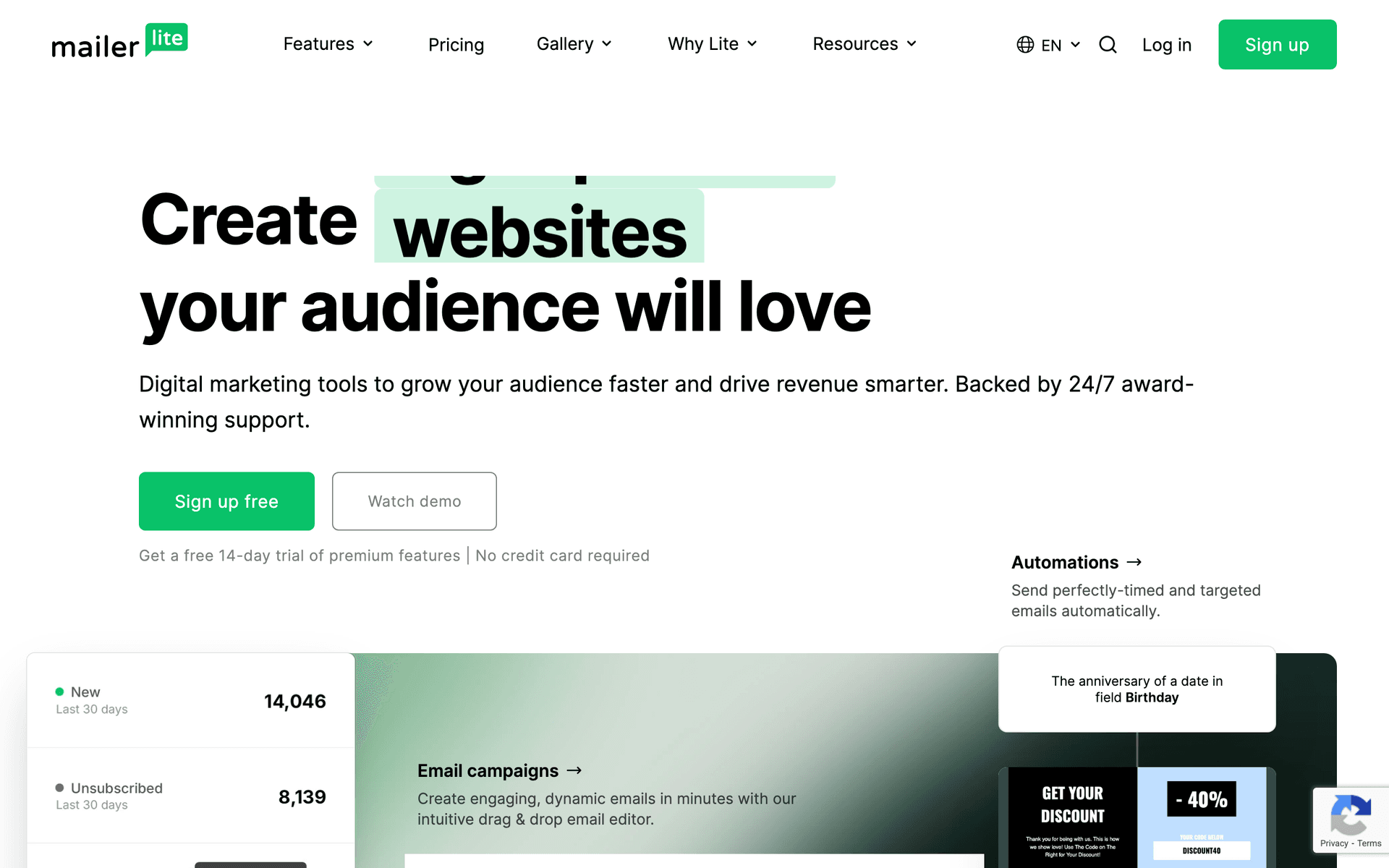
MailerLite is refreshingly simple. The interface is clean, the free tier is generous at 1,000 subscribers, and the automation works well for basic e-commerce flows. E-commerce integrations exist for Shopify and WooCommerce. For small stores that want email marketing without complexity, MailerLite is hard to beat on value. It lacks the advanced e-commerce features of dedicated platforms.

Best for
Small e-commerce stores prioritizing simplicity and value
Pricing
Free up to 1,000 subscribers, then from $10/month

Pros

  • Very affordable with generous free tier
  • Clean, intuitive interface
  • Good landing page builder
  • Solid basic automation

Cons

  • Limited advanced e-commerce features
  • Strict account approval process
  • Basic reporting and analytics
  • No product recommendation engine
#10
Campaign Monitor

Professional email marketing with beautiful, polished templates.

Visit

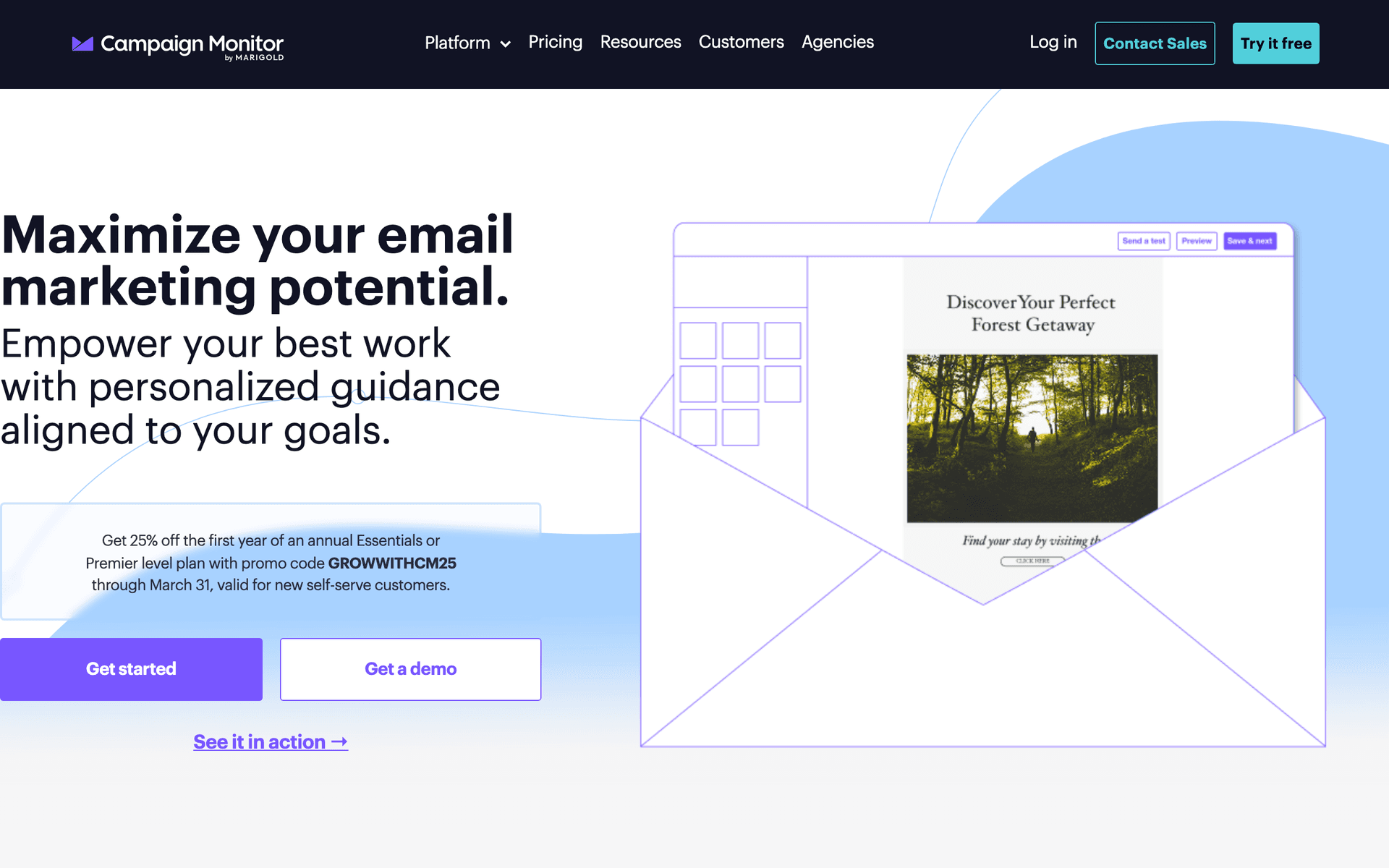
Campaign Monitor has some of the best-looking email templates available. For stores where brand presentation matters, the visual quality is excellent. Product showcase emails look professional out of the box. The downside is limited e-commerce automation and contact-based pricing that adds up fast.

Best for
E-commerce brands prioritizing beautiful email design
Pricing
From $9/month for 500 contacts

Pros

  • Stunning email templates
  • Professional visual quality
  • Reliable deliverability
  • Easy-to-use editor

Cons

  • Limited e-commerce automation
  • Contact-based pricing gets expensive
  • No cart abandonment built in
  • Basic segmentation
#11
Kit

Creator-focused email platform, formerly ConvertKit.

Visit

Kit is designed for creators and content-first businesses, not traditional e-commerce. If you sell digital products, courses, or have a content-driven brand, it works well. For physical product e-commerce with cart recovery and product recommendations, there are much better options on this list.

Best for
Content-driven e-commerce brands selling digital products
Pricing
Free up to 10,000 subscribers, then from $25/month

Pros

  • Generous free tier
  • Great for digital product sales
  • Simple automation builder
  • Strong creator community

Cons

  • Not built for physical product e-commerce
  • No cart abandonment features
  • No product recommendations
  • Limited e-commerce integrations
#12
Moosend

Budget-friendly email marketing with decent automation features.

Visit

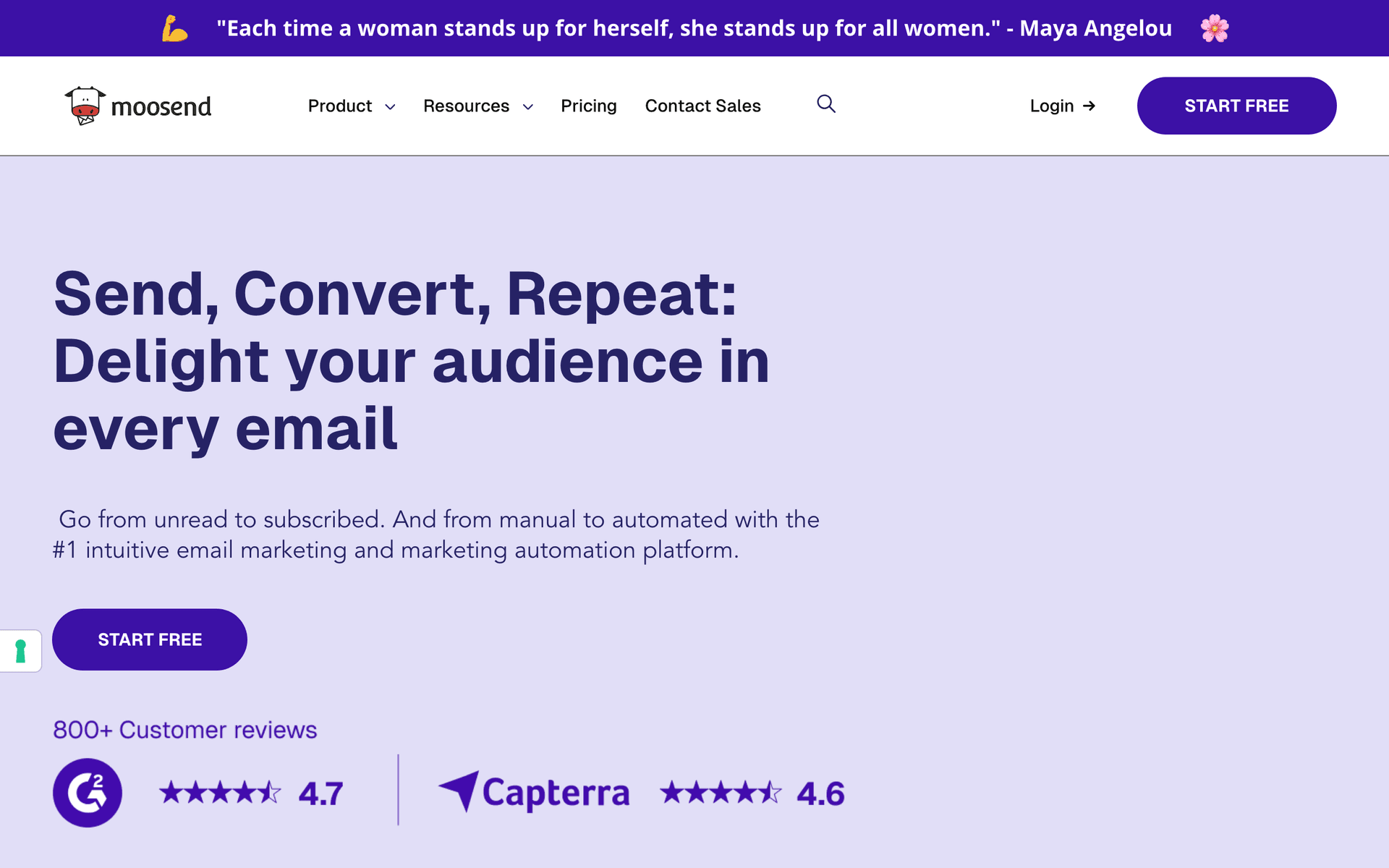
Moosend is the budget pick. Starting at $9 per month, you get automation, landing pages, and product recommendations. The e-commerce AI can suggest products based on purchase history. For stores where cost is the primary concern and you need more than a free tier offers, Moosend delivers surprising value.

Best for
Very price-conscious e-commerce stores
Pricing
From $9/month for 500 subscribers

Pros

  • Very affordable starting price
  • Product recommendation engine included
  • Solid automation for the price
  • Landing page builder

Cons

  • Less well-known platform
  • Limited third-party integrations
  • Smaller template library
  • Support can be slower
#13
AWeber

One of the original email platforms with reliable deliverability.

Visit

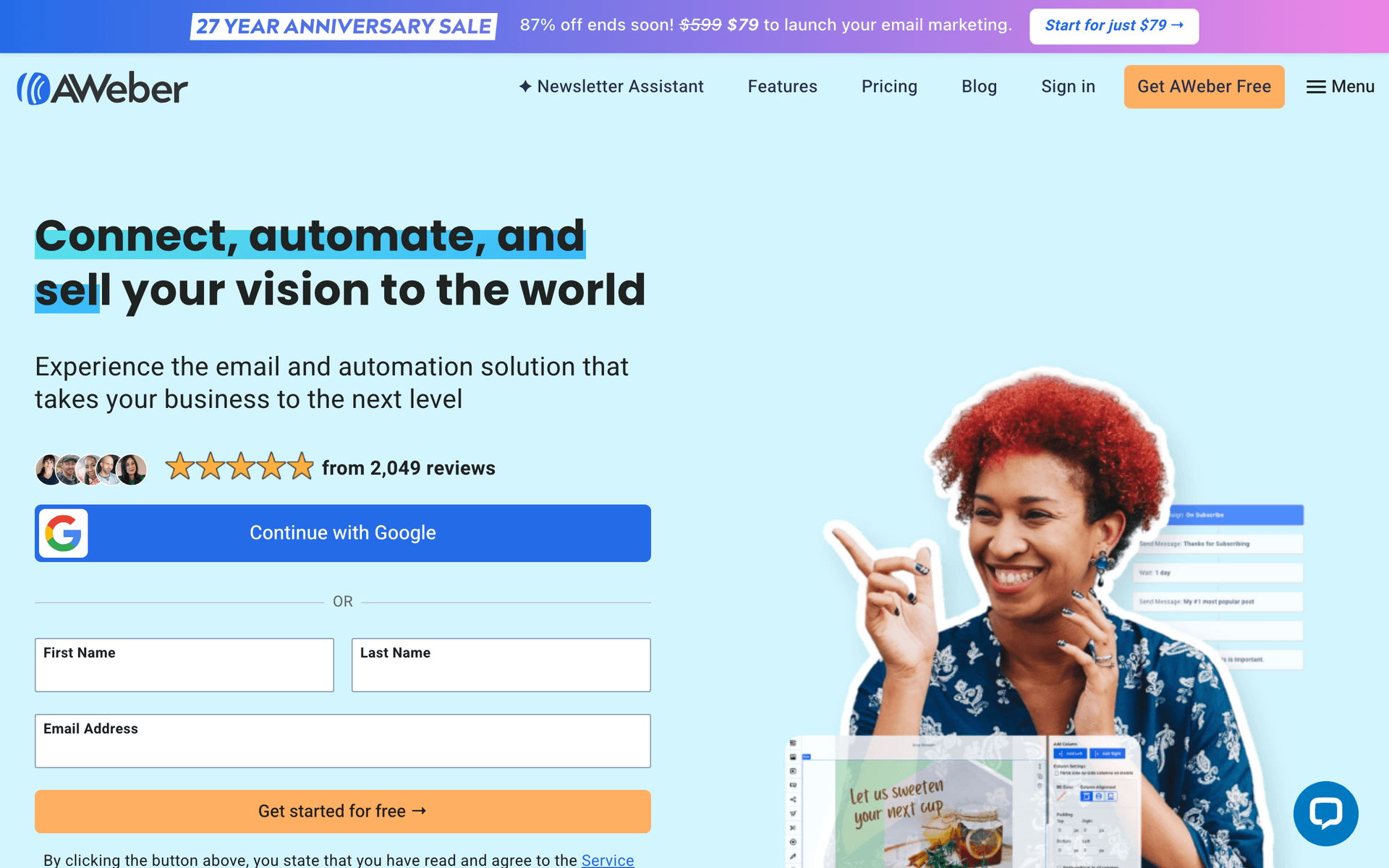
AWeber has been around since 1998 and it shows. Reliable deliverability and solid phone support. For basic newsletters and promotional emails, it works fine. But the lack of modern e-commerce features like cart recovery, product recommendations, and behavior-based automation makes it a poor fit for stores that want to maximize email revenue.

Best for
Small stores wanting basic, reliable email newsletters
Pricing
Free up to 500 subscribers, then from $15/month

Pros

  • Excellent deliverability track record
  • Good phone and chat support
  • Simple to set up and use
  • Free tier available

Cons

  • Feels dated compared to modern tools
  • Very limited e-commerce automation
  • No cart recovery or product recommendations
  • Little innovation in recent years

Feature Comparison

FeatureSequenzyKlaviyoDripOmnisend
Cart abandonment recovery
Yes
Built-in
Built-in
Built-in
Product recommendations
No
AI-powered
Yes
Yes
AI-powered sequences
Yes
No
No
No
Native Shopify integration
No
Deep
Yes
Yes
SMS marketing
No
Yes
Limited
Yes
Pay-per-email pricing
Yes
No
No
No
Post-purchase automation
Yes
Built-in
Built-in
Built-in
Free tier available
Yes
No
Yes

Common Mistakes to Avoid

We see these mistakes over and over. Skip the learning curve and avoid these from day one.

Blasting the same promotional email to your entire list

Sending every sale announcement to every subscriber trains your audience to ignore you. Segment by purchase history, engagement level, and preferences. VIP customers get early access. Lapsed customers get win-back offers. New subscribers get welcome discounts. Relevance drives revenue.

Discounting too aggressively in cart abandonment emails

If your first cart recovery email offers 20% off, you are training customers to abandon carts for discounts. Start with a simple reminder, add social proof in email two, and offer a small discount (10% maximum) only in the final email. Most cart recoveries happen without any discount at all.

Ignoring email deliverability as your list grows

As your list grows past 10,000, deliverability becomes critical. Clean your list regularly by removing hard bounces and chronically disengaged subscribers. Use double opt-in. Monitor spam complaint rates. A clean list of 8,000 engaged subscribers outperforms a dirty list of 20,000.

Not connecting email revenue attribution to your store

If you cannot see which emails drive which sales, you are flying blind. Make sure your email platform integrates with your store so you can track revenue per campaign, revenue per automation, and customer lifetime value from email subscribers.

Email Sequences Every E-Commerce Store Needs

These are the essential automated email sequences that will help you grow your business and keep clients coming back.

Welcome + First Purchase

New subscriber signs up

Turn new subscribers into first-time buyers with a compelling introduction to your brand and a purchase incentive.

Immediately
Welcome to {{store_name}} - here is 10% off your first order

Warm welcome with brand story, bestsellers, and a first-purchase discount code. Set expectations for what emails they will receive.

Day 2
Our customers' favorite picks

Showcase top-selling products with customer reviews and ratings. Social proof drives first purchases.

Day 5
Your 10% off expires in 48 hours

Gentle urgency reminder about the expiring discount. Include product recommendations based on browse history if available.

Day 7
Last chance - your welcome discount ends tonight

Final reminder with a clear call to action. Highlight the discount one last time with a curated product selection.

Abandoned Cart Recovery

Cart abandoned without checkout

Recover lost revenue from abandoned shopping carts with a timed sequence of reminders and incentives.

1 hour
You left something in your cart

Show the exact products left in the cart with images and prices. Direct link back to checkout. No discount yet.

24 hours
Still thinking it over? Here is 10% off

Add urgency and a small discount incentive. Include customer reviews for the abandoned products as social proof.

48 hours
Last chance - your cart expires tomorrow

Final reminder with scarcity messaging. Mention the discount expires soon. Include alternative product suggestions.

Post-Purchase Follow-Up

Order completed

Build loyalty and encourage repeat purchases after a customer buys.

Immediately
Order confirmed - here is what happens next

Order confirmation with shipping timeline, tracking details, and what to expect. Set the tone for a great experience.

Day 3
Tips to get the most from your {{product_name}}

Usage tips, care instructions, or styling suggestions. Add genuine value beyond the sale.

Day 10
How are you enjoying your {{product_name}}?

Request a review with a direct link. Offer a small incentive for leaving feedback. Include cross-sell recommendations.

Day 21
Picked just for you based on your recent purchase

Personalized product recommendations based on what they bought. Encourage the second purchase.

Win-Back Campaign

No purchase in 90 days

Re-engage lapsed customers and bring them back for another purchase.

90 days
We miss you - see what is new

Showcase new arrivals and bestsellers since their last purchase. Remind them why they loved shopping with you.

105 days
A special offer just for you - 15% off your next order

Discount incentive to drive a re-purchase. Include curated product recommendations based on past purchase history.

120 days
Last chance for your 15% off - it expires Friday

Final urgency email. If they do not engage, reduce email frequency to avoid unsubscribes.

Choosing the Right Platform for Your Store

The best email marketing tool for your e-commerce store depends on three factors: your e-commerce platform, your list size, and your budget.

Store Platform Integration

If you are on Shopify and have the budget, Klaviyo's deep integration is hard to beat for product recommendations and predictive analytics. If you want similar automation without the price tag, Drip and Omnisend are solid alternatives.

If cost matters most, look at pricing models carefully. Contact-based pricing (Klaviyo, Drip, ActiveCampaign) punishes you for having a large list even if most subscribers only buy during sales. Pay-per-email pricing (Sequenzy, Brevo) means you only pay when you actually send, which is often cheaper for stores with seasonal buying patterns.

If you want simplicity, Sequenzy and MailerLite stand out. Both have clean interfaces that do not require a marketing degree to navigate. Sequenzy's AI sequence builder is particularly useful if you want automation set up fast without manually configuring every workflow step.

Understanding Pricing Models

Contact-based pricing charges you for every subscriber on your list, whether they bought last week or three years ago. For stores that accumulate customers over time but only email actively during sales and promotions, this model gets expensive fast.

Pay-per-email pricing charges you for what you actually send. If you have 20,000 contacts but send 40,000 emails per month, you pay based on the 40,000 sends. This typically works out cheaper for stores with large but moderately-active lists.

The E-Commerce Email Revenue Formula

Three automations drive the majority of email revenue for e-commerce stores:

Cart Recovery Is Free Money

Abandoned cart recovery recaptures 5-15% of lost sales. This is free money sitting on the table. A three-email sequence with product images, social proof, and a small discount converts browsers into buyers. Most stores see ROI within the first week of activating this automation.

Post-Purchase Builds Lifetime Value

Post-purchase follow-ups build lifetime value. Customers who receive helpful follow-up emails - usage tips, care instructions, and personalized recommendations - have significantly higher repeat purchase rates. The second sale is where profit starts.

Win-Back Recovers Lapsed Customers

Win-back campaigns re-engage lapsed customers at a fraction of the cost of acquiring new ones. A 90-day inactivity trigger with a compelling offer and new product showcase brings dormant customers back.

Getting Started with E-Commerce Email

Start with these steps regardless of which platform you choose:

  1. Set up cart recovery first because it delivers the fastest ROI with minimal effort
  2. Build a welcome series that converts new subscribers into first-time buyers within the first week
  3. Create post-purchase automation to request reviews and recommend complementary products
  4. Segment your list by purchase history, spending level, and engagement so every email feels relevant
  5. Plan seasonal campaigns on a yearly calendar so you are never scrambling at the last minute

Your First 30 Days

During your first month, focus on getting the fundamentals right. Import your customer list with purchase history if possible. Set up your three core automations - cart recovery, welcome series, and post-purchase. Send your first promotional campaign to test engagement. Monitor open rates, click rates, and revenue attribution to establish your baselines.

Months 2-3: Optimization

Once your core automations are running, start optimizing. A/B test subject lines on your cart recovery emails. Experiment with different welcome series lengths and offers. Add segmentation to your promotional campaigns so VIP customers, new subscribers, and lapsed buyers receive different messaging.

Month 4 and Beyond: Advanced Strategies

With solid fundamentals in place, add advanced strategies like browse abandonment emails, loyalty reward programs, cross-sell sequences based on purchase categories, and seasonal campaign calendars. Each addition builds on your foundation and incrementally increases email revenue.

The stores that win at email marketing are not the ones with the most expensive tools. They are the ones that set up the right automations, send relevant content, and stay consistent.

How We Evaluated These Tools

Tools were evaluated based on their fit for e-commerce workflows - cart abandonment automation, product recommendation engines, store platform integrations, post-purchase sequence capabilities, and pricing at various list sizes. We tested each tool's ability to handle the full customer lifecycle and prioritized platforms with native e-commerce features.

Frequently Asked Questions

Ready to grow your e-commerce store practice?

Start your free trial today. Set up your first email sequence in minutes with AI-powered content generation.

Related Industries

Sequenzy - Complete Pricing Guide

Pricing Model

Sequenzy uses email-volume-based pricing. You only pay for emails you send. Unlimited contacts on all plans — storing subscribers is always free.

All Pricing Tiers

  • 2.5k emails/month: Free (Free annually)
  • 15k emails/month: $19/month ($205/year annually)
  • 60k emails/month: $29/month ($313/year annually)
  • 120k emails/month: $49/month ($529/year annually)
  • 300k emails/month: $99/month ($1069/year annually)
  • 600k emails/month: $199/month ($2149/year annually)
  • 1.2M emails/month: $349/month ($3769/year annually)
  • Unlimited emails/month: Custom pricing (Custom annually)

Yearly billing: All plans offer a 10% discount when billed annually.

Free Plan Features (2,500 emails/month)

  • Visual automation builder
  • Transactional email API
  • Reply tracking & team inbox
  • Goal tracking & revenue attribution
  • Dynamic segments
  • Payment integrations
  • Full REST API access
  • Custom sending domain

Paid Plan Features (15k - 1.2M emails/month)

  • Visual automation builder
  • Transactional email API
  • Reply tracking & team inbox
  • Goal tracking & revenue attribution
  • Dynamic segments
  • Payment integrations (Stripe, Paddle, Lemon Squeezy)
  • Full REST API access
  • Custom sending domain

Enterprise Plan Features (Unlimited emails)

  • Visual automation builder
  • Transactional email API
  • Reply tracking & team inbox
  • Goal tracking & revenue attribution
  • Dynamic segments
  • Payment integrations
  • Full REST API access
  • Custom sending domain

Important Pricing Notes

  • You only pay for emails you send — unlimited contacts on all plans
  • No hidden fees - all features included in the price
  • No credit card required for free tier

Contact

  • Pricing Page: https://sequenzy.com/pricing
  • Sales: hello@sequenzy.com